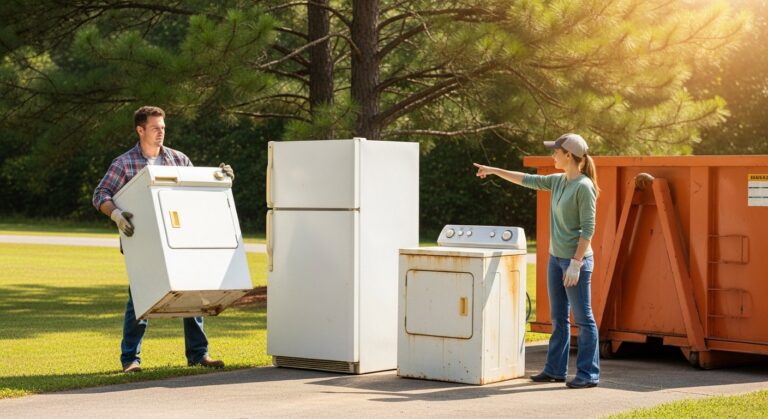
Old refrigerators, washing machines, dryers, and stoves take up garage space and create safety hazards in Arkansas homes. Many homeowners assume bulky appliances go out with regular trash. That assumption leads to fines, rejected pickups, or illegal dumping. Proper appliance disposal requires a plan that handles weight, hazardous materials, and local regulations. Arkansas dumpster rental services offer a straightforward solution for removing multiple large appliances at once. This article explains the rules, costs, and practical steps for getting rid of old appliances without hassle.
Why Standard Trash Pickup Fails for Appliance Disposal
Municipal waste collection in Arkansas typically excludes refrigerators, freezers, air conditioners, and other appliances containing refrigerants. These items are classified as hazardous waste because of the coolant chemicals inside. When a regular trash truck cannot accept an appliance, the item sits on the curb for days. Homeowners then face the task of hauling the unit to a recycling center or paying for a special pickup. Even non-coolant appliances like electric ranges or dryers pose weight issues. Standard bins fill quickly, and most services have strict weight limits per can.
Illegal dumping remains a problem across Arkansas. Abandoned appliances on rural roads or behind commercial lots create environmental hazards and cleanup costs for local governments. Fines for illegal dumping can reach thousands of dollars. Renting a dumpster eliminates these risks by providing a legal, contained disposal method. A dedicated roll-off container allows you to load multiple appliances in one trip and schedule a single pickup. This approach saves time compared to coordinating multiple trips to a disposal facility.
Understanding Arkansas Regulations for Appliance Disposal
Arkansas Department of Environmental Quality (ADEQ) oversees disposal of appliances that contain ozone-depleting substances. Refrigerators, freezers, dehumidifiers, and window air conditioners must have refrigerants removed by a certified technician before disposal. Dumpster rental companies in Arkansas often handle this step as part of their service. When you rent a dumpster specifically for appliance disposal, confirm that the company includes refrigerant recovery in the rental fee. Some providers require you to hire a separate HVAC contractor for this step.
Beyond refrigerants, Arkansas also regulates disposal of electronic components found in newer appliances. Smart refrigerators and washing machines with digital displays contain circuit boards that fall under e-waste rules. In our guide on e-waste disposal in Arkansas: dumpster vs recycling centers, we explain how these items differ from standard appliances. Combining appliance disposal with e-waste handling in one dumpster rental simplifies the entire process. Always ask the rental company which items they accept and whether they separate materials for recycling.
Types of Appliances You Can Dispose of with a Dumpster
A standard residential dumpster rental accommodates most household appliances. The key factor is size and weight. A 10-yard dumpster holds roughly three to four large appliances. A 20-yard container handles six to eight units plus additional household junk. Below is a breakdown of common appliances and their disposal requirements.
Refrigerators and Freezers
These are the most regulated appliances. The foam insulation and refrigerant lines contain chemicals that must be captured. Professional disposal services remove the compressor, recover the refrigerant, and recycle the metal shell. Dumpster rental companies that specialize in appliance disposal include this step in their process. Never attempt to cut refrigerant lines yourself. The fine for improper release of refrigerants starts at $37,500 per day under the Clean Air Act.
Washers, Dryers, and Dishwashers
These appliances contain heavy metals, rubber hoses, and electronic timers. They do not require refrigerant removal. However, the weight of a washer or dryer can exceed 150 pounds. Loading them into a dumpster requires two people or a dolly. Most rental companies allow these items without extra fees. Remove any attached hoses or cords before disposal to simplify recycling.
Ovens, Ranges, and Microwaves
Gas ranges require special attention. The gas line must be capped by a licensed plumber before the unit is moved. Electric ranges and ovens are straightforward but heavy. Countertop microwaves are small enough to fit in a standard dumpster. Built-in microwaves may contain wiring that classifies them as e-waste. Confirm with the rental company whether they accept built-in models.
Air Conditioners and Dehumidifiers
Window AC units and portable dehumidifiers contain refrigerants similar to refrigerators. These units must also go through refrigerant recovery. Some dumpster rental companies refuse window AC units because of the risk of refrigerant leaks. Others accept them with an additional fee for the recovery service. Central air conditioning condensers are typically not accepted in residential dumpsters because of their size and refrigerant charge. Those units require a separate HVAC disposal service.
Step-by-Step Process for Renting a Dumpster for Appliance Disposal
Follow this process to ensure a smooth experience from rental to pickup.
- Measure your appliance count. Walk through your home and list all appliances you plan to discard. Include the garage, basement, and outdoor areas. Count refrigerators, freezers, washers, dryers, dishwashers, ovens, and window AC units separately.
- Choose the right dumpster size. For fewer than four large appliances plus some household junk, a 10-yard dumpster works. For a full kitchen remodel or estate cleanout with six or more appliances, select a 20-yard container. Oversized units like side-by-side refrigerators take more space than compact models.
- Ask about refrigerant recovery. Call at least three dumpster rental companies in Arkansas and ask specifically whether they include refrigerant removal for refrigerators and freezers. Companies that do not offer this service will require you to hire a certified technician first. This adds cost and scheduling complexity.
- Confirm weight limits. Appliances are heavy. A 10-yard dumpster typically has a two-ton weight limit. Four refrigerators alone can exceed that limit. Ask about overage charges. Some companies include a ton of weight in the base price and charge per extra ton. Get this in writing.
- Schedule delivery and placement. Choose a flat, dry area for the dumpster. Avoid soft ground or slopes. Ensure the placement area is within 50 feet of a driveway or road for the truck to access. Clear the path of vehicles, debris, and low-hanging branches.
- Load the dumpster strategically. Place heavy appliances on the bottom. Distribute weight evenly. Break down cardboard boxes and place them around the appliances to fill gaps. Remove doors from refrigerators and freezers if required by the rental company. This prevents children or animals from getting trapped inside the container.
- Schedule pickup. Call the rental company 24 to 48 hours before you need the dumpster removed. Most companies offer same-week pickup. Confirm that the driver understands the load contains appliances with recovered refrigerants.
Cost of Appliance Disposal with Arkansas Dumpster Rental
Pricing varies by location, dumpster size, and the number of appliances requiring refrigerant recovery. In Arkansas, a 10-yard dumpster rental for general junk removal costs between $250 and $400. When appliances are included, expect a surcharge of $25 to $75 per unit for refrigerant recovery. Some companies bundle this into a flat fee. A 20-yard dumpster ranges from $350 to $600 with similar appliance surcharges.
Compare these costs against alternative disposal methods. A municipal bulky-item pickup often costs $50 to $100 per item but requires scheduling weeks in advance. Hauling appliances to a recycling center yourself costs fuel, time, and potential disposal fees at the facility. Many recycling centers charge $15 to $40 per appliance. If you have five appliances, the total approaches $200 plus your labor. A dumpster rental becomes cost-effective when you have multiple units and additional junk to discard simultaneously.
Ask the rental company for an all-inclusive quote. Some companies list a low base price but add fees for heavy items, fuel surcharges, or environmental handling. Request a written estimate that itemizes every charge. Reputable Arkansas dumpster rental companies provide transparent pricing with no hidden fees.
Environmental Benefits of Professional Appliance Disposal
Appliances contain valuable recyclable materials. Steel, copper, aluminum, and glass can be recovered and reused. Refrigerants captured during professional disposal are recycled or destroyed in compliance with EPA regulations. Dumpster rental companies that partner with certified recycling facilities ensure that up to 95 percent of appliance materials avoid landfills.
Arkansas has set waste reduction goals through the Arkansas Recycling Coalition. Proper appliance disposal supports these goals by diverting bulky waste from landfills. When you rent a dumpster and use a company that prioritizes recycling, you contribute to statewide sustainability efforts. Ask the rental company for their recycling rate or the facility where they deliver appliances. Companies that track their recycling numbers are more likely to handle items responsibly.
Common Mistakes to Avoid When Disposing of Appliances
Many homeowners make errors that lead to extra costs or safety issues. Avoid these common pitfalls.
- Leaving doors attached. Refrigerator and freezer doors can trap children or animals. Most rental companies require doors to be removed before pickup. Bring a screwdriver or socket set to remove hinges on site.
- Mixing appliances with hazardous waste. Paint cans, chemicals, batteries, and tires cannot go in the same dumpster as appliances. Separate these items and dispose of them through appropriate channels. Mixing waste types can result in the entire load being rejected.
- Overfilling the dumpster. Appliances take up space, but the dumpster must not exceed the fill line. Overfilled containers are unsafe for transport and may incur additional fees. Stop loading once items reach the top rim of the container.
- Assuming all appliances are accepted. Some rental companies exclude specific items like water heaters, boilers, or large commercial refrigerators. Confirm the list of accepted items before signing the rental agreement. Ask about water heaters separately because they contain residual water and sediment that add weight.
- Ignoring access restrictions. Narrow driveways, low-hanging trees, or soft gravel can prevent delivery or pickup. Measure the width of your driveway and the clearance height. Inform the rental company of any obstacles during the booking call.
Seasonal Considerations for Arkansas Appliance Disposal
Summer months see a spike in appliance disposal because of upgrades to air conditioning and refrigeration. Spring and fall are popular for kitchen renovations. Winter months offer lower demand and potentially lower prices. If you have flexibility, schedule your dumpster rental during the off-season. Rental companies often discount rates in January and February to keep their fleets active.
Weather also affects placement. Rain can turn a gravel driveway into mud, making it difficult for the roll-off truck to maneuver. Place plywood sheets under the dumpster to prevent sinking. Arkansas thunderstorms can cause delays in pickup. Allow a buffer of two to three days in your schedule if bad weather is forecasted.
Choosing the Right Arkansas Dumpster Rental Company
Not all dumpster rental companies handle appliance disposal equally. Look for the following indicators of a reliable provider.
First, verify that the company is licensed and insured in Arkansas. Appliance disposal involves heavy lifting and potential environmental liability. Insured companies protect you if an accident occurs on your property. Second, ask about their experience with refrigerant recovery. Companies that have been in business for five years or more likely have established relationships with certified recovery technicians. Third, read online reviews specifically mentioning appliance disposal. Look for comments about punctuality, clear communication, and whether the company handled refrigerators correctly.
Fourth, request a list of prohibited items before booking. A company that refuses to accept any appliances likely does not have the proper equipment or permits. A company that accepts all appliances without asking questions may skip regulatory steps. The best providers ask detailed questions about your load and explain their process. Fifth, compare at least three quotes. Price is important, but the cheapest option may cut corners on recycling or refrigerant recovery. Pay slightly more for a company that demonstrates environmental compliance.
Arkansas residents have access to several regional dumpster rental providers. Local companies often offer more personalized service than national chains. They understand local disposal regulations and have relationships with nearby recycling facilities. Supporting local businesses also reduces transportation emissions because the dumpster does not travel long distances.
Wrapping Up Your Appliance Disposal Project
Clearing out old appliances improves home safety, frees up space, and prepares your property for renovations or sale. Arkansas dumpster rental provides a legal and efficient method for removing multiple heavy items in one transaction. By following the regulations for refrigerant recovery and choosing a reputable rental company, you avoid fines and environmental harm. The upfront cost of a dumpster rental often proves cheaper than coordinating multiple disposal methods. Plan your project around the number of appliances, their weight, and the seasonal availability of rental equipment. With the right preparation, your appliance disposal project finishes in a single day with no lingering headaches.