
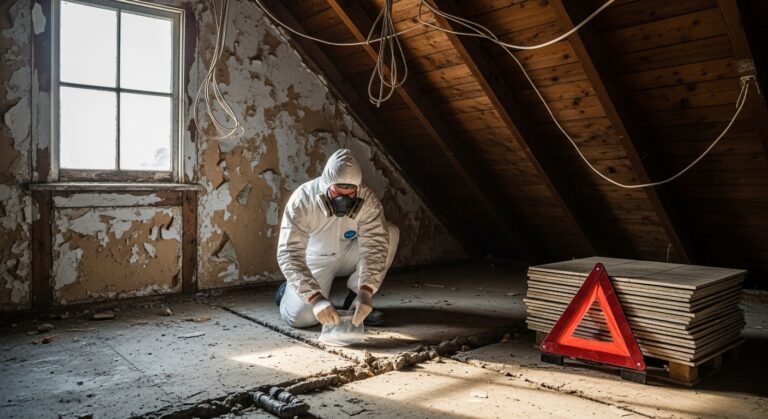
When planning a demolition or major renovation in Arkansas, property owners and contractors face a critical regulatory hurdle that is often overlooked until it stops a project cold. Arkansas Regulation 21 sets the legal framework for asbestos inspection before any demolition or renovation activity can begin. Failing to comply with this rule does not just invite fines. It creates serious health risks for workers and the surrounding community. Understanding the specific requirements of this regulation is essential for anyone who owns, manages, or works on buildings in the Natural State.
Asbestos was once a common building material prized for its fire resistance and insulating properties. It appears in floor tiles, roofing shingles, pipe insulation, siding, and many other products installed in homes and commercial buildings before the 1980s. When these materials remain intact and undisturbed, they pose little risk. However, demolition and renovation activities disturb these materials, releasing microscopic fibers into the air. These fibers can cause lung cancer, mesothelioma, and asbestosis. Arkansas Regulation 21 exists specifically to prevent this exposure by mandating thorough inspection and safe removal before any structural work begins.
What Arkansas Regulation 21 Requires for Demolition
Arkansas Regulation 21 is the state’s implementation of the National Emission Standards for Hazardous Air Pollutants (NESHAP) for asbestos. The regulation applies to all demolition projects, regardless of the building’s size or age. It also applies to renovation projects that involve the removal of a certain amount of regulated asbestos-containing material. The key requirement is that the owner or operator of a demolition or renovation activity must thoroughly inspect the affected facility for the presence of asbestos before any demolition or renovation work begins.
The inspection must be conducted by a licensed asbestos inspector who follows specific procedures. The inspector must sample suspect materials and send those samples to a laboratory accredited by the National Voluntary Laboratory Accreditation Program. The laboratory analysis determines whether asbestos is present and, if so, what percentage of the material contains asbestos. This information is documented in an inspection report that must be kept on file and made available to the Arkansas Department of Energy and Environment’s Division of Environmental Quality.
For demolition projects, the notification requirements are equally strict. The owner or operator must provide written notification to the Division of Environmental Quality at least ten working days before the demolition begins. This notification must include the inspection results, the start date, the methods of asbestos removal, and the disposal location for any asbestos waste. Failure to provide this notification in a timely manner can result in significant penalties and project delays.
When Is an Asbestos Inspection Legally Required?
Many property owners assume that an asbestos inspection is only necessary for older buildings or large commercial structures. Arkansas Regulation 21 makes no such distinction. The inspection requirement applies to all buildings that were constructed before the effective date of the federal asbestos ban, which is generally considered to be 1980. However, because asbestos-containing materials continued to be used in some products well into the 1980s and even 1990s, a cautious approach dictates that any building constructed before 1990 should be inspected before demolition or major renovation.
The regulation covers both residential and commercial structures. This includes single-family homes, apartment buildings, office buildings, schools, churches, and industrial facilities. The only exceptions are for very small renovations that disturb a limited amount of material. Specifically, the regulation exempts renovation projects where the amount of regulated asbestos-containing material being removed is less than 260 linear feet on pipes, less than 160 square feet on other surfaces, or less than 35 cubic feet. However, this exemption only applies if the material has been confirmed through inspection to be non-asbestos or if it falls below the regulatory threshold for regulated asbestos-containing material.
It is important to note that even if a project qualifies for the small-scale exemption, the regulation still requires that any asbestos-containing material be handled and disposed of properly. The exemption simply removes the requirement for a full notification and work practice procedures. Property owners who attempt to bypass inspection by claiming a small-scale exemption without actual confirmation often find themselves facing enforcement actions when the material turns out to contain asbestos.
The Role of the Licensed Asbestos Inspector
Arkansas Regulation 21 requires that inspections be performed by a person who is licensed by the state. The licensing process involves completing an accredited training course, passing an examination, and maintaining continuing education credits. The inspector must be independent from the demolition contractor to avoid any conflict of interest. The inspection itself is a systematic process that involves visually examining the building, identifying suspect materials, and collecting samples for laboratory analysis.
A thorough inspection covers all areas of the building that will be affected by the demolition or renovation. This includes not only the obvious locations like ceilings and walls but also hidden areas such as behind paneling, above dropped ceilings, and inside mechanical rooms. The inspector must also consider materials that may be buried or encapsulated, such as old floor tiles covered by newer flooring. The goal is to identify all asbestos-containing materials so that they can be removed safely before the demolition begins.
Once the laboratory results are received, the inspector prepares a comprehensive report that includes the location of each sample, the laboratory analysis results, and a determination of whether the material is regulated asbestos-containing material. This report becomes the foundation for the asbestos abatement plan and the notification to the regulatory agency. Property owners should keep a copy of this report for their records, as it may be required during property transactions or future renovations.
Penalties for Non-Compliance With Regulation 21
The consequences of failing to comply with Arkansas Regulation 21 can be severe. The Arkansas Division of Environmental Quality has the authority to issue fines of up to $25,000 per day for each violation. These fines can accumulate quickly, especially if a project proceeds without an inspection or without proper notification. In addition to financial penalties, the agency can issue stop-work orders that halt the entire project until compliance is achieved. This can lead to significant delays and increased costs for contractors and property owners.
Beyond the regulatory penalties, there are also legal liabilities. Property owners who fail to conduct an asbestos inspection before demolition may be held responsible for exposing workers and the public to asbestos fibers. This can result in personal injury lawsuits, workers’ compensation claims, and even criminal charges in cases of willful negligence. Contractors who perform demolition without verifying that an inspection has been completed may also face liability, as they have a duty to ensure a safe work environment.
Insurance coverage is another consideration. Many general liability and workers’ compensation policies exclude coverage for asbestos-related claims. If a property owner or contractor proceeds with demolition without a proper asbestos inspection, they may find that their insurance does not cover any resulting claims. This leaves them personally responsible for medical expenses, legal fees, and settlements. In our guide on Batesville waste disposal services and local regulations, we explain how local rules can affect project planning and waste management.
The Asbestos Abatement Process Under Regulation 21
If the inspection reveals the presence of asbestos-containing materials, the next step is abatement. This is the process of removing or encapsulating the asbestos to prevent fiber release. Arkansas Regulation 21 requires that abatement be performed by a licensed asbestos abatement contractor who follows strict work practices. These practices include wetting the material to suppress dust, using negative air pressure enclosures, and wearing appropriate personal protective equipment.
The abatement process typically involves the following steps:
- Setup of containment barriers to isolate the work area from the rest of the building and the outside environment.
- Installation of negative air machines equipped with HEPA filters to create a pressure differential that prevents fibers from escaping.
- Removal of asbestos-containing materials using hand tools and wet methods to minimize dust generation.
- Placement of removed materials in leak-tight containers or bags that are properly labeled as asbestos waste.
- Decontamination of workers and equipment before leaving the containment area.
After the asbestos has been removed, the abatement contractor must conduct a visual inspection and air monitoring to verify that the area is free of asbestos fibers. Only after this clearance is obtained can the demolition or renovation proceed. The asbestos waste must be transported to a landfill that is approved to accept asbestos waste. The waste must be accompanied by a waste shipment record that documents the origin, quantity, and disposal location. This record must be kept for a minimum of two years.
How Regulation 21 Affects Different Types of Demolition Projects
The impact of Regulation 21 varies depending on the nature and scale of the demolition project. For a small residential demolition, such as tearing down a single-family home, the inspection and notification requirements are the same as for a large commercial building. The owner must still hire a licensed inspector, collect samples, and provide ten working days notice to the regulatory agency. The only difference may be in the amount of asbestos found and the complexity of the abatement.
For commercial and industrial demolitions, the stakes are higher because these buildings often contain large amounts of asbestos-containing materials. Pipe insulation, boiler wrap, ceiling tiles, and floor tiles are common in commercial structures. The abatement process for these materials can be extensive and costly. Contractors must plan for the abatement to be completed before the main demolition begins, which adds time and expense to the project schedule.
Emergency demolitions, such as those following a fire or natural disaster, are subject to different rules. The regulation allows for a reduced notification period in emergency situations, but the inspection and abatement requirements still apply. The property owner must notify the Division of Environmental Quality as soon as possible after the emergency occurs and must still conduct an inspection before proceeding with demolition. The inspection may be more challenging in an emergency situation because the building may be structurally unstable, but it is still legally required.
Common Mistakes and How to Avoid Them
One of the most common mistakes property owners make is assuming that a building is too new to contain asbestos. Asbestos was used in construction materials well into the 1990s, and some products imported from other countries may still contain asbestos today. Relying on the age of the building as a substitute for a professional inspection is a risky gamble that often leads to compliance issues.
Another frequent error is failing to provide the required ten working days notice. Property owners sometimes miscalculate the timeline or assume that the notification is not necessary for small projects. The regulation is clear that the notice period is ten working days, not calendar days, and that it applies to all demolitions regardless of size. Contractors should build this notice period into their project schedules from the outset.
Finally, some property owners attempt to perform the asbestos inspection themselves or hire an unlicensed inspector to save money. This is a violation of Regulation 21 and can result in fines and project delays. The inspection must be performed by a licensed professional who follows the proper sampling protocols. The cost of a professional inspection is minimal compared to the potential penalties for non-compliance.
Proper waste disposal is another area where mistakes occur. Asbestos waste must be disposed of at a landfill that is permitted to accept it. Ordinary construction and demolition debris landfills are not authorized to accept asbestos waste. Property owners should confirm with the landfill in advance that they accept asbestos and should obtain a waste shipment record for each load. Improper disposal can result in significant fines and cleanup costs.
Arkansas Regulation 21 is not merely a bureaucratic requirement. It is a public health measure that protects workers, residents, and the environment from the dangers of asbestos exposure. Property owners and contractors who take the time to understand and comply with this regulation not only avoid legal trouble but also contribute to a safer community. The upfront investment in inspection and abatement is far less costly than the long-term consequences of asbestos exposure.
For anyone planning a demolition or major renovation in Arkansas, the first step should always be to schedule an asbestos inspection by a licensed professional. This inspection provides the information needed to plan the project, obtain the necessary permits, and ensure that the work is done safely and legally. By following the requirements of Regulation 21, property owners can proceed with confidence, knowing that they have met their legal obligations and protected the health of everyone involved.