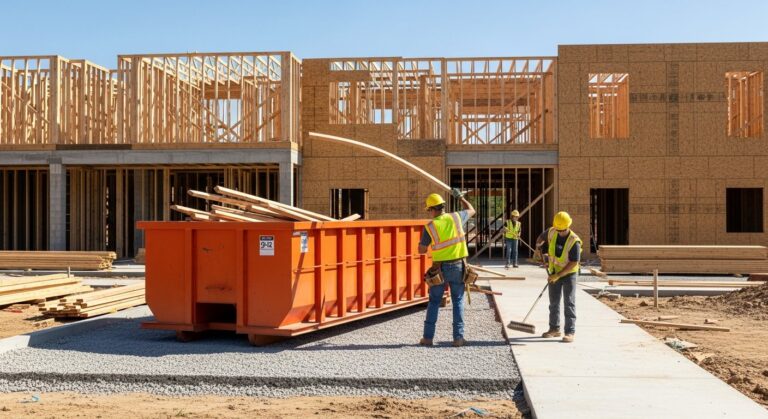
Construction site safety is not just about hard hats and harnesses. It is about the entire environment where crews work, including how waste is managed. In Arkansas, general contractors and site supervisors face strict regulations from OSHA and the Arkansas Department of Environmental Quality (ADEQ) that directly tie debris handling to worker safety. A cluttered site creates trip hazards, fire risks, and pest problems. This is where Arkansas dumpster rental for construction site safety compliance becomes a critical tool. Choosing the right waste solution helps you maintain clear walkways, contain hazardous materials, and pass inspections without last-minute scrambling.
How Waste Management Directly Affects Site Safety
Every construction project generates debris: lumber scraps, drywall, concrete, metal, packaging, and sometimes hazardous substances like paint thinners or sealants. When these materials pile up in corners, along pathways, or near scaffolding, they create immediate physical dangers. Workers can trip over loose boards, step on nails, or lose footing on uneven piles. A proper dumpster rental removes these hazards by providing a single, designated location for all waste.
Beyond trip hazards, improper waste storage can lead to airborne dust and chemical exposure. For example, cutting treated lumber or mixing certain adhesives releases particles that should be contained. Open piles allow these contaminants to spread across the site. A covered or properly positioned dumpster helps control dust and keeps toxic materials away from breathing zones. In our guide on Appliance Disposal Arkansas Dumpster Rental Made Simple, we explain how proper containment prevents cross-contamination and protects workers.
OSHA Standards and Arkansas Specific Regulations
The Occupational Safety and Health Administration sets clear rules for housekeeping on construction sites. Standard 1926.25 requires employers to keep scrap lumber, waste material, and debris in containers or stored safely. It also mandates that removal of debris from floors and roofs happens frequently. Failing to comply can result in fines, stop-work orders, or increased insurance premiums.
Arkansas adds its own layer of oversight through ADEQ. Construction waste that includes hazardous components must be separated and disposed of according to state guidelines. Dumpster rental services that offer mixed-waste or segregated-stream options help you stay compliant. For instance, if your project involves demolition of an older structure, you may encounter lead-based paint or asbestos. A compliant rental provider will advise on proper container labeling and pickup schedules to meet ADEQ standards.
Choosing the Right Dumpster Size for Safety
Selecting the correct dumpster volume is a safety decision, not just a cost decision. An undersized dumpster fills quickly, forcing crews to stack waste around it or delay disposal. This defeats the purpose of the rental. An oversized dumpster may be difficult to place without blocking emergency exits or access roads.
Consider these common site scenarios and matching dumpster sizes:
- Small renovation or remodel (10-15 yards): Best for interior demolition, drywall removal, and light framing debris. Fits in a driveway or small staging area without blocking walkways.
- Medium new construction (20-30 yards): Suitable for houses, townhomes, or small commercial builds. Handles lumber, siding, roofing, and packaging waste. Ensure placement does not obstruct fire lanes.
- Large commercial or industrial (30-40 yards): For major projects with heavy debris like concrete, steel, and large fixtures. Requires a flat, stable surface away from trenches or heavy equipment paths.
After choosing size, verify that the container has low sides for safe loading and that the rental company provides a door or ramp if workers will be loading by hand. This reduces strain and fall risks.
Placement Strategies That Improve Compliance
Where you put the dumpster matters as much as what goes inside it. Poor placement can create blind spots for equipment operators, block emergency exits, or interfere with fire hydrants. Follow these placement rules to maintain safety and pass inspections.
First, keep the dumpster on stable, level ground. Soft or sloped surfaces can cause the container to shift, tip, or sink, especially when loaded with heavy materials like concrete. Use plywood or gravel pads if necessary. Second, maintain a clearance of at least ten feet from any building opening, such as doors or windows, to prevent odor or pests from entering the structure. Third, ensure that the dumpster does not block access for emergency vehicles. Fire trucks need at least 20 feet of clear width on access roads.
Finally, consider pedestrian and vehicle traffic flow. Position the dumpster so that delivery and pickup trucks can approach and leave without reversing through active work zones. This minimizes the risk of backing accidents, which are among the most common causes of construction site fatalities.
Hazardous Waste Segregation and Compliance
Not all construction waste is equal. Ordinary debris like wood, drywall, and metal can go into a standard roll-off dumpster. However, materials classified as hazardous require special handling. Common hazardous items found on Arkansas construction sites include oil-based paints, solvents, adhesives, fluorescent light bulbs containing mercury, and lead-based paint chips from older buildings.
Mixing hazardous waste with general debris violates ADEQ regulations and can lead to significant fines. It also endangers workers who handle the dumpster. If hazardous materials are present, you must segregate them into approved containers and arrange for specialized disposal. Many Arkansas dumpster rental companies offer separate bins for these materials or can recommend licensed hazardous waste transporters.
To stay compliant, post clear signage on the dumpster listing prohibited items. Include a list of accepted materials and a contact number for questions. This reduces confusion among subcontractors and prevents accidental contamination.
Loading Practices That Prevent Injuries
Even with a perfectly placed dumpster, unsafe loading habits can cause injuries. Workers should never throw debris from heights into the container. Instead, use a chute or lower materials by hand. Heavy items like concrete blocks or steel beams should be placed on the bottom of the dumpster, with lighter materials on top, to prevent shifting during transport.
Another common hazard is overloading. A dumpster filled above the rim line is dangerous for drivers who must transport it. Debris can fall off during transit, causing road hazards or injuries to other drivers. Most rental contracts specify a maximum fill line. Respecting that limit is both a safety and legal requirement. If your site generates more waste than expected, order an additional dumpster or schedule a mid-project pickup.
Personal protective equipment (PPE) should be worn by anyone loading the dumpster. Gloves protect against cuts from sharp metal or broken glass. Safety glasses prevent dust and debris from entering eyes. Steel-toed boots guard against dropped heavy objects. Make PPE a requirement for all site personnel, not just those directly handling waste.
Seasonal Considerations for Arkansas Construction Sites
Arkansas weather varies significantly from summer heat to winter storms. Each season presents unique challenges for dumpster use and site safety. In summer, high temperatures can cause chemical reactions in certain waste materials. For example, aerosol cans left in direct sunlight can explode. Place dumpsters in shaded areas when possible, and avoid storing flammable waste in metal containers that absorb heat.
Winter brings rain, ice, and mud. Wet debris is heavier and more likely to stick to the dumpster walls, making loading difficult. Snow and ice can accumulate around the container, creating slip hazards. Keep the area around the dumpster clear and apply salt or sand as needed. Also, schedule pickups before heavy storms to avoid delays that lead to overflowing waste.
Spring and fall often bring wind. Light materials like plastic sheeting, cardboard, and foam can blow out of an open dumpster and scatter across the site or nearby properties. Use a tarp or netting to cover the container when not in active use. This prevents litter, reduces fire risk from windblown materials, and keeps the site looking professional for inspectors.
Documentation and Record Keeping
Compliance is not just about physical safety. It also involves paperwork. Arkansas construction sites should maintain records of dumpster rental agreements, waste disposal manifests, and any hazardous waste transfer documents. These records prove that you disposed of materials legally and can be crucial during an OSHA inspection or ADEQ audit.
Keep a log of each dumpster delivery and pickup, noting dates, container size, and the type of waste loaded. If your project involves hazardous materials, retain the manifests for at least three years. Many rental companies provide digital records or copies of weigh tickets. Store these in a project binder or cloud-based system accessible to the site supervisor and safety officer.
Having organized documentation also helps when coordinating with subcontractors. If a plumbing or electrical crew generates specialized waste, you can track what they disposed of and ensure it was handled correctly. This level of detail demonstrates due diligence and can reduce liability in case of an incident.
Training Your Crew on Dumpster Safety
A dumpster is only as safe as the people using it. Provide clear training to all site personnel on proper waste handling procedures. Cover these key points: what materials are allowed in the dumpster, how to load heavy items safely, the maximum fill line, and the location of the dumpster in relation to emergency exits.
Hold a brief safety meeting at the start of each project phase. For example, during demolition, remind workers to separate metal from wood and to avoid throwing debris from upper floors. During finishing work, emphasize proper disposal of chemical containers and paint cans. Reinforce these habits with posters or signs near the dumpster.
Encourage workers to report safety concerns about the dumpster area, such as overflow, leaks, or damage to the container. Address these issues promptly. A small crack in the dumpster floor can leak fluids that create slip hazards. A damaged door can pinch fingers. Regular inspections of the dumpster itself are part of a comprehensive safety program.
Cost Benefits of Prioritizing Safety Through Dumpster Rental
Some contractors view dumpster rental as an expense rather than an investment in safety. In reality, proper waste management saves money by reducing accident risks, avoiding fines, and improving productivity. A single OSHA fine for housekeeping violations can range from several hundred to tens of thousands of dollars, depending on severity. Dumpster rental costs are modest in comparison.
Additionally, a clean, organized site allows workers to move faster and with fewer interruptions. They spend less time navigating around debris piles and more time on actual construction tasks. This efficiency can shorten project timelines and reduce labor costs. When you factor in the potential for lower insurance premiums due to fewer claims, the financial case for compliant dumpster use becomes clear.
Arkansas dumpster rental for construction site safety compliance is not a one-time decision. It requires ongoing attention to size, placement, loading, and disposal practices. But the payoff is a safer worksite, fewer compliance headaches, and a reputation as a responsible contractor.
Taking the time to evaluate your waste stream and choose the right rental partner will pay dividends throughout your project. Whether you are building a new home in Fayetteville or renovating a commercial space in Little Rock, safe waste management is a non-negotiable part of the job. By integrating dumpster rental into your overall safety plan, you protect your crew, your budget, and your standing with regulators.