
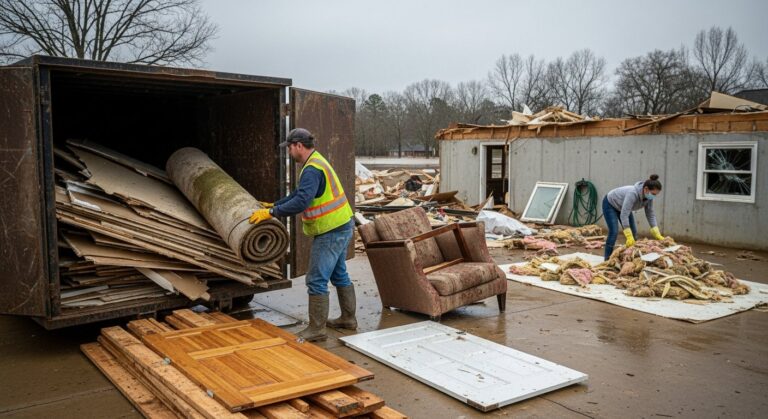
When floodwaters recede, the real work begins. In Arkansas, where heavy spring rains and flash floods are a recurring threat, homeowners and businesses face the daunting task of cleaning up water-damaged property. But clearing debris is only half the battle. Proper flood cleanup waste disposal in Arkansas requires following specific guidelines to protect public health, comply with state regulations, and avoid costly fines. Whether you are dealing with soaked drywall, ruined furniture, or contaminated silt, understanding the rules before you haul anything away can save you time, money, and legal headaches.
Flood waste is not ordinary trash. It often contains hazardous materials like sewage, chemicals, mold, and sharp objects. The Arkansas Department of Environmental Quality (ADEQ) and local municipal authorities have established clear protocols for sorting, transporting, and disposing of flood debris. This article walks you through those flood cleanup waste disposal Arkansas guidelines step by step, so you can restore your property safely and legally.
Understanding Flood Debris Categories
Arkansas regulations require that flood waste be separated into distinct categories before disposal. Mixing different types of debris can contaminate entire loads and lead to rejection at landfills or recycling centers. The ADEQ recognizes several primary categories that every property owner should know.
Construction and demolition debris includes drywall, wood, siding, insulation, flooring, and roofing materials that have been damaged by water. These items cannot go into standard household trash bins because they are heavy, bulky, and often contain mold or asbestos. Household hazardous waste covers paints, solvents, cleaners, pesticides, batteries, and propane tanks that may have leaked or become unstable during flooding. These require special handling and cannot be placed in curbside collection. White goods such as refrigerators, washing machines, and water heaters must be drained of any residual water and refrigerants before disposal. Electronics like televisions, computers, and phones contain heavy metals and are banned from Arkansas landfills under state e-waste laws. Vegetative debris including trees, branches, leaves, and grass clippings should be kept separate because they are often chipped or composted rather than landfilled. Putrescible waste such as food, dead animals, and sewage-contaminated materials requires immediate disposal at a permitted facility to prevent disease outbreaks.
Failing to sort these categories correctly can result in rejected loads and additional fees. Many Arkansas counties offer temporary debris collection sites after major floods, but they enforce strict separation rules. Understanding these categories is the first step in compliant flood cleanup waste disposal in Arkansas.
Local Regulations and Permits
Arkansas does not have a single statewide rule for flood debris disposal. Instead, regulations vary by county and municipality. However, the ADEQ sets baseline standards that all local programs must meet. For example, any waste that contains asbestos must be handled by a licensed abatement contractor and disposed of at a permitted asbestos landfill. Similarly, floodwaters that have come into contact with oil, chemicals, or sewage create hazardous waste that cannot go to a standard municipal solid waste landfill without special approval.
Most Arkansas cities require a permit for any dumpster placed on a public street or sidewalk during cleanup. If you rent a roll-off dumpster for flood debris, confirm with the rental company that they have the necessary permits and that your waste will be taken to an approved facility. The Real Deal Dumpsters, for instance, handles all permitting for Arkansas customers and ensures that flood debris is sorted and delivered to the correct disposal sites. This eliminates the risk of fines and keeps your project moving forward.
Additionally, some counties issue temporary waivers for flood debris disposal fees after a declared disaster. Check with your local emergency management office or county solid waste department to see if fee waivers are in effect. These waivers often expire within 30 to 60 days, so act quickly if you qualify.
Hazardous Materials and Special Handling
Floodwater is rarely clean. It picks up everything from lawn chemicals to automotive fluids to raw sewage. As a result, many items that were safe before a flood become hazardous afterward. Arkansas guidelines require that any material that has absorbed floodwater and cannot be effectively cleaned must be treated as contaminated waste. This includes carpets, upholstered furniture, mattresses, pillows, and stuffed toys. These items should be double-bagged in heavy-duty plastic and disposed of at a lined landfill that accepts household hazardous waste.
If you find containers of household chemicals that are damaged or leaking, do not open them. Place the entire container in a plastic bucket or box with a secure lid and label it as hazardous. Many Arkansas counties host household hazardous waste collection events periodically, but after a flood, they may set up special drop-off locations. Contact your county solid waste office for the nearest site.
For electronics, Arkansas law prohibits disposing of computers, monitors, televisions, printers, and other e-waste in the trash. Flood-damaged electronics must be taken to a certified e-waste recycler. Some retailers and manufacturers offer take-back programs, but be aware that flood-damaged units may not be accepted. In that case, a licensed recycler is your best option. In our guide on e-waste disposal in Arkansas, dumpster vs recycling centers, we explain how to choose the right method for your damaged electronics.
Dumpster Rental for Flood Cleanup
Renting a dumpster is often the most efficient way to manage large volumes of flood debris. A roll-off dumpster can be delivered to your driveway or job site and picked up when full, eliminating multiple trips to the landfill. However, not all dumpster rental companies in Arkansas are equipped to handle flood waste. You need a provider that understands the specific disposal requirements for water-damaged materials.
When you rent a dumpster for flood cleanup, the rental company should provide clear instructions on what can and cannot go inside. Most Arkansas dumpster companies prohibit hazardous waste, tires, batteries, and refrigerants. They will also require that debris be loaded loosely and not packed too tightly, as weight limits apply. For mixed loads of construction debris, furniture, and vegetative waste, a 20-yard or 30-yard dumpster is usually sufficient for a typical home flood cleanup.
Before the dumpster arrives, separate your debris into the categories listed above. Place non-hazardous construction materials in the dumpster. Keep hazardous waste, electronics, and white goods aside for separate disposal. Many dumpster companies offer additional services for these items, but they often come at an extra cost. Ask your provider about their policy for flood debris to avoid surprises.
The Real Deal Dumpsters serves Arkansas homeowners and contractors with flood cleanup waste disposal solutions. They coordinate directly with local landfills and recycling centers to ensure that every load meets state guidelines. Their team can advise you on sorting requirements and provide the right size container for your project. Using a knowledgeable rental company simplifies the process and helps you avoid costly mistakes.
Steps for Compliant Flood Waste Disposal
Following a systematic approach to flood debris management will keep your cleanup on track and within the law. Here is a step-by-step process based on Arkansas guidelines:
Step 1: Assess and Document. Before moving anything, walk through your property and identify all damaged items. Take photographs for insurance purposes. Note any items that may contain hazardous materials, such as old paint cans or cleaning products.
Step 2: Sort Immediately. Set up separate piles or containers for each debris category: construction debris, household hazardous waste, electronics, white goods, vegetative debris, and putrescible waste. Use clear labels or color-coded bags to avoid confusion.
Step 3: Protect Yourself. Wear rubber gloves, waterproof boots, an N95 mask, and eye protection when handling flood debris. Contaminated water can cause skin infections, and mold spores can trigger respiratory problems. Wash hands and clothes thoroughly after each work session.
Step 4: Arrange Disposal for Each Category. Contact your local solid waste authority to find out which facilities accept each type of debris. Some landfills have separate areas for construction debris, vegetative waste, and household trash. Hazardous waste and electronics require special drop-off locations.
Step 5: Use a Dumpster for Bulk Non-Hazardous Waste. Rent a roll-off dumpster for large volumes of construction debris, furniture, and other non-hazardous items. Confirm with the rental company that they will deliver the waste to an approved facility. Avoid overfilling the dumpster, as overweight loads can result in extra fees.
Step 6: Dispose of Hazardous Waste Properly. Take household hazardous waste to a designated collection site. Never pour chemicals down drains or onto the ground. For electronics, use a certified e-waste recycler. For white goods, ensure refrigerants are removed by a licensed technician before disposal.
Step 7: Keep Records. Save receipts, permits, and disposal manifests for all flood waste. Insurance companies and tax authorities may request documentation of your cleanup efforts. ADEQ inspectors may also ask for proof of proper disposal if you are in a regulated area.
Common Mistakes to Avoid
Even well-intentioned property owners can run afoul of Arkansas disposal rules. One common error is mixing household trash with flood debris. Regular garbage trucks are not equipped to handle wet, heavy construction materials, and landfills may reject entire loads if they contain prohibited items. Another mistake is placing hazardous waste in a dumpster. If a landfill discovers paint, batteries, or electronics in a mixed load, the dumpster company may be fined, and that cost is often passed to the customer.
Dumping flood debris on private land or in unauthorized areas is illegal in Arkansas and carries severe penalties. Illegal dumping can result in fines of up to $10,000 per violation and even jail time for repeat offenders. Always use permitted facilities or licensed haulers. Finally, do not delay disposal. Flood debris that sits for weeks can breed mold, attract pests, and create public health hazards. Arkansas guidelines recommend completing debris removal within 30 days of a flood event.
Environmental and Health Considerations
Flood waste disposal is not just about following rules. It is about protecting Arkansas’s natural resources and community health. Floodwaters often carry bacteria like E. coli and salmonella, as well as viruses and parasites. When debris is improperly disposed of, these pathogens can leach into groundwater or be spread by wind and animals. Mold spores from wet drywall and insulation can cause allergies, asthma attacks, and long-term respiratory damage.
By adhering to flood cleanup waste disposal Arkansas guidelines, you help prevent contamination of rivers, lakes, and drinking water supplies. Proper disposal also reduces the burden on local landfills, which can become overwhelmed after a major flood. Many Arkansas communities have established debris management plans that include recycling of metal, concrete, and wood. Whenever possible, choose recycling over landfilling to support sustainability.
The state of Arkansas encourages residents to use certified disposal facilities and licensed haulers. The ADEQ maintains a list of permitted landfills, transfer stations, and recycling centers on its website. If you are unsure about a specific item, call the facility ahead of time to confirm acceptance. Better to ask than to haul a load that gets turned away.
Flood cleanup is exhausting and stressful, but proper waste disposal does not have to be complicated. By understanding the categories, knowing local regulations, and working with experienced professionals, you can restore your property without adding legal or environmental problems to your list. Whether you rent a dumpster or haul debris yourself, always prioritize safety and compliance. The peace of mind is worth the extra effort.