Few home improvement projects generate as much debris as gutting a kitchen or bathroom. After you pull out old cabinets, rip up tile, and remove drywall, the pile of waste can be overwhelming. Without a clear plan for handling this interior demolition waste, your kitchen bathroom remodel can stall for days. That is where a solid dumpster strategy becomes essential. This guide covers exactly how to manage interior demolition waste for a kitchen or bathroom remodel in Arkansas, including dumpster sizing, prohibited items, cost factors, and local regulations. Whether you are a homeowner tackling a DIY renovation or a contractor managing multiple job sites, knowing what to expect will save you time, money, and frustration.
Understanding Interior Demolition Waste in Kitchen and Bathroom Remodels
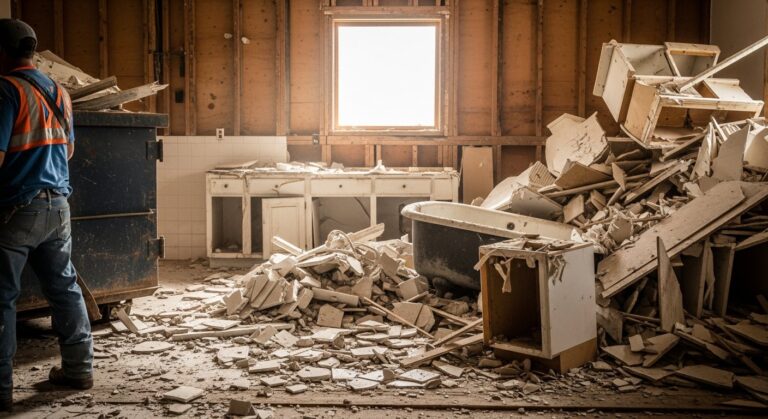
Interior demolition waste is the debris created when you strip a room down to its structural elements. In a kitchen remodel, this typically includes old cabinets, countertops, laminate flooring, drywall, plumbing fixtures, and appliances. Bathroom demolition adds tile, shower pans, vanities, toilets, and sometimes cast-iron tubs. The volume of this waste can be deceiving. A small bathroom can produce 500 to 1,000 pounds of debris, while a full kitchen demolition can generate 2,000 to 4,000 pounds or more.
Arkansas does not have a single statewide ordinance for construction and demolition debris, but local municipalities like Little Rock, Fayetteville, and Fort Smith have specific rules about what can go in a dumpster and what must be recycled or disposed of separately. Understanding these rules before you start tearing out walls will keep your project compliant and avoid unexpected fines. For example, appliances containing refrigerants (refrigerators, freezers, air conditioners) often require special handling and cannot simply be tossed into a mixed waste dumpster.
One of the most common mistakes homeowners make is underestimating the weight of demolition debris. Wet drywall, concrete backer board, and old cast-iron fixtures are extremely heavy. If you rent a dumpster that is too small or exceed the weight limit, you may face overage charges that blow your budget. That is why it is critical to match your dumpster size to the scope of your project.
Choosing the Right Dumpster Size for Your Arkansas Remodel
Selecting the correct dumpster size for interior demolition waste from a kitchen or bathroom remodel depends on the square footage of the room, the materials being removed, and whether you are doing a partial or full gut. Below is a practical breakdown of common dumpster sizes and which projects they fit best.
10-Yard Dumpster: Small Bathroom or Powder Room
A 10-yard dumpster holds about 10 cubic yards of material, roughly equivalent to three pickup truck loads. This size works well for a small bathroom remodel where you are removing a vanity, toilet, fiberglass shower stall, and some tile. It is also suitable for a half-bath or powder room demolition. Keep in mind that if your bathroom has heavy tile flooring or a concrete shower pan, the weight may approach the dumpster’s limit. Always confirm the weight allowance with your rental provider.
15-Yard Dumpster: Standard Bathroom or Small Kitchen
A 15-yard dumpster is the sweet spot for most standard bathroom remodels and smaller kitchen gut jobs. It holds roughly 4.5 to 5 tons of material. This size can accommodate the debris from removing a full set of kitchen cabinets, countertops, a sink, and basic flooring. If you are also pulling out appliances like a dishwasher or stove, a 15-yard dumpster will handle that as well, provided you remove doors and secure them properly.
20-Yard Dumpster: Full Kitchen or Master Bathroom
For a full kitchen remodel with extensive cabinetry, granite or quartz countertops, heavy tile, and multiple appliances, a 20-yard dumpster is the most common choice. It holds about 6 to 7 tons. This size is also appropriate for a master bathroom demolition that includes a large soaking tub, double vanity, and floor-to-ceiling tile. Many Arkansas contractors choose a 20-yard dumpster because it provides enough capacity for the debris while still fitting in most driveways.
30-Yard Dumpster: Whole-Home Interior Demolition or Large Renovation
If your project involves gutting multiple rooms, such as a kitchen and two bathrooms simultaneously, or if you are doing a whole-home interior demolition, a 30-yard dumpster is the right choice. It holds up to 9 tons of material. Be aware that a 30-yard dumpster requires significant space for placement and may not fit in a narrow driveway or tight urban lot. Check with your city for any permits needed for large dumpsters placed on the street.
As a general rule, it is better to size up one level rather than risk overfilling or exceeding weight limits. Overage fees can range from $50 to $100 per ton, which can quickly add up. If you are unsure, consult with your dumpster rental company. They have experience with Arkansas remodels and can guide you based on the specifics of your project.
What Can and Cannot Go in an Interior Demolition Dumpster
Even though interior demolition waste from a kitchen or bathroom remodel is mostly non-hazardous, there are important restrictions. The following lists outline what is generally accepted and what requires special handling.
Items typically allowed in a mixed construction debris dumpster include:
- Wood, lumber, and plywood (including particle board and MDF)
- Drywall and plaster (without asbestos contamination)
- Cabinets, countertops, and vanities (laminate, wood, solid surface)
- Tile, ceramic, porcelain, and stone flooring
- Carpet, padding, and vinyl flooring (check if your provider accepts carpet separately)
- Plumbing fixtures (sinks, faucets, toilets, tubs, shower pans)
- Windows and mirrors (must be taped or wrapped to prevent shattering)
- Non-hazardous insulation (fiberglass batt, mineral wool)
Items that are prohibited or require separate disposal include:
- Appliances containing refrigerants (refrigerators, freezers, AC units, dehumidifiers)
- Electronics (televisions, computers, monitors)
- Paint, solvents, adhesives, and chemical containers
- Asbestos-containing materials (old flooring tiles, pipe insulation, popcorn ceilings)
- Batteries of any kind
- Tires and automotive waste
- Hazardous waste (oil, gasoline, pesticides, cleaners)
If your home was built before 1980, there is a higher chance that materials like floor tiles, ceiling tiles, or insulation contain asbestos. Arkansas law requires asbestos to be abated by a licensed professional and disposed of at a permitted facility. Never mix asbestos waste with your regular demolition debris. Doing so can result in significant fines and safety hazards for workers and the community.
For appliances like refrigerators and freezers, many Arkansas dumpster rental companies offer separate pick-up services or can point you to a local recycler that handles refrigerant recovery. Most landfills in the state require proof of refrigerant removal before accepting these items. Plan ahead so you are not left with a bulky appliance and nowhere to put it.
Dumpster Rental Costs and Factors in Arkansas
The cost of renting a dumpster for interior demolition waste from a kitchen or bathroom remodel in Arkansas varies based on dumpster size, rental duration, location, and the type of debris. On average, you can expect to pay between $250 and $600 for a 10 to 20-yard dumpster for a 7 to 10-day rental. Larger dumpsters or longer rental periods will cost more.
Several factors influence the final price. First, the weight of your debris matters. Most rental companies include a weight allowance in the base price, typically 2 to 4 tons for a 15-yard dumpster. If your demolition includes heavy materials like concrete, stone, or cast iron, you may exceed that allowance and incur overage charges. Second, your location within Arkansas affects pricing. Dumpster rentals in more rural areas may have higher delivery fees due to travel distance, while urban areas like Little Rock or Bentonville often have more competitive rates.
Third, the type of debris can affect cost. Some companies charge a premium for heavy debris like concrete or brick because it requires special disposal methods. If you are removing a concrete shower pan or heavy tile, ask your provider if there is a separate rate for concrete and masonry. Fourth, the rental period matters. Standard rentals are usually 7 to 10 days, but if your project runs longer, daily extension fees of $5 to $15 per day may apply. Some Arkansas companies offer flexible scheduling with no extra charge for a few extra days, so it pays to ask.
Finally, consider the cost of permits. If you plan to place the dumpster on a public street or sidewalk, your city may require a permit. For example, Little Rock charges a fee for street occupancy permits for dumpsters. Fayetteville and Springdale have similar requirements. Permit costs are typically $25 to $75, and the application process can take a few days. Factor this into your timeline and budget.
Step-by-Step Process for Renting a Dumpster in Arkansas
To ensure a smooth experience when renting a dumpster for your interior demolition waste, follow this step-by-step process.
- Estimate your debris volume. Measure the dimensions of your kitchen or bathroom and estimate the cubic footage of debris. Use online calculators or consult with your dumpster provider for guidance.
- Check for prohibited items. Identify any materials in your demolition that require special disposal, such as appliances with refrigerants, electronics, or potential asbestos. Make a separate plan for those items.
- Call multiple Arkansas dumpster rental companies. Request quotes based on your estimated volume and debris type. Ask about weight limits, rental periods, overage fees, and any additional charges for heavy materials.
- Choose a dumpster size and delivery date. Schedule delivery for the day before you begin demolition so the dumpster is ready when you need it. Confirm the drop-off location and ensure there is clear access.
- Prepare your site. Place plywood or boards under the dumpster to protect your driveway from damage. Mark any underground utilities if the dumpster will be placed on grass or near buried lines.
- Load the dumpster strategically. Place heavy items at the bottom and distribute weight evenly. Break down large items like cabinets and countertops to maximize space. Do not fill the dumpster above the fill line.
- Schedule pick-up. When your demolition is complete, call the rental company for pick-up. Most companies offer same-day or next-day service. Ensure the debris is level with the top of the dumpster and that no prohibited items are visible.
Following these steps will help you avoid common pitfalls like overfilling, exceeding weight limits, or violating local disposal rules. Many Arkansas homeowners find that renting a dumpster is actually more convenient and cost-effective than making multiple trips to the landfill, especially when you consider fuel costs, time, and the hassle of loading a truck.
Tips for Efficient Loading and Cost Savings
Maximizing the space inside your dumpster can reduce the number of rentals you need or help you stay within weight limits. Here are some practical tips for loading interior demolition waste efficiently.
First, break down large items before tossing them in. Remove cabinet doors, drawer fronts, and hardware. Knock down countertops into manageable sections. Tile and drywall can be stacked flat rather than thrown in haphazardly. Second, place heavy items like cast iron tubs, concrete backer board, or stone countertops at the bottom of the dumpster. This creates a stable base and allows lighter materials to fill the gaps above. Third, fill voids with smaller debris. Old insulation, small pieces of drywall, and broken tile can be packed into empty spaces between larger items.
Fourth, avoid overloading the dumpster. Most rental companies require that debris not extend above the top rail of the dumpster. Overfilling creates a safety hazard during transport and may result in additional fees. If you find that your debris is exceeding the fill line, stop and request a second dumpster or a swap-out. Fifth, separate recyclable materials if your rental company offers a discount for sorted loads. Some Arkansas facilities accept clean wood, metal, and cardboard for recycling at lower disposal rates.
Finally, consider the timing of your rental. If you are doing a phased renovation where you demolish the kitchen and then later the bathroom, you might save money by renting one larger dumpster for a longer period rather than two smaller ones. Discuss your project timeline with your rental provider to find the most economical option.
Local Arkansas Regulations and Environmental Considerations
Arkansas takes construction and demolition debris management seriously. The Arkansas Department of Environmental Quality (ADEQ) oversees landfill operations and sets standards for waste disposal. While individual cities and counties may have additional rules, all demolition waste must be disposed of at permitted facilities. Using an unlicensed hauler or dumping debris illegally can lead to fines and environmental damage.
For Arkansas homeowners, the most relevant regulation involves asbestos. The Arkansas Asbestos Abatement Program requires that any demolition or renovation of a building constructed before 1980 must be inspected for asbestos by a certified inspector. If asbestos is found, it must be removed by a licensed abatement contractor before any other demolition begins. This is not just a recommendation. It is the law. Failing to comply can result in penalties of up to $25,000 per day.
Another consideration is the disposal of gypsum drywall. While drywall is generally accepted in construction debris dumpsters, some Arkansas landfills have restrictions on the amount of drywall they can accept because it produces hydrogen sulfide gas when decomposing. If your project involves large quantities of drywall, your dumpster rental company may need to arrange for disposal at a facility that can handle it properly.
Recycling is encouraged for certain materials. Many Arkansas scrap metal yards accept old plumbing fixtures, copper pipes, and aluminum siding. Some building material reuse centers, such as Habitat for Humanity ReStores, accept gently used cabinets, vanities, and doors. Donating reusable items not only reduces waste but may also qualify you for a tax deduction. Check with local organizations before your demolition to see what they accept.
Working with a Dumpster Rental Company in Arkansas
Choosing the right dumpster rental company for your interior demolition project can make the difference between a smooth renovation and a stressful one. Look for a provider that offers transparent pricing, clear communication, and reliable delivery and pick-up. Many Arkansas companies specialize in construction debris and understand the specific needs of kitchen and bathroom remodels.
When you call a rental company, be prepared to describe your project in detail. Tell them the rooms you are demolishing, the types of materials you are removing, and any special items like appliances or heavy fixtures. Ask about weight limits, prohibited items, and what happens if you exceed the allowance. A good company will walk you through the process and help you choose the right size dumpster.
In our guide on fall yard waste removal dumpster Arkansas, we discuss similar considerations for seasonal cleanup projects. The same principles of sizing, weight management, and local regulations apply to interior demolition. The key difference is that interior demolition waste is often heavier and more varied, so working with an experienced provider is even more critical.
Many Arkansas dumpster rental companies offer same-day or next-day delivery, flexible rental periods, and competitive pricing. Some even provide dumpsters with low sides for easier loading of heavy items like bathtubs and countertops. Take advantage of free quotes from multiple providers to ensure you are getting the best value for your money.
Final Thoughts on Managing Interior Demolition Waste
Successfully managing interior demolition waste from a kitchen or bathroom remodel in Arkansas comes down to planning, proper sizing, and working with a trusted dumpster rental partner. By estimating your debris volume accurately, understanding what materials are allowed, and following local regulations, you can keep your project on track and avoid unexpected costs. The convenience of having a dumpster on site means you can focus on the exciting parts of your remodel rather than worrying about waste disposal. Whether you are updating a small powder room or gutting a large kitchen, the right dumpster makes all the difference.