
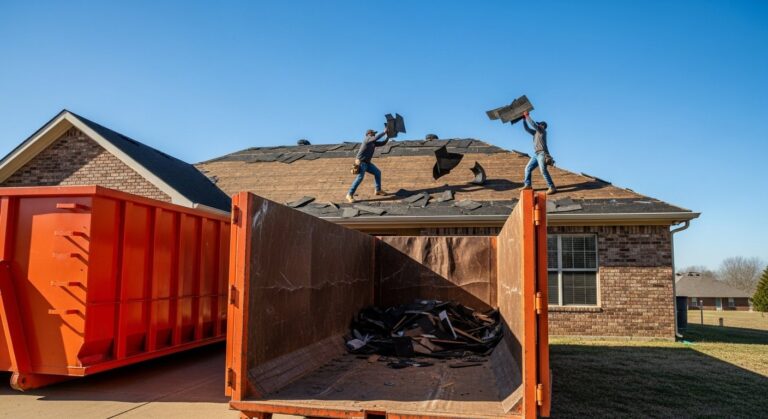
Replacing a roof is one of the most impactful home improvement projects an Arkansas homeowner can tackle. A new roof protects your family, boosts curb appeal, and increases property value. However, the aftermath of a tear-off leaves behind a massive pile of asphalt shingles, underlayment, nails, and felt paper. This debris is heavy, bulky, and often requires special handling. Without a proper plan, you face multiple trips to the landfill, potential fines from illegal dumping, and a yard littered with sharp debris. That is where Arkansas dumpster rental for roofing shingle disposal becomes an essential part of your project. Renting a dedicated roll-off container streamlines the entire cleanup process, allowing your crew to focus on the installation while the waste management takes care of itself.
Why Roofing Shingle Disposal Requires a Specialized Approach
Asphalt shingles are not ordinary household trash. A typical 30-square roof (roughly 3,000 square feet) generates between 2.5 and 4 tons of waste. This weight is significant because most standard dumpsters have strict weight limits. Exceeding those limits results in costly overage fees. Additionally, shingles are abrasive and can damage the interior of a standard garbage truck if not contained properly. Many municipal landfills also have specific regulations for construction and demolition (C&D) debris, which includes roofing materials. Using a dumpster rental specifically designed for heavy debris ensures compliance with local waste disposal rules and keeps your project running smoothly.
Another factor is the sheer volume of debris. Shingles come off in large, awkward pieces that do not compact easily. A dumpster with low sides and a wide opening allows for easier loading. The rental company will also know which local facilities accept shingles and how to handle any recyclable components. Some Arkansas landfills even recycle old asphalt shingles into pavement or aggregate, reducing environmental impact. By choosing a specialized service, you gain access to this knowledge and avoid the headache of navigating disposal regulations on your own.
Understanding Weight Limits and Dumpster Sizes for Roofing Debris
When you search for Arkansas dumpster rental for roofing shingle disposal, the first decision you will face is selecting the right container size. Roofing debris is dense. A 10-yard dumpster might hold the debris from a small shed or a single-layer repair, but it will reach the weight limit quickly. For most residential roof replacements, a 20-yard or 30-yard dumpster is the standard choice. A 20-yard container holds roughly 4 to 6 tons of material, which covers a 20- to 25-square roof. A 30-yard dumpster can handle up to 8 tons, making it suitable for larger homes or multi-layered tear-offs.
Weight limits are just as important as volume. Rental companies in Arkansas typically include a set tonnage in the rental price. For shingle disposal, you should confirm the weight allowance upfront. If you exceed that allowance, you pay a per-ton overage fee. To avoid surprises, discuss the specifics of your roof with the rental provider. They can estimate the weight based on the square footage and number of layers. It is always smarter to rent a slightly larger dumpster than to overload a smaller one and incur extra charges. In our guide on Appliance Disposal Arkansas Dumpster Rental Made Simple, we explain how proper planning prevents cost overruns. The same principle applies here: measure twice, rent once.
How to Estimate the Number of Dumpsters Your Roof Will Need
Accurately estimating your dumpster count starts with understanding your roof’s square footage. A roofing square is 100 square feet. A 30-square roof (3,000 square feet) with a single layer of shingles will produce approximately 3 tons of debris. If you are removing two layers of old shingles, that weight doubles to 6 tons. Here is a simple framework to help you calculate:
- Measure the roof area: Multiply the length by the width of each roof plane, then add them together. Divide by 100 to get the total squares.
- Factor in layers: A single layer adds about 1 ton of debris per 10 squares. Two layers add roughly 2 tons per 10 squares.
- Include underlayment and felt: Add 10 percent to your total weight estimate to account for felt paper, nails, and flashing.
Once you have your total tonnage estimate, compare it to the weight allowance of your chosen dumpster size. For a 30-square roof with two layers, a 30-yard dumpster with an 8-ton limit will likely be sufficient. If your roof is larger or has three layers, consider renting two dumpsters or a 40-yard container if available. Always confirm availability with your rental provider, as not all companies carry every size.
Key Factors That Affect Rental Costs in Arkansas
Pricing for Arkansas dumpster rental for roofing shingle disposal varies based on several factors. First is the dumpster size and weight allowance. Heavier allowances cost more because the disposal fees at the landfill are higher for shingles. Second is your location within Arkansas. Urban areas like Little Rock, Fayetteville, and Fort Smith often have lower delivery fees because the drop-off distances are shorter. Rural locations may incur a mileage surcharge. Third is the rental period. Most companies offer 7 to 14 days for a flat rate. If your project extends beyond that, daily extension fees apply. Fourth is the type of debris. Mixed debris (shingles plus wood, drywall, or metal) may have different disposal costs than pure shingle loads. Finally, seasonal demand plays a role. Spring and fall are peak roofing seasons in Arkansas, so prices may be slightly higher and availability tighter.
To get the best value, ask for an all-inclusive quote that covers delivery, pickup, disposal fees, and a reasonable weight allowance. Avoid companies that advertise extremely low base prices but charge high overage fees per ton. A transparent provider will explain exactly what is included and help you choose the right container for your specific shingle load.
Preparing Your Property for Dumpster Delivery
Before the dumpster arrives, you need to prepare a suitable drop-off location. The ideal spot is a flat, hard surface like a driveway or a compacted gravel area. The dumpster truck requires at least 60 feet of straight-line access and 14 feet of vertical clearance to maneuver. Check for low-hanging tree branches, power lines, or gutters that could obstruct the delivery. Place plywood sheets under the dumpster to protect asphalt driveways from the weight and potential oil stains. Communicate clearly with the driver about where you want the container placed. Once the dumpster is set, position it so the door (the hinged end) faces the work area. This allows you to walk heavy debris directly into the container without carrying it across the yard.
Also, consider the local permitting requirements. If you need to place the dumpster on a public street or sidewalk, your city or county may require a temporary right-of-way permit. In most Arkansas municipalities, placing a dumpster on your private driveway does not require a permit. However, if the only viable location is the street, check with the local public works department to avoid fines. Your rental company can often guide you on permit requirements for your specific area.
What You Can and Cannot Put in a Roofing Dumpster
While a roofing dumpster is designed for heavy construction debris, not everything from a roof replacement belongs inside. Acceptable items include asphalt shingles, felt underlayment, roofing nails (in small quantities), metal flashing, drip edge, and tar paper. You can also dispose of wooden sheathing if you are replacing the decking, though some companies prefer separate loads for wood and shingles due to different recycling streams.
Prohibited items almost always include household trash, food waste, hazardous materials (paint, solvents, chemicals), tires, batteries, and appliances containing refrigerants. Asbestos-containing materials are strictly forbidden and require specialized abatement services. If you are working on an older home built before 1980, have the roofing material tested for asbestos before scheduling the dumpster. Violating these rules can result in heavy fines from the landfill and additional cleaning fees from the rental company. When in doubt, ask your provider before loading questionable items.
Loading Techniques to Maximize Space and Avoid Overage Fees
Efficient loading is the key to getting the most out of your dumpster rental. Start by placing the heaviest debris (bundled shingles) at the bottom, spreading them evenly across the floor of the container. This creates a stable base and prevents the dumpster from becoming front-heavy. As you load, break down larger pieces of wood or metal to fit flat against the sides. Fill gaps between shingle bundles with smaller debris like torn felt or broken flashing. When the dumpster reaches about two-thirds full, stop and use the door to walk inside and tamp down the load. This step is critical because shingles are springy and trap air pockets. Compacting the load can reclaim 10 to 20 percent of your available volume. Do not stack debris above the rim of the dumpster. Overfilled containers are unsafe for transport and may be refused by the driver. If you are close to the weight limit but have more debris, consider scheduling a second pickup or swapping the container for a larger size.
Environmental Benefits of Proper Shingle Disposal in Arkansas
Arkansas is home to beautiful natural landscapes, from the Ozark Mountains to the Delta region. Responsible waste management helps preserve these environments. When you choose a professional Arkansas dumpster rental for roofing shingle disposal, your shingles are likely taken to a facility that recycles them into new products. Asphalt shingle recycling is a growing industry. The old shingles are ground up, screened, and mixed with new asphalt to create pavement, aggregate base, or even new roofing materials. This process diverts millions of tons of waste from landfills each year. It also reduces the demand for virgin asphalt and saves energy. By recycling your shingles, you contribute to a circular economy and lower your project’s carbon footprint. Always ask your rental provider if they partner with a recycling facility. Many companies in Arkansas now include recycling as part of their standard service at no extra cost.
Choosing the Right Rental Company for Your Roofing Project
Not all dumpster rental companies are equipped to handle roofing debris. When evaluating providers, look for one that specializes in construction and demolition waste. Ask about their experience with shingle disposal specifically. A reputable company will know the weight limits, local landfill regulations, and recycling options. They will also have a fleet of trucks with roll-off mechanisms that can handle heavy loads without damage. Read online reviews and ask for references from roofing contractors in your area. Pricing transparency is another sign of a good provider. They should provide a written quote that itemizes delivery, rental period, weight allowance, and disposal fees. Avoid companies that are vague about overage charges or refuse to explain their pricing structure. Finally, confirm their availability for your project timeline. During peak roofing season, popular dumpster sizes book up quickly. Reserve your container at least a week in advance to secure your spot.
Roofing a home is a significant investment. The cleanup phase should not add unnecessary stress or expense. By securing a dedicated dumpster rental designed for heavy shingle debris, you simplify the entire process. You protect your property, comply with local laws, and potentially save money by avoiding surprise fees. Whether you are a homeowner tackling a DIY roof replacement or a contractor managing multiple jobs, proper disposal planning makes all the difference. Take the time to choose the right dumpster size, load it efficiently, and work with a provider who understands the unique demands of roofing waste. Your new roof will look great, and your yard will thank you.