Renting a dumpster for a home renovation, construction project, or major cleanout in Arkansas can make waste disposal much easier. However, not everything you throw away can go into that roll-off container. Knowing which items are banned from dumpsters is critical to avoid fines, protect the environment, and keep your project on track. This prohibited items dumpster rental Arkansas guide covers the most common restricted materials, explains why they are prohibited, and provides safe disposal alternatives so you can stay compliant from start to finish.
Whether you are a homeowner clearing out a garage or a contractor managing a demolition site, understanding local regulations helps you plan ahead. Arkansas has specific rules regarding hazardous waste, electronics, and other materials that require special handling. By the end of this guide, you will know exactly what to keep out of your dumpster and how to dispose of those items legally. Let’s begin with the most important category: hazardous household waste.
Hazardous Household Waste: What You Cannot Throw in a Dumpster
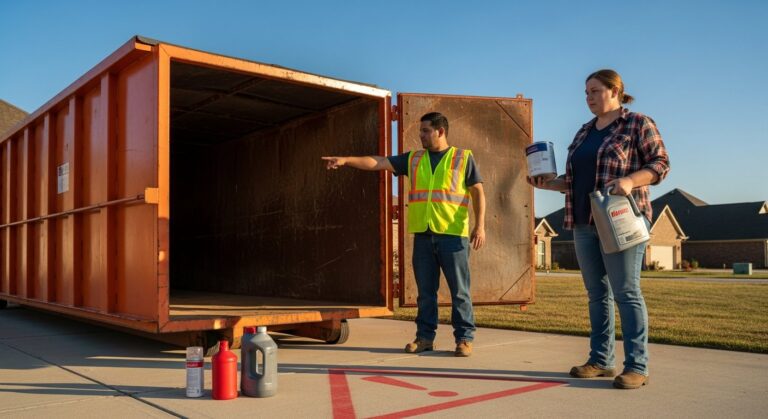
Hazardous household waste (HHW) includes any product that is flammable, corrosive, toxic, or reactive. In Arkansas, these items are strictly prohibited from standard dumpster rental containers because they can leak into the ground, cause fires, or harm sanitation workers. Common examples include paints, solvents, cleaning agents, motor oil, antifreeze, and pesticides. Even small quantities can create big problems if a container is crushed or compacted.
Why are these materials banned? The Arkansas Department of Environmental Quality (ADEQ) regulates waste disposal to protect groundwater and air quality. Dumpsters are not designed to contain hazardous chemicals, and sending them to a landfill without pretreatment can lead to contamination. Instead, residents should take HHW to a local collection event or permanent drop-off facility. For example, Pulaski County holds regular HHW collection days, and many cities offer year-round disposal sites. Check with your county solid waste department for specific locations and accepted items.
Paints, Stains, and Thinners
Latex paint is often considered non-hazardous when dried, but wet paint or oil-based paints are prohibited. You can dry out small amounts of latex paint by leaving the can open or mixing in kitty litter. Once solid, the can may go into regular trash (check local rules). Oil-based paints, thinners, and strippers must go to a hazardous waste facility. Never pour these liquids down drains or onto the ground.
Batteries and Electronics
Batteries contain heavy metals like lead, cadmium, and lithium that can leach into soil and water. Arkansas bans all types of batteries from dumpsters, including alkaline, rechargeable, and car batteries. Many retailers accept used batteries for recycling. Electronics such as televisions, computers, and monitors are also prohibited because they contain hazardous components like mercury and lead. The state encourages e-waste recycling through registered e-waste recyclers. Some dumpster rental companies in Arkansas offer separate bins for electronics, but never place them in a general roll-off.
Prohibited Construction and Demolition Materials
While construction and demolition (C&D) debris is generally allowed in Arkansas dumpsters, certain materials are strictly prohibited. Asbestos is the most dangerous. If your renovation involves old insulation, floor tiles, or siding that may contain asbestos, you cannot place it in a dumpster. Asbestos fibers are carcinogenic when airborne, and special handling, containment, and disposal procedures are required by law. Only licensed asbestos abatement contractors can remove and transport these materials.
Other C&D items that are typically banned include treated lumber, which contains chemicals like arsenic and copper that can leach into the environment. Untreated wood, drywall, concrete, and metal are usually fine, but always confirm with your rental provider. In Arkansas, some landfills also restrict gypsum drywall because it can produce hydrogen sulfide gas when decomposing. Check with your rental company for specific restrictions on C&D waste in your area. For a complete overview of the rental process, see our first time dumpster rental guide Arkansas.
Tires and Automotive Waste: Special Disposal Required
Tires are a major problem for dumpster rental companies. They take up a lot of space, are difficult to compact, and can harbor mosquitoes. Arkansas has a tire recycling program that mandates proper disposal. Most dumpster rentals explicitly prohibit tires, even if they are cut in half. You can take used tires to a designated tire collection site or to a retailer that accepts them for a small fee. Automotive parts such as engines, transmissions, and axles are also generally not allowed unless you have a specific agreement with the rental company. Car batteries and used oil fall under hazardous waste categories and must be handled separately.
If you are cleaning out a garage or automotive shop, plan to separate these items before your dumpster arrives. Many Arkansas communities offer free or low-cost tire disposal events each year. The ADEQ also maintains a list of registered tire haulers and recyclers. Taking the extra step to dispose of tires properly not only keeps you compliant but also contributes to reducing illegal dumping across the state.
Appliances and White Goods: Refrigerants and Mercury
Large appliances like refrigerators, freezers, air conditioners, and dehumidifiers contain refrigerants (CFCs or HCFCs) that must be recovered by certified technicians before disposal. In Arkansas, it is illegal to throw these appliances into a dumpster without removing the refrigerant. Many rental companies also prohibit washers, dryers, and stoves because they contain heavy metals or require separate handling. Some scrap metal yards accept appliances for recycling, but you may need to remove doors and secure loose parts.
Additionally, items containing mercury, such as thermostats, fluorescent light bulbs, and some old switches, are banned. Mercury is a potent neurotoxin, and spills must be cleaned by hazardous waste professionals. Take fluorescent tubes to a household hazardous waste facility or a retailer that offers recycling. LED bulbs are generally safer but still not accepted in standard dumpsters; check with your local disposal guidelines.
Medical and Infectious Waste: Strictly Off-Limits
Medical waste including syringes, needles, pharmaceuticals, and biological materials cannot go into any dumpster. Arkansas law requires that sharps be disposed of in puncture-proof containers and taken to approved collection points. Pharmacies often have drop boxes for unused medications, and some police stations accept sharps. Never place medical waste in a roll-off container because it poses a safety risk to workers and the public. Even if you think items are clean, assume they are prohibited unless you have explicit permission from the rental company.
Other Common Prohibited Items
Beyond the major categories, there are several other items that may surprise you. Here is a quick checklist of materials that are almost always banned from Arkansas dumpster rentals:
- Propane tanks (empty or full) , explosive risk; take to a propane exchange or recycling center.
- Oil-based paints, paint thinners, and stains , must go to HHW facilities.
- Fire extinguishers , require depressurization and special disposal.
- Liquids of any kind (including chemicals, fuels, and used cooking oil) , can leak and cause environmental harm.
- Yard waste (leaves, branches, grass clippings) , often prohibited because landfills have separate organic waste programs; check with your rental provider.
- Mattresses and box springs , some Arkansas landfills accept them but many dumpster companies charge extra or forbid them due to bulky size and potential for pest infestation.
- Concrete, dirt, and heavy debris , may require a separate container or special pricing due to weight limits.
This list is not exhaustive. Always ask your dumpster rental company for a complete list of prohibited items before you start loading. If you are unsure about an item, it is better to set it aside and ask rather than risk a fee or having your dumpster refused at the landfill.
Consequences of Putting Prohibited Items in Your Dumpster
Violating prohibited item rules can lead to serious consequences. Dumpster rental companies in Arkansas typically charge a surcharge or fine if they discover banned materials during pickup. In some cases, they may reject the entire load, causing you to pay for a second haul or face a delay. More severe violations involving hazardous waste can result in fines from ADEQ, cleanup costs, and even legal liability for environmental damage. For example, if a leaking paint can contaminates a landfill cell, the cost of remediation can reach thousands of dollars.
To protect yourself, read your rental agreement carefully. Most contracts include a list of prohibited items and a clause holding you responsible for any fines or cleanup fees. If you are unsure about an item, contact the rental company before the dumpster arrives. They have experience with local regulations and can advise you on proper disposal. Some companies even offer additional services such as hazardous waste pickup or e-waste recycling bins for an extra fee.
Safe Disposal Options for Prohibited Items in Arkansas
Arkansas residents have several options for disposing of items that cannot go in a dumpster. The ADEQ operates a network of household hazardous waste collection events throughout the year. Many counties, including Washington, Benton, and Sebastian, have permanent drop-off facilities. For electronics, companies like Goodwill and Best Buy offer recycling programs, and some municipalities have dedicated e-waste centers. Tires can be taken to authorized recyclers; the Arkansas Department of Transportation also holds occasional tire amnesty days.
For construction materials like asbestos, only licensed abatement professionals can handle removal and transport. If you suspect asbestos in your home, do not attempt to remove it yourself. Hire a certified contractor who will seal the material and dispose of it at a permitted landfill. For everyday items like batteries, many hardware stores have collection bins. Always check with your local solid waste authority , they often have the most up-to-date information on disposal options in your area.
How to Prepare Before Renting a Dumpster in Arkansas
Before you order a dumpster, take a few minutes to sort your waste mentally or physically. Make a list of everything you plan to throw away and highlight any items that might be prohibited. Then confirm with the rental company. This step can save you from unexpected fees and ensure a smooth drop-off and pickup. In our experience, customers who plan ahead have a much easier time with the rental process. If you are a first-time renter, our first time dumpster rental guide Arkansas walks you through the entire process from sizing to permits.
Additionally, ask about weight limits and prohibited items specific to the landfill your rental company uses. Some landfills accept certain materials that others do not. For instance, while most ban yard waste, some rural transfer stations may accept it. The more you know, the better prepared you will be. Finally, if you have a large quantity of a prohibited item, consider renting a separate container specifically for that waste stream. Some companies offer specialized roll-offs for concrete, clean wood, or metal recycling.
Understanding what cannot go in your dumpster is just as important as knowing what can. By following this prohibited items dumpster rental Arkansas guide, you can avoid fines, keep the environment clean, and complete your project without unnecessary headaches. The key is to identify restricted materials early, seek out proper disposal alternatives, and communicate openly with your rental provider. With a little planning, waste management in Arkansas becomes a straightforward and responsible part of any job.