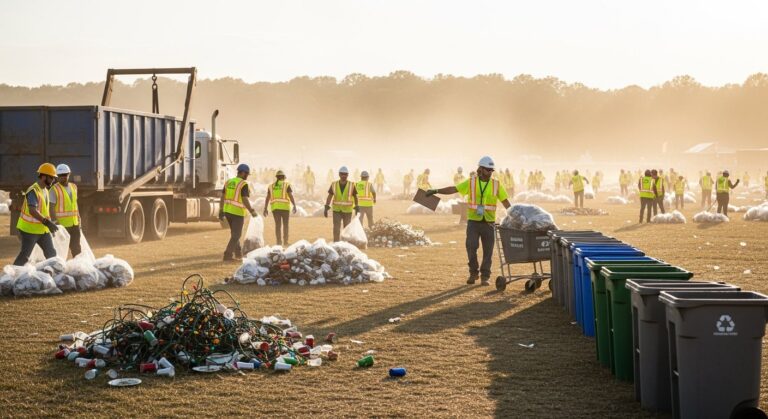
When the music fades, the lights dim, and the last attendees trickle out of the venue, a daunting mountain of trash remains. Corporate event cleanup in Arkansas is more than just picking up cups and napkins; it is a complex logistical operation that demands planning, resources, and a commitment to sustainability. For event organizers, venue managers, and corporate sustainability officers, the post-festival period is where reputations are built or broken. A chaotic, litter-strewn site can tarnish a brand’s image and invite regulatory scrutiny. Conversely, a smooth, efficient, and eco-conscious cleanup reinforces a company’s values and leaves a positive lasting impression on the community.
This guide provides a comprehensive roadmap for navigating post-festival waste management in Arkansas. We will explore the unique challenges of the Natural State, the regulatory landscape, and the practical strategies you need to execute a successful cleanup. From segregation and recycling to partnering with professional waste removal services, we cover the essential steps to turn a logistical nightmare into a showcase of operational excellence.
Understanding the Scale of Post-Festival Waste
Corporate events and festivals generate waste on a massive scale. A single weekend festival can produce tons of trash, ranging from food containers and beverage cups to promotional materials and temporary signage. The composition of this waste stream is diverse, making segregation and diversion a challenge. Without a clear plan, the majority of this material ends up in a landfill, contributing to environmental degradation and increasing disposal costs. For businesses in Arkansas, where natural beauty is a point of pride, responsible waste management is both an ethical imperative and a public relations necessity.
The first step in effective post-festival waste management is to conduct a waste audit or estimate. This involves projecting the types and volumes of waste likely to be generated based on attendance, food vendors, and event activities. A detailed estimate allows you to order the correct number of dumpsters, plan recycling stations, and schedule staff or volunteer crews effectively. Underestimating can lead to overflowing bins and litter, while overestimating wastes money on unused capacity. A balanced approach, informed by past events or industry benchmarks, is crucial.
Key Waste Streams to Anticipate
To manage waste effectively, you must first understand what you are dealing with. A typical corporate festival produces several distinct waste categories, each requiring a different handling method. Here are the primary streams to plan for:
- Commingled recyclables: plastic bottles, aluminum cans, and glass containers from beverage sales and concessions.
- Compostable organics: food scraps, soiled paper plates, and biodegradable serviceware from food vendors.
- Landfill trash: non-recyclable packaging, plastic wrap, and other miscellaneous items that cannot be diverted.
- Bulk waste: broken chairs, tents, banners, and other large items that require special handling or separate disposal.
- Hazardous materials: batteries, propane tanks, and cleaning chemicals that must be segregated and disposed of according to regulations.
Each of these streams requires a dedicated collection system. Color-coded bins, clear signage, and trained staff are essential to ensure that attendees and cleanup crews place items in the correct receptacle. Without proper segregation, even the most well-intentioned recycling program will fail, as contamination can render entire batches of recyclables worthless.
Regulatory Compliance and Arkansas-Specific Considerations
Arkansas has specific regulations governing waste disposal, and corporate event cleanup must align with state and local laws. The Arkansas Department of Energy and Environment (E&E) oversees environmental compliance, including solid waste management. While most event waste is classified as non-hazardous, improper disposal of certain materials can lead to fines and legal action. For example, dumping waste in unauthorized locations or failing to contain hazardous substances is strictly prohibited. Event organizers must also consider local municipal ordinances, which may have specific requirements for dumpster placement, noise during collection, or recycling mandates.
One of the most critical compliance issues is the handling of food waste. While not strictly regulated at the state level for events, many Arkansas municipalities are exploring organics diversion programs. Proactively separating food waste for composting not only reduces landfill burden but also positions your event as a leader in sustainability. Furthermore, if your event involves the use of generators or other equipment, you must ensure proper disposal of fuel and oil. By working with a professional waste management partner familiar with Arkansas regulations, you can navigate these complexities with confidence.
Planning for Efficient Post-Festival Cleanup
The most successful event cleanups are those that are planned months in advance, not after the last attendee leaves. A comprehensive waste management plan should be part of the overall event logistics from the very beginning. This plan should outline the types of waste expected, the collection methods, the roles and responsibilities of staff and volunteers, and a timeline for the cleanup operation. It should also include contingency plans for unexpected events, such as a sudden downpour that soaks recyclables or a vendor who produces more waste than anticipated.
Efficiency is key to minimizing costs and environmental impact. Pre-positioning dumpsters and recycling bins in high-traffic areas encourages proper disposal during the event. After the event, a well-organized cleanup crew can systematically break down the site, starting with high-priority areas like the main stage and food courts. The use of color-coded bags for different waste streams can significantly speed up the sorting process. Finally, a final sweep of the venue ensures that no litter is left behind, protecting wildlife and the local ecosystem.
A Step-by-Step Post-Festival Cleanup Process
To visualize the operational flow, consider this structured approach to the cleanup itself:
- Immediate Debris Collection: Begin with a rapid sweep of the entire venue, collecting loose trash into clearly marked bags or carts. This prevents litter from spreading and makes the site safer for crews.
- Station Breakdown: Dismantle vendor booths, stages, and seating areas. Separate reusable materials like wood and metal from trash, and consolidate waste into designated collection points.
- Dumpster Loading and Compaction: Transport collected waste to centrally located dumpsters. Use compaction equipment if available to maximize space and reduce the number of hauls needed.
- Final Inspection and Decontamination: Walk the entire site, including parking lots and green spaces, to ensure no waste remains. Address any stains, spills, or hazardous residues with appropriate cleaning methods.
This process requires clear communication and coordination. A designated cleanup manager should oversee each step, ensuring that safety protocols are followed. For large events, it may be necessary to hire a professional cleaning crew with experience in event teardown. Their expertise can dramatically reduce the time and effort required to return the venue to its pre-event condition.
Leveraging Professional Dumpster Rental Services
For most corporate events and festivals, partnering with a professional dumpster rental service is not just a convenience; it is a necessity. The volume of waste generated is typically far beyond what standard municipal curbside collection can handle. A reliable dumpster rental company provides the right-sized containers, timely delivery and pickup, and proper disposal at licensed facilities. They also handle the heavy lifting, allowing your staff to focus on other aspects of the event. In Arkansas, companies like Real Deal Dumpsters offer a range of dumpster sizes to fit any event, from small corporate gatherings to large multi-day festivals.
Beyond simply providing a dumpster, a good waste management partner will work with you to optimize your diversion goals. They can advise on the best placement for bins, help you coordinate recycling and composting services, and provide documentation of waste volumes for sustainability reporting. In our guide on eco-friendly event waste management tips, we discuss how to integrate these practices seamlessly into your event plan. By leveraging their expertise, you can ensure that your post-festival cleanup is both compliant and environmentally responsible.
Sustainability and Zero-Waste Initiatives
The push toward sustainability is reshaping corporate event management. A growing number of companies are setting ambitious zero-waste goals, aiming to divert 90% or more of their event waste from landfills. Achieving this requires a holistic approach that begins with procurement (choosing compostable or recyclable materials) and extends through to waste handling. Post-festival, the focus is on maximizing diversion through aggressive segregation and finding markets for recyclable materials. Arkansas has a growing recycling infrastructure, but it is not uniform across the state. Event organizers must research local facilities and partnerships to ensure that collected materials actually end up being recycled or composted.
One of the most effective strategies is to work with vendors and caterers to minimize waste at the source. Encouraging the use of bulk dispensers, avoiding single-use plastics, and implementing a deposit-return system for cups are all proven methods. After the event, a detailed analysis of the waste stream can reveal areas for improvement. For instance, if a significant portion of the trash is food waste, you might partner with a local farm for composting or donation. By publishing your diversion rate, you also demonstrate transparency and accountability to stakeholders, enhancing your brand’s reputation.
Cost Management and Budgeting for Cleanup
Post-festival cleanup is a significant line item in any event budget. Costs include dumpster rentals, labor, disposal fees, and potentially specialized services like hazardous waste removal. To avoid surprises, it is essential to budget accurately. Obtain quotes from multiple dumpster rental providers, and consider the cost of different dumpster sizes and rental periods. Also, factor in the potential cost of fines for improper waste disposal, which can be substantial. A well-planned waste management strategy can actually reduce costs by minimizing the volume of waste sent to landfill and avoiding overtime labor.
Here are a few cost-saving tips to keep in mind:
- Right-size your dumpsters: Ordering a 40-yard dumpster when two 20-yard units would suffice can waste money. Analyze your waste estimate to choose the most efficient configuration.
- Segregate to save: Recycling and composting are often cheaper than landfill disposal. By increasing your diversion rate, you can lower your overall waste bill.
- Schedule smartly: Avoid peak disposal times and holiday surcharges. Plan your pickup schedule to align with non-peak hours.
- Negotiate with vendors: Some waste management companies offer package deals for multiple events or long-term partnerships.
Transparency in budgeting also helps justify the expense to company leadership. By tracking your waste generation and diversion rates, you can demonstrate the return on investment for sustainability initiatives. Over time, these efforts can lead to more efficient events and lower per-attendee waste costs.
In summary, corporate event cleanup is a critical component of successful event management in Arkansas. It requires foresight, planning, and the right partnerships. By understanding the waste streams, complying with regulations, and embracing sustainability, you can turn a potential liability into a competitive advantage. The key is to start early, engage professional help, and continuously refine your approach based on real-world data.
Ultimately, the goal is to leave the venue as pristine as you found it, if not better. A clean site reflects positively on your brand and builds goodwill with the community. It also sets the stage for future events, as local authorities are more likely to approve permits for organizers with a proven track record of responsible waste management. As you plan your next corporate festival, remember that the cleanup is not an afterthought, but an integral part of the event experience.