
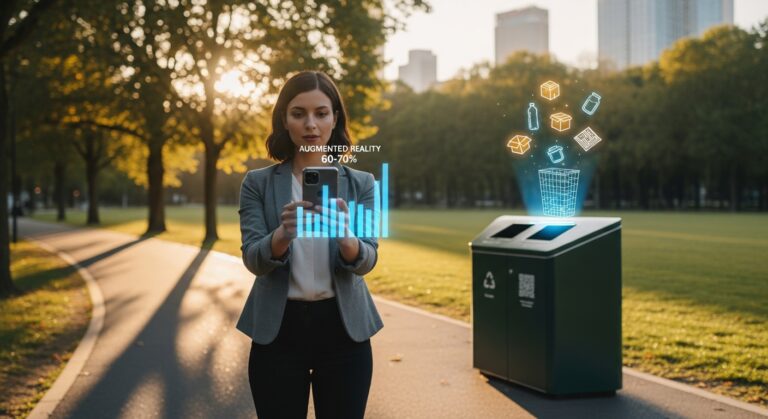
Imagine pointing your smartphone at a dumpster and instantly seeing its fill level, collection schedule, and recycling instructions overlaid on your screen. This isn’t science fiction; it’s the practical reality of augmented reality (AR) applied to waste management. While the humble garbage can seems like an unlikely candidate for high-tech innovation, it is becoming a critical touchpoint in smarter cities and sustainable homes. Garbage cans AR applications are bridging the digital and physical worlds, turning passive receptacles into interactive tools for efficiency, education, and environmental stewardship. This transformation is reshaping how municipalities, businesses, and homeowners interact with waste, moving from a schedule-based system to a data-driven, user-engaged model.
The Core Technology Behind AR-Enhanced Waste Systems
At its heart, AR for waste management uses a device’s camera and sensors to superimpose digital information onto the real-world view of a bin or dumpster. This typically involves either marker-based AR, where a QR code or symbol on the bin triggers the display, or markerless AR that uses object recognition to identify the container itself. The superimposed data isn’t just decorative; it’s pulled in real-time from IoT sensors often embedded within the bins themselves. These sensors monitor fill levels, internal temperature, and even composition, sending data to a cloud platform that the AR interface then visualizes instantly for the user. This creates a seamless feedback loop between the physical asset and the person servicing or using it.
For a waste management worker, this might mean seeing a color-coded highlight over bins that are over 90% full on their smart glasses, optimizing their collection route dynamically. For a resident, it could involve pointing their phone at a public bin to reveal which specific materials go into each compartment, drastically reducing contamination. The power of garbage cans AR lies in this contextual, just-in-time delivery of information, eliminating guesswork and manuals. It transforms a mundane task into an informed action, making proper waste disposal intuitive and accessible to everyone.
Practical Applications Transforming Industries
The implementation of augmented reality for garbage cans and dumpsters spans several key areas, each addressing specific pain points in traditional waste management. In municipal settings, AR is a powerful tool for public education and operational efficiency. Cities piloting these technologies report significant reductions in recycling contamination rates, as citizens can use their phones to get instant, bin-specific sorting guidance. This direct visual communication is far more effective than posted signs, which are often ignored or misunderstood.
For commercial property management and construction sites, the benefits are measured in cost savings and logistical precision. Superintendents can conduct virtual waste audits by scanning dumpsters on-site, with AR displaying historical data on waste volume and type. This aids in right-sizing container orders and verifying service compliance. On large campuses or facilities, maintenance staff can use AR to locate and identify the status of all waste stations quickly, streamlining their daily rounds. The technology also enhances training for new employees, providing interactive, on-the-job instructions overlaid directly on the equipment they are learning to handle.
At the consumer level, while less common, innovative smart bin manufacturers are beginning to integrate AR into their companion apps. This can help with setup, troubleshooting, and understanding the bin’s smart features, like compaction schedules or bag replacement alerts. As our guide on choosing the best garbage disposal bins for your home explores, the future of home waste management is intelligent, and AR serves as the intuitive interface for that intelligence.
The Tangible Benefits of an AR-Enabled Waste Stream
Adopting AR interfaces for waste management delivers a cascade of positive outcomes that justify the technological investment. The advantages are clear and multifaceted, impacting operational, financial, and environmental metrics.
Before diving into a list, it’s important to understand that these benefits are interconnected. Improved education leads to cleaner recycling streams, which lowers processing costs and increases the value of recycled materials. These savings can then be reinvested into further technological or sustainability initiatives.
- Dramatically Reduced Contamination: Real-time visual guidance at the point of disposal ensures items are placed in the correct bin, increasing the purity and marketability of recyclables and organics.
- Optimized Collection Logistics: AR visualizations of fill-level data enable “pickup-on-demand” routing for waste trucks, reducing fuel consumption, vehicle wear, and labor hours spent checking empty bins.
- Enhanced Public Engagement and Education: The interactive, gamified nature of AR makes learning about waste sorting more engaging, leading to higher long-term compliance rates.
- Improved Operational Training and Safety: New staff can learn procedures through AR overlays that demonstrate safe handling, preventing injuries and improper use of equipment.
- Data-Driven Decision Making: Stakeholders gain visual access to actionable waste analytics, supporting better contracts, site planning, and sustainability reporting.
The cumulative effect is a waste management system that is not only more efficient but also more circular. By ensuring materials are properly sorted at the source, AR helps keep valuable resources in the production loop. This directly supports corporate ESG (Environmental, Social, and Governance) goals and municipal sustainability targets, turning waste management from a cost center into a demonstrable pillar of environmental responsibility.
Implementation Considerations and Future Outlook
Integrating AR into waste management infrastructure requires thoughtful planning. The first step is often deploying the underlying IoT sensors in bins to generate the necessary data. From there, organizations must develop or license a simple, reliable AR application that works across common devices. User experience is paramount; the interface must be intuitive and provide immediate value, or it will not be adopted. For public-facing applications, ensuring digital accessibility and providing options for those without smartphones is a critical consideration. Privacy must also be addressed, ensuring that AR systems collect only necessary operational data.
Looking forward, the convergence of AR with other technologies like artificial intelligence and computer vision will make systems even smarter. Imagine a bin that uses AR not just to display information, but to actively analyze an item you’re holding and guide you with an arrow to the correct compartment. Furthermore, as smart city ecosystems mature, data from AR waste interactions could feed into larger urban planning models, influencing everything from public space design to material recovery facility investments. The humble garbage can, through the lens of AR, is poised to become a vital node in the intelligent, sustainable cities of tomorrow.
The evolution of garbage cans through augmented reality represents a quiet but profound shift in our relationship with waste. It moves us from a system of blind disposal to one of informed participation. By making the invisible details of waste streams visible and actionable, this technology empowers every stakeholder—from the resident to the city planner—to make smarter decisions. The result is a cleaner, more efficient, and more sustainable model for managing the resources we too often throw away, proving that even the most everyday objects have a role to play in our digital future.