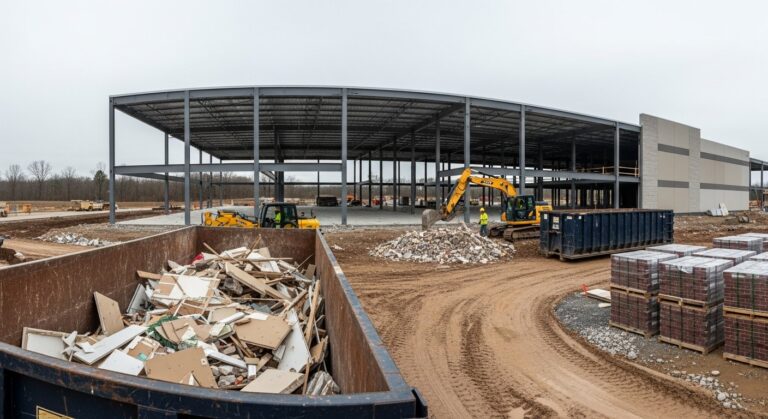
When you manage a commercial construction site in Arkansas, waste piles up faster than a summer thunderstorm. Drywall scraps, lumber offcuts, concrete chunks, and packaging materials fill dumpsters before the foundation is even poured. Without a solid waste management plan, those piles turn into costly delays, safety hazards, and compliance headaches. Fortunately, smart commercial construction waste management in Arkansas is not just about hauling debris away. It is about reducing costs, protecting the environment, and keeping your project on schedule. This article walks you through the essential strategies, regulations, and best practices for handling construction waste on commercial sites across the Natural State.
Why Commercial Construction Waste Management Matters in Arkansas
Arkansas has experienced steady growth in commercial development, from new retail centers in Little Rock to industrial parks in Bentonville. With growth comes a massive volume of construction and demolition debris. The Arkansas Department of Environmental Quality (ADEQ) oversees disposal regulations, and failing to comply can mean fines, project delays, and reputational damage. Beyond compliance, effective waste management directly impacts your bottom line. Landfill tipping fees in Arkansas vary by region, but they typically range from $30 to $50 per ton. A 50,000-square-foot commercial project can generate 200 to 400 tons of debris. Multiply that by the tipping fee, and you are looking at thousands of dollars in disposal costs. Reduce what goes to the landfill, and you keep more of that money in your budget.
Additionally, clients and investors increasingly expect sustainable practices. A waste management plan that prioritizes recycling and diversion can strengthen your bid for new projects. It shows that your company is forward-thinking and responsible. Commercial construction waste management in Arkansas is not just a regulatory requirement. It is a competitive advantage.
Key Regulations for Construction Debris in Arkansas
The ADEQ requires that all construction and demolition debris be handled according to state solid waste rules. You must separate hazardous materials such as paints, solvents, asbestos, and lead-based materials from general debris. These hazardous items require special disposal through licensed facilities. For non-hazardous debris, Arkansas allows disposal at permitted landfills, but some landfills have specific restrictions. For example, certain facilities in central Arkansas ban whole tires and appliances. You also need to watch for local city ordinances. Fayetteville, for instance, has a recycling ordinance that requires contractors to recycle at least 50% of construction waste on projects over a certain size.
Another critical regulation involves stormwater runoff. The Arkansas Department of Energy and Environment enforces the National Pollutant Discharge Elimination System (NPDES) permit program. If your site disturbs one acre or more, you need a stormwater permit. Construction debris left uncovered can wash into storm drains, leading to violations and cleanup orders. Proper waste containment and disposal help you stay compliant with both solid waste and water quality rules.
Developing a Waste Management Plan for Your Commercial Project
Before you break ground, create a written waste management plan. This document should outline how you will handle each waste stream. Start by estimating the types and volumes of materials you expect. Common commercial construction materials in Arkansas include concrete, wood, metal, drywall, cardboard, and roofing materials. For each material, decide whether it will be recycled, donated, or sent to a landfill. Include specific diversion goals. A realistic target for commercial projects is 50% to 75% diversion from landfills. Larger projects with aggressive sustainability goals can aim for 90% or higher.
Your plan should also designate a waste management coordinator. This person oversees sorting, container placement, and hauler coordination. They also track weights and volumes to document diversion rates. Finally, include a budget line item for waste management. Many contractors underestimate these costs. A detailed plan prevents surprise bills at the end of the project.
Steps to Build Your Plan
Follow these steps to create a actionable waste management plan:
- Conduct a pre-demolition or pre-construction audit to identify reusable and recyclable materials.
- Estimate the volume of each waste stream using historical data or industry averages.
- Research local recycling facilities and donation centers that accept construction materials.
- Select a waste hauler with experience in commercial construction waste management in Arkansas.
- Set up clearly labeled containers for each waste stream and train your crew on sorting procedures.
Once your plan is written, share it with all subcontractors during the pre-construction meeting. Make sure everyone understands their role. A plan that sits in a file cabinet is useless. Active communication keeps your team aligned.
Choosing the Right Waste Containers and Haulers
Container selection directly affects efficiency. For large commercial sites, you typically need multiple roll-off dumpsters in different sizes. A 30-yard dumpster works well for mixed debris, while a 40-yard container suits heavy materials like concrete and brick. If you separate recyclables, you need dedicated containers for each material. Cardboard, metal, and wood each require separate dumpsters to avoid contamination. Many haulers offer recycling-specific containers at reduced rates because they save on landfill fees.
When selecting a hauler, look for one that understands local regulations and has relationships with Arkansas recycling facilities. Ask about their diversion tracking. Some haulers provide monthly reports showing exactly how much material was recycled versus landfilled. This data is invaluable for LEED certification or client sustainability reports. In our guide on Choosing the Right Construction Waste Dumpster for Your Project, we explain how to match container size and type to your specific site requirements.
Recycling and Reuse Opportunities in Arkansas
Arkansas has a growing network of facilities that accept construction materials for recycling. Concrete and asphalt can be crushed and reused as aggregate for road base or new concrete. Wood waste, if clean and untreated, can be chipped into mulch or used for biomass energy. Metal scrap from rebar, steel studs, and copper wiring has high market value. Many scrap yards in Arkansas pay competitive prices for clean metal. Cardboard and paper from packaging are easily recyclable through standard municipal programs or commercial recyclers.
Donation is another excellent option. Organizations like Habitat for Humanity ReStores in Little Rock, Fayetteville, and Jonesboro accept new or gently used building materials such as doors, windows, cabinets, and lighting fixtures. Donating materials not only keeps them out of the landfill but also provides a tax deduction for your company. Some non-profits will even pick up large quantities on site.
Materials That Are Difficult to Recycle
Not everything can be recycled easily. Here are common commercial construction materials that pose challenges in Arkansas:
- Gypsum drywall: While some facilities grind it for soil amendment, many landfills require it to be disposed of separately due to hydrogen sulfide gas concerns.
- Asphalt shingles: A few Arkansas recyclers accept shingles for use in pavement, but availability is limited.
- Insulation: Fiberglass and foam insulation are rarely recyclable and typically go to landfills.
- Treated wood: Wood treated with preservatives cannot be mulched or burned and must be landfilled.
For these materials, focus on minimizing waste upfront. Order exact quantities to reduce overage. Use prefabricated components to limit offcuts. When disposal is unavoidable, factor the higher tipping fees into your budget.
On-Site Sorting and Crew Training
Sorting waste at the source is far more effective than trying to separate it later. Place clearly labeled containers in convenient locations around the site. Use color-coded bins or large signage with pictures to reduce confusion. For example, a green container for wood, a blue one for metal, and a black one for general trash. Assign a crew member to monitor the sorting area daily and correct mistakes. Contamination in a recycling container can cause the entire load to be rejected and sent to the landfill. A small investment in training saves significant disposal costs.
Hold a brief toolbox talk at the start of each week to reinforce sorting rules. Remind workers that cardboard boxes must be flattened, metal must be free of attached wood or plastic, and hazardous materials must never go in regular dumpsters. When workers understand the reasons behind the rules, they are more likely to follow them. Over time, a culture of waste discipline develops on your site.
Cost-Saving Strategies for Commercial Construction Waste Management
Reducing waste volume is the most direct way to save money. Order materials in standard sizes to minimize cutting waste. Use modular construction techniques where possible. Prefabricated wall panels, trusses, and MEP systems arrive on site ready to install, generating almost no scrap. Another strategy is to negotiate disposal rates with your hauler. If you generate consistent volume, you can often lock in a lower per-ton price. Some haulers also offer rebates for recyclable materials like metal.
Track your waste data closely. Weigh each container and record the material type. After a few projects, you will see patterns. You might discover that drywall waste is consistently 20% higher than expected, prompting you to adjust ordering practices. Use this data to refine your waste management plan for the next project. Continuous improvement compounds savings over time.
Technology and Tools for Waste Tracking
Several software platforms now help contractors track waste in real time. Tools like GreenBadger, WasteLogics, and Rubicon integrate with scales and cameras on dumpsters to provide instant data. You can see exactly how much waste leaves the site, where it goes, and what percentage is recycled. These platforms also generate reports for LEED documentation or client sustainability dashboards. For smaller projects, a simple spreadsheet with columns for date, container size, material type, and destination works fine. The key is consistency. Track every load.
Some haulers offer online portals where you can view invoices, request pickups, and access diversion reports. Take advantage of these features. They reduce administrative time and give you greater control over your waste program.
Common Mistakes to Avoid
Even experienced contractors make errors in waste management. One frequent mistake is failing to separate hazardous materials. A single can of paint thrown into a mixed dumpster can render the entire load hazardous, forcing you to pay for special disposal. Another mistake is underestimating the space needed for containers. If dumpsters are too small, they overflow, creating safety hazards and attracting pests. Conversely, oversized containers waste money on rental fees. Calculate your volume needs carefully based on project phase.
Another pitfall is ignoring local recycling ordinances. Cities like Fayetteville and Bentonville have specific requirements. Check with the city planning department before starting work. Finally, do not assume your subcontractors know the waste plan. Provide written instructions and post signs on site. Follow up regularly. A plan without enforcement is just a piece of paper.
Building a Reputation for Sustainable Construction
Commercial construction waste management in Arkansas is evolving. More project owners are requiring waste diversion plans as part of their bid packages. By demonstrating strong waste management practices, your company becomes a preferred partner for environmentally conscious clients. You also reduce your exposure to regulatory fines and negative publicity. Over time, a commitment to sustainability attracts better talent. Skilled workers want to be part of companies that care about their impact on the community.
Consider pursuing green building certifications like LEED or the National Green Building Standard. Waste management contributes directly to credits in these systems. Even if certification is not your goal, documenting your waste reduction efforts provides marketing material. Include your diversion rates in proposals and on your website. It sets you apart from competitors who treat waste as an afterthought.
Effective waste management is not a burden. It is a business strategy that saves money, ensures compliance, and builds your brand. With the right plan, containers, and team, you can turn construction debris from a liability into an asset. Start implementing these practices on your next commercial project in Arkansas, and you will see immediate benefits.