When you rent a dumpster for a home renovation, construction project, or major cleanout in Arkansas, the last thing you want is a surprise fine or a rejected load. The state enforces strict hazardous waste disposal Arkansas dumpster rules that every renter and contractor must understand. These regulations determine what you can and cannot throw into a roll-off container, and violating them can lead to penalties, environmental harm, and extra fees from your rental company. By knowing the rules upfront, you can plan your project safely, avoid costly mistakes, and keep your disposal process smooth from start to finish.
What Counts as Hazardous Waste Under Arkansas Law
Arkansas follows federal guidelines set by the Environmental Protection Agency (EPA) along with state-specific additions from the Arkansas Department of Energy and Environment (DEQ). Hazardous waste is any material that poses a substantial or potential threat to public health or the environment. The defining characteristics include ignitability, corrosivity, reactivity, and toxicity. Common household and construction items that fall into this category include paints, solvents, pesticides, cleaning chemicals, batteries, fluorescent bulbs, and certain electronics.
Industrial and commercial generators must also consider listed wastes from EPA’s F, K, P, and U lists. These include spent solvents, certain wastewater treatment sludges, and discarded commercial chemical products. For dumpster rentals, the key distinction is that hazardous waste cannot be mixed with general construction debris or household trash. If you place prohibited items in a dumpster, the rental company may refuse pickup, report the violation, or charge a decontamination fee. Understanding these classifications helps you separate waste streams correctly before loading begins.
Why Dumpster Rentals Prohibit Hazardous Materials
Dumpster rental companies in Arkansas operate under permits that restrict the types of waste they can accept at their disposal facilities. Most standard roll-off dumpsters are designed for non-hazardous solid waste such as wood, drywall, metal, concrete, cardboard, and furniture. When hazardous materials enter the waste stream, they contaminate the entire load and require special handling, treatment, and disposal at licensed facilities. This drives up costs and creates liability for both the rental company and the customer.
Beyond legal compliance, there are practical reasons for these restrictions. Hazardous chemicals can react with other materials in the dumpster, causing fires, toxic gas releases, or explosions. Corrosive liquids can damage the dumpster itself, leading to leaks during transport. Flammable solvents pose a risk to drivers and disposal site workers. By following hazardous waste disposal Arkansas dumpster rules, you protect yourself, the rental crew, and the community. The rules are not arbitrary. They are based on decades of environmental regulation and safety data.
Accepted and Prohibited Items for Arkansas Dumpsters
Before you start loading a rented dumpster, review the list of allowed and banned items provided by your rental company. While policies vary slightly between providers, the following categories are standard across Arkansas. Most companies will give you a written agreement that outlines these restrictions. If you are unsure about a specific item, ask the rental representative before placing it in the container.
Here is a breakdown of what you can typically put in a standard construction or household dumpster and what must be handled separately:
- Accepted: Wood, lumber, drywall, concrete, brick, asphalt, roofing shingles, metal, cardboard, paper, plastics, furniture, carpet, clothing, and general household trash.
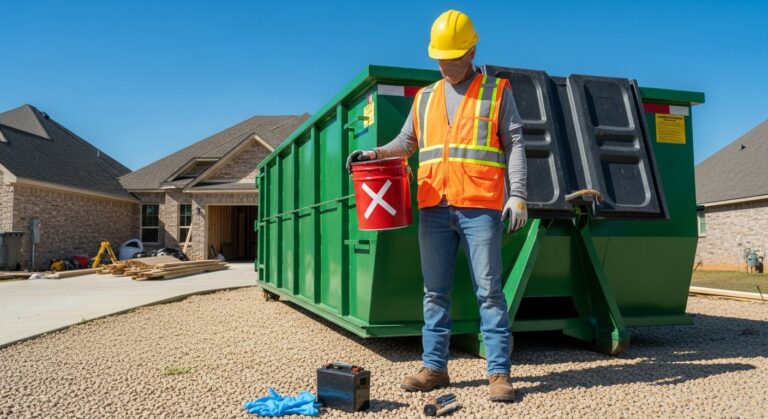
- Prohibited: Paint (liquid), solvents, thinners, adhesives, pesticides, herbicides, fertilizers, motor oil, antifreeze, gasoline, propane tanks, batteries, fluorescent bulbs, medical waste, tires, and any container labeled toxic, flammable, or corrosive.
- Conditionally accepted: Appliances containing refrigerants (requires removal of Freon by a certified technician), electronics (may require separate recycling), and mattresses (may incur extra fees).
Some rental companies offer specialized containers or services for certain prohibited items like concrete or roofing waste. However, hazardous chemicals and liquids are almost universally banned from standard dumpsters. If your project generates significant quantities of hazardous waste, you may need to hire a separate hazardous waste transporter or arrange for a special collection event. Arkansas DEQ provides resources for locating licensed hazardous waste disposal facilities in your area.
State Regulations Specific to Arkansas
Arkansas has its own set of rules that supplement federal hazardous waste regulations. The Arkansas Hazardous Waste Management Act gives the DEQ authority to enforce standards that can be more stringent than EPA requirements. For example, Arkansas requires generators of hazardous waste to obtain an EPA identification number and follow specific recordkeeping and reporting procedures. Even small businesses that generate less than 100 kilograms per month must comply with state-level waste accumulation and labeling rules.
For dumpster users, the most relevant state regulation involves the prohibition of liquid waste in landfills. Arkansas landfills are not permitted to accept free liquids, meaning any paint, oil, or chemical that can flow must be solidified or disposed of elsewhere. This is why rental companies strictly ban liquid paints and solvents. Additionally, Arkansas has specific rules for the disposal of electronic waste, including computers, monitors, and televisions. These items contain heavy metals like lead and mercury and must be recycled through approved e-waste programs rather than thrown into a dumpster destined for a landfill.
Another important state rule concerns the disposal of treated wood. Lumber treated with chromated copper arsenate (CCA) or other preservatives is considered hazardous in some contexts. While many Arkansas landfills accept treated wood from construction projects, it cannot be burned or used as mulch. Check with your dumpster provider about their policy on treated lumber, as some may require it to be separated or disposed of at a specific facility.
Consequences of Violating Dumpster Hazardous Waste Rules
Violating hazardous waste disposal Arkansas dumpster rules can result in serious consequences for both individuals and businesses. The most immediate penalty is financial. Dumpster rental companies typically charge a contamination fee when they discover prohibited items in a load. These fees can range from $100 to $500 or more, depending on the type and quantity of hazardous material. In some cases, the entire load may be rejected, and you will be responsible for removing the prohibited items and reordering disposal.
Beyond rental company fees, state and federal environmental agencies can impose civil and criminal penalties for illegal disposal of hazardous waste. The EPA can fine individuals up to $50,000 per day for violations, and businesses face even higher penalties. Arkansas DEQ has its own enforcement authority and can issue compliance orders, require cleanup actions, and pursue legal action. Repeat offenders or those who knowingly dump hazardous waste may face criminal charges, including imprisonment.
There are also indirect consequences. If hazardous waste contaminates a landfill or transfer station, the cleanup costs can be enormous, and those costs may be passed back to the waste generator through lawsuits or insurance claims. Your reputation as a contractor or business owner can also suffer if you are cited for environmental violations. The safest approach is to educate yourself and your team about the rules before starting any project that involves a dumpster rental.
How to Properly Dispose of Hazardous Waste in Arkansas
If your project generates hazardous waste that cannot go into a standard dumpster, you have several responsible disposal options. Arkansas operates a network of household hazardous waste (HHW) collection facilities where residents can drop off items like paints, cleaners, batteries, and pesticides at no charge. These facilities are typically run by county solid waste districts or municipal governments. Check with your local county to find the nearest HHW drop-off location and its operating hours.
For businesses and contractors, the process is more involved. You must determine your generator status based on the amount of hazardous waste your business produces per month. The three categories are conditionally exempt small quantity generator (CESQG), small quantity generator (SQG), and large quantity generator (LQG). Each category has specific rules for accumulation time, labeling, storage, and disposal. You will need to contract with a licensed hazardous waste transporter and arrange for disposal at a permitted treatment, storage, and disposal facility (TSDF).
Some dumpster rental companies in Arkansas also offer specialized services for particular waste streams. For example, if you are removing roofing materials, you may be able to rent a dumpster specifically for asphalt shingles. If you are demolishing a commercial building that contains asbestos, you must follow strict abatement procedures and use a designated disposal site. Never attempt to hide hazardous waste inside a load of clean debris. Inspections at landfills and transfer stations are common, and the penalties for concealment are severe.
Best Practices for Dumpster Renters in Arkansas
To stay compliant with hazardous waste disposal Arkansas dumpster rules, start by reading your rental agreement carefully. The contract should list prohibited items and outline the penalties for violations. If the agreement is vague, ask the rental company to clarify. A reputable provider will be happy to explain the rules and help you sort your waste correctly. You can also refer to our comprehensive guide on Arkansas dumpster rentals for additional details on sizes, costs, and local regulations.
Plan your waste separation before the dumpster arrives. Set aside a designated area for hazardous materials that require special disposal. Keep containers labeled and stored safely away from children, pets, and heat sources. If you are unsure whether an item is hazardous, treat it as hazardous until you can verify. Many common household products like nail polish remover, bleach, and drain cleaners are considered hazardous and should not go in the dumpster.
Communicate with your crew or family members about the rules. Post a visible list of prohibited items near the dumpster. When loading, avoid overfilling the container, as this can cause items to spill during transport and create a safety hazard. If you accidentally place a prohibited item in the dumpster, contact the rental company immediately. They may be able to remove it safely before the container is hauled away. Being proactive is always better than facing a fine or a rejected load.
Finally, consider whether your project truly requires a standard dumpster or if a specialized service would be more appropriate. For projects that involve significant amounts of hazardous waste, such as a chemical plant cleanup or a large-scale painting operation, a general-purpose dumpster is not the right tool. Instead, work with a hazardous waste management company that can provide containers designed for dangerous materials and ensure compliant disposal from start to finish.
Frequently Asked Questions About Hazardous Waste and Dumpsters
Many Arkansas residents and contractors have similar questions about what they can and cannot put in a dumpster. Below are answers to some of the most common inquiries. If your question is not covered here, contact your rental company or the Arkansas DEQ for guidance.
Can I put empty paint cans in a dumpster? Yes, empty paint cans that have been dried out or cleaned are generally acceptable. However, cans with wet paint or liquid residue are prohibited. To dispose of latex paint, remove the lid and let the paint dry completely or mix it with cat litter or paint hardener. Once solid, the can and dried paint can go in the dumpster.
What about oil-based paint? Oil-based paints are considered hazardous waste and must be taken to an HHW facility. Do not put them in a dumpster even if the can appears dry. The same applies to stains, varnishes, and sealers that contain solvents.
Are propane tanks allowed? No. Propane tanks, even if empty, are prohibited because they can explode when crushed or exposed to heat. Return them to a propane exchange service or take them to a hazardous waste collection site.
Can I dispose of old electronics in a dumpster? Some rental companies accept electronics, but many do not due to e-waste recycling laws. Check with your provider. If electronics are banned, take them to an e-waste recycler or a designated drop-off event. Arkansas has several programs that accept computers, monitors, and televisions for free or a small fee.
Working With Your Dumpster Rental Company
Your relationship with the dumpster rental company is a partnership in responsible waste management. When you rent a dumpster, you are not just paying for a container. You are paying for transportation, disposal fees, and regulatory compliance. The rental company relies on you to follow the rules so that they can operate legally and keep costs down for all customers. If you violate the hazardous waste disposal Arkansas dumpster rules, the company may be held liable alongside you, which is why they take violations seriously.
Before the dumpster is delivered, ask the company for a detailed list of prohibited items and any specific rules for your area. Some counties in Arkansas have additional restrictions, such as bans on certain types of plastic or requirements for recycling construction debris. Knowing these local nuances can save you time and money. If you have a large or complex project, consider scheduling a site visit with the rental company to discuss waste management planning.
After the dumpster is filled and picked up, keep copies of your rental agreement and any disposal receipts. These documents can serve as proof of proper disposal if questions arise later. For contractors, maintaining a paper trail is especially important for demonstrating compliance with environmental regulations. A little documentation now can prevent major headaches during an audit or inspection.
By following the hazardous waste disposal Arkansas dumpster rules, you contribute to a cleaner environment and a safer community. You also protect your wallet from unexpected fees and legal troubles. Whether you are a homeowner cleaning out a garage or a contractor managing a large construction site, taking the time to understand and apply these rules is a smart investment in your project’s success.