
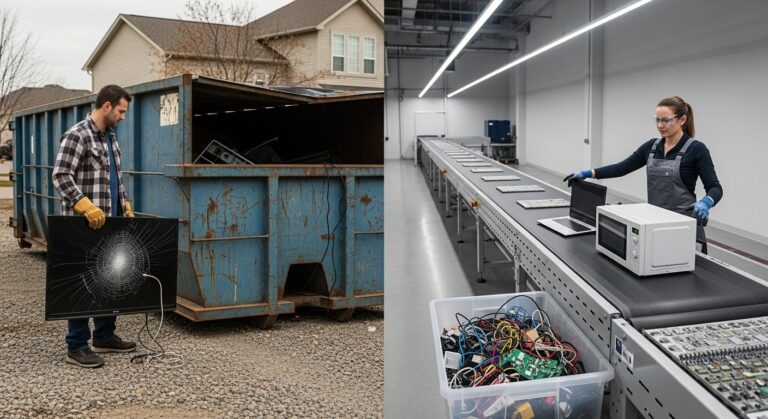
When old electronics pile up in your home or business, the question of how to dispose of them responsibly becomes urgent. In Arkansas, many people assume they can toss a broken television, an old computer, or a dead microwave into a dumpster and be done with it. But that assumption can lead to fines, environmental harm, and missed opportunities for recovery. Understanding the difference between electronics waste e-waste disposal Arkansas dumpster vs recycling centers is not just a matter of convenience. It is a decision that affects your wallet, your community, and the planet.
Electronic waste, or e-waste, includes anything with a plug or a battery that you no longer use. From smartphones and laptops to refrigerators and power tools, these items contain materials that can be toxic if they end up in a landfill. Arkansas has specific rules about how to handle this waste stream, and the options you choose can vary widely in cost, legality, and environmental impact. This article breaks down the two main paths: tossing e-waste into a rental dumpster versus taking it to a dedicated recycling center. By the end, you will know exactly which route fits your situation and how to execute it without hassle.
What Counts as E-Waste in Arkansas?
Before you decide on a disposal method, you need to know what qualifies as electronic waste. The Arkansas Department of Environmental Quality (ADEQ) defines e-waste as any discarded electronic device that contains a circuit board or a cathode ray tube. This includes common household items like televisions, monitors, printers, scanners, keyboards, mice, and cables. It also includes larger appliances such as refrigerators, freezers, air conditioners, and washing machines, though those often fall under separate appliance recycling rules.
Items that do not contain circuit boards, such as simple lamps, toasters, or electric fans without electronic controls, may be disposed of as regular trash in most Arkansas municipalities. However, anything that stores data or contains hazardous components like batteries, mercury switches, or lead solder requires special handling. If you are unsure about a specific item, check with your local waste authority or refer to ADEQ guidelines. Misclassifying an item can lead to rejected loads or fines if you use a dumpster service.
Dumpster Rental for E-Waste: What You Need to Know
Renting a dumpster is a popular choice for large cleanouts, construction projects, or estate clearances. Many people assume that a roll-off dumpster can handle anything they throw away, including old electronics. However, most dumpster rental companies in Arkansas have strict rules about e-waste. They cannot accept items like televisions, monitors, computers, or anything containing hazardous materials because of state and federal regulations.
If you rent a dumpster for a general cleanup, you must separate your e-waste before loading. Some companies offer separate e-waste containers or can direct you to a partner recycling facility. Others will reject your entire load if they find prohibited items. The risk of contamination is real: if a dumpster company discovers e-waste mixed with regular debris, they may charge you extra fees or refuse to haul the container away. In our guide on hazardous waste disposal Arkansas dumpster rules, we explain how to identify banned items and avoid costly penalties.
For certain types of e-waste, such as large appliances like refrigerators or air conditioners, you may need a specific appliance dumpster or a separate pickup. These units often require proper refrigerant removal by a certified technician before disposal. If you are planning a major cleanout that includes a mix of construction debris and electronics, the safest approach is to ask your dumpster provider about their e-waste policy upfront. Many reputable companies will provide a list of accepted and banned items when you book.
Pros and Cons of Using a Dumpster for E-Waste
Using a dumpster for e-waste disposal can be convenient if you are already renting one for other debris. However, the limitations are significant. Here are the key advantages and disadvantages to consider:
- Pros: Convenient for large cleanouts with mixed waste types; one container can hold many items; pickup and disposal handled by the rental company; often cheaper per item if you have a lot of non-electronic trash.
- Cons: Most e-waste is banned; risk of rejected loads and extra fees; no guarantee of responsible recycling; may require separate sorting and trips to recycling centers anyway.
- Best for: Projects where e-waste is a small fraction of the total debris and you have already removed all prohibited electronics.
If you decide to go the dumpster route, confirm with the rental company that they accept the specific electronics you plan to discard. Some companies in Arkansas have partnerships with e-waste recyclers and can arrange for a separate container or pickup. Do not assume because a dumpster is large enough that it can handle your old television. The rules are about material content, not size.
Recycling Centers: The Responsible Choice for E-Waste
Dedicated e-waste recycling centers offer a more reliable and environmentally sound solution for disposing of old electronics. These facilities are equipped to safely dismantle devices, recover valuable materials like copper, gold, and aluminum, and properly dispose of hazardous components such as lead, mercury, and cadmium. In Arkansas, several certified recyclers operate across the state, from Little Rock and Fayetteville to Jonesboro and Fort Smith.
Recycling centers typically accept a wide range of electronics, including televisions, monitors, computers, laptops, tablets, cell phones, printers, cables, and small appliances. Some also handle larger items like refrigerators and washing machines, though they may charge a fee for items that require special processing. Many centers offer free drop-off for certain items, especially if they are in working condition and can be refurbished or resold. Others charge a small fee per item to cover the cost of safe recycling.
When you take your e-waste to a recycling center, you receive a receipt or certificate of recycling. This document proves that your electronics were handled responsibly and not illegally dumped. For businesses, this is crucial for compliance with data destruction laws and environmental regulations. For individuals, it provides peace of mind that toxic materials will not end up in a landfill or waterway.
How to Choose a Certified E-Waste Recycler
Not all recycling centers are created equal. Some may simply export e-waste to developing countries or dump it in landfills. To ensure your electronics are recycled responsibly, look for facilities that hold certifications like R2 (Responsible Recycling) or e-Stewards. These certifications require recyclers to meet strict environmental and data security standards. In Arkansas, several R2-certified recyclers operate, and many local government programs partner with them.
Before visiting a recycling center, call ahead to confirm what they accept, their hours, and any fees. Some centers host periodic collection events, especially for items like televisions and batteries. Others have permanent drop-off locations. If you have a large volume of e-waste, ask if they offer pickup services or if they can accommodate a bulk drop-off. For businesses, many recyclers provide secure data destruction services, including hard drive shredding or degaussing, with a certificate of destruction.
Using a recycling center requires more effort than tossing items into a dumpster. You must transport the electronics yourself, pay any applicable fees, and sometimes wait in line. However, the environmental and legal benefits far outweigh the inconvenience. For most Arkansas residents, recycling centers are the only legal and responsible way to dispose of electronics waste.
Cost Comparison: Dumpster vs Recycling Centers
Cost is often the deciding factor when choosing between a dumpster and a recycling center. At first glance, a dumpster rental may seem cheaper because you pay a flat fee for the container and hauling. However, if your e-waste is banned, you may face additional charges or need to rent a separate container. Recycling centers, on the other hand, often accept many items for free or for a small per-item fee.
For example, a standard 20-yard dumpster rental in Arkansas typically costs between $350 and $600, depending on your location and the weight of the debris. If you fill that dumpster with construction waste and a few old electronics, you might pay the same flat rate. But if the dumpster company discovers e-waste and rejects the load, you could be charged a re-haul fee of $100 or more, plus the cost of a separate e-waste disposal service. In contrast, taking a television and a computer to a recycling center might cost $20 total, and many items are free.
For large volumes of e-waste, such as an office cleanup or a school district refresh, a recycling center may offer bulk pricing or even free pickup for qualifying loads. Some recyclers pay for scrap metal and working electronics, which can offset your costs. Dumpster rentals are generally not cost-effective for e-waste alone because you pay for the container and hauling regardless of how much you fill it. The best financial move is to separate your e-waste and use a recycling center for those items, while using a dumpster only for non-electronic debris.
Environmental Impact: Why Recycling Matters
The environmental stakes of e-waste disposal are high. Electronics contain hazardous materials like lead, mercury, cadmium, and brominated flame retardants. When these substances end up in a landfill, they can leach into soil and groundwater, contaminating drinking water sources and harming wildlife. In Arkansas, where many communities rely on groundwater, this is a serious concern. Recycling prevents these toxins from entering the environment and recovers valuable resources that can be used to manufacture new products.
Recycling one million laptops saves the energy equivalent of electricity used by 3,657 U.S. homes in a year. For every one million cell phones recycled, 35,000 pounds of copper, 772 pounds of silver, 75 pounds of gold, and 33 pounds of palladium can be recovered. These materials are finite, and mining them has its own environmental costs. By recycling your electronics, you help reduce the demand for virgin materials and lower the carbon footprint of new devices.
Dumpster disposal, even when allowed, does not guarantee recycling. Most municipal landfills do not sort e-waste for recovery. Your old computer or television will likely be buried, where it may take hundreds of years to decompose and release toxins along the way. Choosing a recycling center ensures that your electronics are processed in a facility designed to extract value and neutralize hazards. It is the only option that aligns with Arkansas’s sustainability goals and protects future generations.
Legal Requirements in Arkansas
Arkansas has specific laws regarding the disposal of electronic waste. The Arkansas Computer and Electronic Solid Waste Management Act, passed in 2007, prohibits the disposal of certain electronics in landfills. Specifically, computers, computer monitors, televisions, and other devices containing cathode ray tubes (CRTs) must be recycled or reused. Violators can face fines and penalties, although enforcement is often complaint-driven.
Businesses and institutions have additional responsibilities. Under federal and state law, companies must properly dispose of electronic waste and ensure that any data stored on devices is destroyed before disposal. Failure to do so can result in liability for data breaches and environmental violations. Many Arkansas businesses use certified recyclers that provide chain-of-custody documentation and data destruction certificates.
If you rent a dumpster for a commercial project, the rental company may require you to sign a waiver stating that you will not place prohibited e-waste in the container. If you violate that agreement, you could be held responsible for cleanup costs and fines. For residential customers, the rules are less strict, but it is still illegal to dispose of certain electronics in the trash. Most Arkansas counties have drop-off events or permanent collection sites for household hazardous waste, including e-waste.
To stay compliant, always check with your local solid waste district before disposing of electronics. Many counties have updated their regulations in recent years, and what was allowed five years ago may now be prohibited. When in doubt, call a certified recycler and ask for guidance. They are the experts on what can and cannot be accepted.
Making the Right Choice for Your Situation
So which option is best for electronics waste e-waste disposal Arkansas dumpster vs recycling centers? The answer depends on your specific project. If you are doing a home renovation that generates mostly wood, drywall, and metal, and you have only a couple of old electronics, you might be able to separate those items and take them to a recycling center while using a dumpster for the rest. This hybrid approach gives you the convenience of a dumpster for bulk waste and the responsibility of recycling for electronics.
If your project involves a large amount of e-waste, such as clearing out an old office or a school, a recycling center is almost always the better choice. Many centers offer competitive pricing for bulk loads and will handle the logistics of sorting and processing. You avoid the risk of dumpster contamination and the potential for extra fees. Additionally, you get the documentation you need for tax deductions or regulatory compliance.
For one-time, small-scale disposal, such as getting rid of a single television or computer, a recycling center is the most straightforward and cost-effective option. Many cities in Arkansas offer free drop-off days or low-cost recycling events. A quick online search for e-waste recycling in your county will likely yield several options. If you are in a rural area, you may need to drive to a larger city, but the peace of mind is worth the trip.
Ultimately, the choice between a dumpster and a recycling center comes down to volume, convenience, and your commitment to environmental stewardship. Dumpsters are not designed for e-waste, and using them for that purpose creates legal and environmental risks. Recycling centers are built specifically for electronics and offer a safe, compliant, and often affordable solution. By choosing the right method, you protect your community, comply with Arkansas law, and keep valuable materials in the economy.
Whether you are a homeowner tackling spring cleaning or a contractor managing a large demolition, planning your e-waste disposal in advance saves time, money, and headaches. Start by identifying what you need to discard, research your local recycling options, and communicate clearly with your dumpster provider about what is allowed. With the right approach, you can handle your electronics waste responsibly and efficiently.