
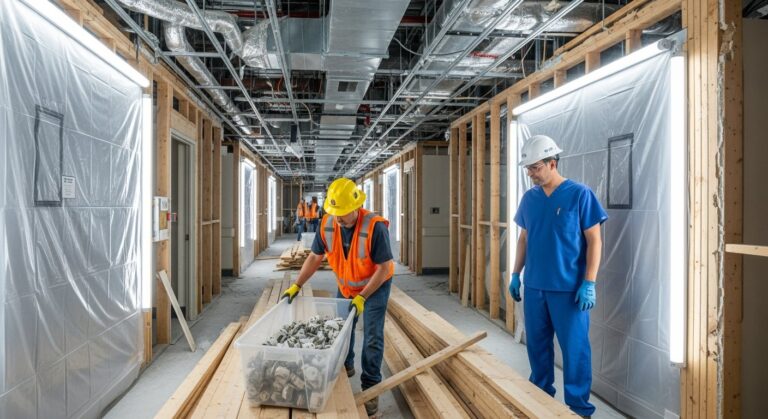
When a hospital, clinic, or long-term care facility in Arkansas undergoes renovation, the waste stream is unlike any other construction project. It includes not only drywall, lumber, and metal but also regulated medical waste, hazardous materials like mercury thermostats, and large volumes of packaging from new medical equipment. Managing this complex waste stream requires strict adherence to state and federal regulations, careful segregation, and a reliable disposal partner. For facility managers, contractors, and administrators in Arkansas, understanding the full scope of healthcare facility renovation waste management Arkansas is essential to avoid costly fines, protect patient safety, and keep the project on schedule.
Why Healthcare Renovations Create Unique Waste Challenges
Healthcare facilities operate under some of the most stringent cleanliness and safety standards in the country. During a renovation, these standards do not take a break. Construction dust must be contained to prevent contamination of sterile areas. Demolition debris must be inspected for sharps, pharmaceuticals, and infectious materials before it leaves the building. In our guide on Arkansas Shed Garage Demolition Waste Disposal Step by Step, we discuss general demolition logistics, but healthcare projects add layers of complexity that require specialized planning.
Common waste types found in healthcare renovation projects include:
- Mixed construction and demolition (C&D) debris: concrete, wood, metal, drywall, ceiling tiles, carpeting.
- Regulated medical waste (RMW): items contaminated with blood or other potentially infectious materials, such as used linens, bandages, or sharps that are discovered during demolition.
- Hazardous waste: chemicals, solvents, mercury-containing devices (thermostats, switches), lead-based paint chips, asbestos-containing materials (floor tiles, pipe insulation).
- Universal waste: batteries, pesticides, and lamps (fluorescent bulbs, LED tubes).
- Electronic waste (e-waste): defibrillators, monitors, computers, cables, and other outdated equipment.
- Recyclable materials: cardboard, paper, plastics, metals, and clean wood.
Each of these waste types must be handled, transported, and disposed of according to specific regulations. Mixing a small amount of RMW with ordinary construction debris can turn an entire dumpster load into regulated waste, dramatically increasing disposal costs and creating regulatory liability. A well-designed waste management plan separates these streams at the source, reducing risk and often lowering overall project expenses.
Arkansas Regulations That Impact Healthcare Renovation Waste
Arkansas has its own set of environmental and health regulations that apply to healthcare facility renovation waste. The Arkansas Department of Energy and Environment (DEQ) oversees solid and hazardous waste management, while the Arkansas Department of Health (ADH) has authority over medical waste and infection control. Understanding which agency has jurisdiction over each waste type is the first step in compliance.
Medical Waste Rules Under ADH
The Arkansas Medical Waste Management Act requires that regulated medical waste be treated (typically by autoclaving or incineration) before disposal in a permitted landfill. Generators must maintain records of treatment and disposal for three years. During a renovation, any waste that is suspected of being contaminated must be segregated and handled by a licensed medical waste transporter. This is not the kind of waste that can go into a standard construction dumpster.
Hazardous Waste Rules Under DEQ
Arkansas DEQ enforces the Resource Conservation and Recovery Act (RCRA) for hazardous waste. Healthcare facilities often generate hazardous waste in small quantities, but during a renovation, hidden hazards like old chemical containers, mercury switches, or lead paint can appear in unexpected places. The renovation contractor must be trained to recognize these items and follow proper containment and labeling protocols. Failure to do so can result in penalties of up to $50,000 per violation per day.
Air Quality and Dust Control
Renovations in occupied healthcare buildings also fall under air quality regulations. The Arkansas DEQ has rules for particulate matter emissions, and hospitals often require negative air pressure enclosures and HEPA filtration to protect patients with compromised immune systems. Waste management is tied to this because debris must be removed through controlled pathways, and dust-generating activities must be scheduled to minimize exposure.
Creating a Waste Management Plan for Healthcare Renovations
A successful waste management plan for a healthcare renovation in Arkansas starts before the first wall is opened. It involves coordination between the facility’s environmental services department, the general contractor, specialized waste haulers, and regulatory agencies. Here is a step-by-step framework that can be adapted to any project size.
First, conduct a pre-renovation audit. Walk every area that will be affected and identify all potential waste types. Look for old storage rooms, abandoned equipment, and areas where hazardous materials may have been used historically. This audit should produce a waste inventory that informs the rest of the plan.
Second, establish a waste segregation station. This is a dedicated area on the renovation floor where different containers are clearly labeled for C&D debris, RMW, hazardous waste, universal waste, e-waste, and recyclables. All workers must be trained on which waste goes where. A single mistake can contaminate an entire container.
Third, select the right disposal partner. Not all dumpster rental companies in Arkansas are equipped to handle healthcare renovation waste. You need a provider that offers segregated containers, understands medical waste regulations, and can provide documentation for every load. Look for a company that works with licensed medical waste and hazardous waste subcontractors as part of a integrated service.
Fourth, create a removal schedule that aligns with the construction timeline. Healthcare facilities cannot have dumpsters blocking emergency exits or patient transport routes. Deliveries and pickups should be scheduled during off-hours or through designated service corridors. The plan should also include contingency procedures for unexpected discoveries, such as an asbestos-containing material found mid-demolition.
Finally, document everything. Arkansas law requires waste manifests for hazardous and medical waste, but keeping detailed records for all waste streams provides protection in case of an audit. It also helps the facility demonstrate its commitment to sustainability and regulatory compliance during Joint Commission or other accreditation surveys.
Cost Considerations and How to Reduce Expenses
Healthcare renovation waste management Arkansas carries higher costs than standard construction debris disposal. The main drivers are the specialized handling requirements for medical and hazardous waste, the need for segregated containers, and the regulatory paperwork. However, there are several strategies that can reduce these costs without sacrificing compliance.
Aggressive recycling is one of the most effective cost-control measures. Cardboard, metal, clean wood, and certain plastics can be recycled at lower rates than disposal. In Arkansas, metal recycling often pays the generator based on market rates, which can offset the cost of other waste streams. By separating recyclables at the source, a facility can reduce the volume of waste sent to the landfill and lower its overall disposal bill.
Another strategy is to minimize the amount of regulated medical waste generated during renovation. This can be done by thoroughly cleaning and inspecting areas before demolition, removing any potentially contaminated items, and sealing off patient-care zones. The less waste that is classified as RMW, the lower the disposal cost.
Finally, consider a waste audit during the project. A third-party auditor can review the waste streams and identify opportunities for improvement. For example, they might find that a particular material is being over-classified as hazardous when it could be handled as non-hazardous, or that a recyclable material is being landfilled. These audits pay for themselves quickly through reduced disposal fees.
Choosing the Right Dumpster Rental Partner in Arkansas
For most healthcare renovation projects, the general contractor or facility manager will need to rent multiple dumpsters to handle segregated waste streams. The rental company must be able to deliver the right size containers, provide clear labeling, and pick up on a schedule that does not disrupt facility operations. In Arkansas, there are several factors to consider when selecting a partner.
First, verify that the company has experience with healthcare facilities. Ask for references from similar projects. A company that has worked on hospital renovations will understand the need for clean containers, timely pickups, and compliance documentation. They will also know how to navigate the logistics of working in an occupied medical building.
Second, ask about their network for specialized waste disposal. Most dumpster rental companies do not handle medical or hazardous waste directly. They subcontract that work to licensed haulers and treatment facilities. A good partner will have established relationships with these providers and will coordinate the entire process, so you only have one point of contact.
Third, compare pricing structures. Some companies offer flat-rate pricing that includes disposal fees, while others charge separate rental and disposal fees. For a healthcare renovation, flat-rate pricing can simplify budgeting and avoid surprise charges. However, make sure the flat rate covers the specific waste types you will generate. A low flat rate might not include medical waste surcharges.
Fourth, consider sustainability. Many healthcare organizations have green building goals, such as LEED certification for renovation projects. A dumpster rental partner that offers recycling services and provides detailed waste diversion reports can help the facility achieve these goals. Ask about their recycling rates and whether they can provide documentation for the amount of material diverted from the landfill.
Common Mistakes and How to Avoid Them
Even experienced contractors can make mistakes when managing healthcare renovation waste in Arkansas. Here are the most common pitfalls and practical ways to avoid them.
One frequent error is assuming that all construction debris can go into a single dumpster. As discussed earlier, mixing waste streams can turn a low-cost disposal into a high-cost regulatory problem. The solution is to invest in multiple containers and train every worker on the segregation rules from day one. Post clear signage at each container and hold a brief safety meeting before the start of each shift.
Another mistake is failing to plan for bulky items like old MRI machines, X-ray equipment, or patient beds. These items may contain hazardous components, such as magnets, coolants, or radioactive materials. They also require special handling for transport. The waste management plan should include specific procedures for decommissioning and disposing of large medical equipment, including coordination with the manufacturer or a specialized recycler.
A third mistake is neglecting to update the waste management plan when the project scope changes. In a busy healthcare renovation, it is common for additional areas to be added to the project or for unexpected conditions to be discovered. When this happens, the waste plan must be revised to account for new waste types or increased volumes. A static plan that is not revisited can lead to compliance gaps.
Finally, do not overlook the importance of documentation. In the event of a regulatory inspection or a dispute with a waste hauler, having detailed records of what was generated, how it was segregated, and where it went is invaluable. Keep copies of manifests, receipts, and training logs in a project file that is accessible to all stakeholders.
Looking Ahead: Trends in Healthcare Waste Management
The field of healthcare facility renovation waste management Arkansas is evolving. Sustainability is becoming a higher priority for healthcare systems across the state, driven by both environmental goals and financial incentives. Many Arkansas hospitals have committed to zero-waste initiatives or carbon neutrality targets, and renovation projects are a key part of those efforts.
One emerging trend is the use of reusable containers and packaging for medical supplies. When a renovation includes the installation of new equipment, the packaging can be returned to the manufacturer for reuse, eliminating waste before it is generated. This requires coordination with suppliers but can significantly reduce the volume of cardboard and plastic that enters the waste stream.
Another trend is the adoption of digital waste tracking systems. These platforms allow facility managers to monitor waste generation in real time, generate compliance reports automatically, and identify opportunities for improvement. Some Arkansas healthcare systems are already using these tools to manage waste across multiple facilities, creating a standardized approach that simplifies renovation projects.
As regulations continue to tighten and disposal costs rise, the importance of professional waste management for healthcare renovations will only increase. Facility managers and contractors who invest in planning, training, and the right partnerships will be best positioned to complete their projects safely, compliantly, and cost-effectively.
Managing healthcare facility renovation waste in Arkansas requires more than just renting a dumpster. It demands a comprehensive strategy that addresses medical waste, hazardous materials, recycling, and regulatory compliance. By following the framework outlined above and working with an experienced disposal partner, you can turn a complex waste challenge into a manageable part of your renovation project. The result is a cleaner, safer environment for patients, staff, and the community.