
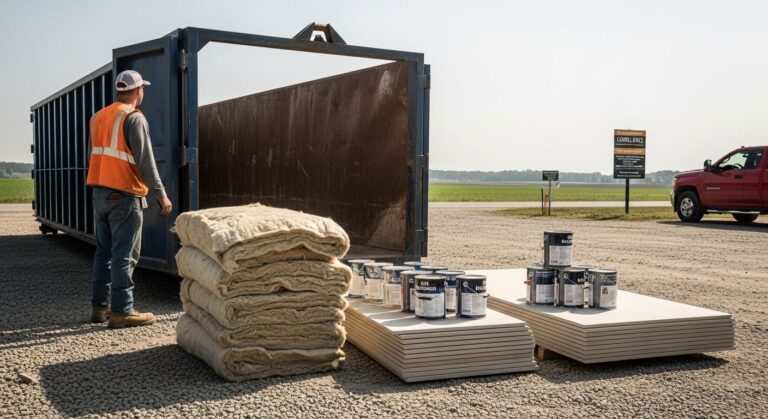
When you finish a renovation or construction project in Arkansas, you might face a pile of leftover insulation, drywall, and paint cans. These materials cannot just go into any dumpster. Arkansas regulations for disposing insulation, drywall, and paint are specific, and ignoring them can lead to fines or environmental harm. This guide explains the rules, the risks, and the proper steps for handling each material so you stay compliant and keep your job site safe.
Why Arkansas Has Separate Rules for Construction Debris
Arkansas environmental agencies regulate construction and demolition (C&D) waste to protect groundwater and air quality. Insulation, drywall, and paint each contain substances that can leach into soil or release toxins if handled incorrectly. For instance, drywall in landfills can produce hydrogen sulfide gas, a foul-smelling and potentially hazardous compound. Paint often contains solvents, heavy metals, or lead in older homes. Insulation may include fiberglass, asbestos, or formaldehyde. The Arkansas Department of Environmental Quality (ADEQ) sets guidelines for disposal, and local landfills may have additional restrictions. Understanding these rules before you haul saves you time and prevents costly penalties.
Disposing Drywall in Arkansas: Rules and Best Practices
Drywall (also called gypsum board or sheetrock) is one of the most common renovation materials. In Arkansas, clean drywall (non-painted, non-contaminated) is generally accepted at C&D landfills. However, painted drywall or drywall mixed with other debris may require special handling. For a deeper look at this topic, see our guide on disposing drywall in Arkansas rules and best practices. That resource covers landfill acceptance criteria and recycling options in detail. Here, we focus on how drywall interacts with insulation and paint disposal regulations.
Key points for drywall disposal in Arkansas include the following. First, separate drywall from other waste types whenever possible. Mixed loads are harder to process and may be rejected at the landfill. Second, check whether your local landfill requires drywall to be bagged or covered. Some facilities want drywall wrapped to prevent dust and gypsum dust from spreading. Third, if the drywall is painted or has joint compound, ask the landfill if they accept it. Many do, but some charge a higher fee for painted board. Fourth, consider recycling. Several Arkansas facilities accept clean drywall for grinding into soil amendment or new drywall production. Recycling reduces landfill volume and avoids the hydrogen sulfide issue.
If your drywall is contaminated with mold or asbestos, disposal becomes more complex. Asbestos-containing drywall (common in homes built before 1980) must be handled as hazardous waste. You cannot legally put it in a standard dumpster. You must hire a licensed asbestos abatement contractor who follows ADEQ notification and disposal rules. Similarly, moldy drywall may need to be bagged and labeled to protect workers. Always disclose any contamination to your disposal provider.
Insulation Disposal: Fiberglass, Foam, and Cellulose
Insulation comes in several types, and Arkansas regulations treat each differently. Fiberglass insulation is the most common. It is generally considered non-hazardous, but it can cause skin and respiratory irritation. You should bag fiberglass insulation securely before placing it in a dumpster. Loose fibers can blow around during transport, creating a nuisance and potential health risk. Use heavy-duty contractor bags or wrap rolls in plastic sheeting. Tape the bags closed to prevent spills.
Spray foam insulation (polyurethane) is more challenging. It is often classified as a hazardous waste if the canisters are not completely empty. Aerosol cans of spray foam that still contain propellant must be handled as hazardous waste in Arkansas. You can either use the entire contents according to the label or take the cans to a household hazardous waste (HHW) collection event or facility. Empty cans (punctured and drained) can go into the regular trash or a C&D dumpster, but check with your local landfill first. Some Arkansas landfills prohibit aerosol cans entirely.
Cellulose insulation (made from recycled paper) is usually non-hazardous and can be disposed of similarly to fiberglass. However, cellulose can be dusty and may contain fire retardants like boric acid. Bag it to reduce dust. If the insulation is wet or moldy, treat it as contaminated material and follow the same rules as moldy drywall. Asbestos insulation (vermiculite or old pipe wrap) again requires professional abatement. Never attempt to remove asbestos insulation yourself. Call a certified abatement company that can test, remove, and transport the material to a permitted facility.
Here are the key steps for insulation disposal in Arkansas:
- Identify the insulation type before removal. Look for labels or test for asbestos if the home was built before 1980.
- Bag fiberglass, cellulose, and foam scraps in heavy-duty contractor bags. Seal bags with tape or zip ties.
- For spray foam cans, empty them completely or take them to an HHW collection site.
- Never mix insulation with general trash or recycling. Keep it separate for proper handling.
- Transport bags in a covered vehicle or dumpster to prevent fiber release.
Following these steps keeps you compliant and protects waste workers from irritation or exposure. If you are unsure about a specific insulation type, contact your local ADEQ office or waste hauler for guidance.
Paint Disposal: Latex, Oil-Based, and Aerosol Cans
Paint disposal rules in Arkansas depend on the paint type. Latex paint (water-based) is the easiest to handle. You can dry it out and dispose of it in the regular trash. To dry latex paint, remove the lid and let the paint harden in the can. You can also mix it with kitty litter, sawdust, or paint hardener. Once the paint is solid, you can put the can (lid off) in your household trash or a C&D dumpster. Some landfills accept liquid latex paint, but many do not. Check with your disposal facility first. Never pour paint down a drain or onto the ground. That is illegal and harms water quality.
Oil-based paint (alkyd) and other solvent-based paints are considered hazardous waste in Arkansas. You cannot throw them in the trash, even if dried. Oil-based paint contains flammable solvents and heavy metals that require special handling. You must take oil-based paint to a household hazardous waste collection event or facility. Many Arkansas counties hold HHW collection days several times a year. Some cities have permanent drop-off locations. If you are a contractor, you may need to use a commercial hazardous waste disposal service. Never mix oil-based paint with latex paint or other materials, as that complicates disposal.
Aerosol paint cans (spray paint) follow the same rule as spray foam. If the can is completely empty (no propellant), you can recycle it with metal cans or put it in the trash. If it still contains paint or propellant, it is hazardous waste. Take it to an HHW collection site. For large quantities of aerosol cans from a renovation, consider using a commercial hazardous waste hauler. They can provide proper containers and documentation.
Key points for paint disposal in Arkansas:
- Latex paint: dry it out, then dispose of the solid can in trash.
- Oil-based paint: take to HHW collection or commercial hazardous waste service.
- Aerosol cans: empty only into trash; partially full cans go to HHW.
- Never pour paint down drains, storm sewers, or onto soil.
- Keep paint labels intact for proper identification by disposal staff.
If you have old paint that may contain lead (pre-1978 homes), treat it as hazardous. Lead paint chips and dust are regulated under federal and state law. You cannot dispose of lead paint debris in regular trash. It must go to a permitted C&D landfill that accepts lead-contaminated waste or be handled by a licensed abatement contractor.
Mixed Loads: Combining Insulation, Drywall, and Paint
Many renovation projects produce a mix of insulation scraps, drywall pieces, and paint cans. Arkansas regulations discourage mixing these materials because it complicates recycling and increases contamination. Landfills may charge higher fees for mixed loads or reject them entirely. The best practice is to separate materials at the source. Use separate containers or dumpsters for drywall, insulation, and paint. If you must combine them, consult your waste hauler first. Some haulers offer mixed C&D dumpsters that accept all three materials, but they will likely require paint to be dried or empty. Insulation must be bagged to prevent dust. Drywall should be clean and free of paint or joint compound if possible.
When a mixed load is the only option, here are tips to stay compliant. Bag all insulation securely. Place drywall on top of the pile, not under heavy debris that could crush it and release dust. Place paint cans upright and secure them to prevent tipping. If you have oil-based paint, do not put it in the same dumpster as other debris. That creates a hazardous waste mixture that most landfills cannot accept. Instead, arrange separate transport for oil-based paint to an HHW facility.
Arkansas does not have a statewide ban on mixed C&D waste in landfills, but many local landfills have their own policies. For example, the Little Rock Landfill requires separate loads for drywall and limits the amount of insulation per load. The Washington County Landfill near Fayetteville has specific hours for hazardous waste drop-off. Always call ahead to confirm acceptance and fees. Failing to do so could mean a rejected load and extra charges.
Penalties and Enforcement in Arkansas
Improper disposal of insulation, drywall, or paint can result in fines from ADEQ or local authorities. For individuals, fines typically range from $100 to $1,000 per violation. For contractors or businesses, penalties can reach $10,000 or more per day for ongoing violations. ADEQ conducts inspections at landfills and may trace waste back to the generator. If you are caught dumping prohibited materials (like oil-based paint in a regular dumpster), you could face enforcement action. Additionally, if your waste causes environmental damage, you may be liable for cleanup costs. These costs can be substantial, especially if hazardous substances contaminate groundwater.
To avoid penalties, always use a permitted disposal facility. Keep receipts and manifests for your waste. If you hire a hauler, verify they are licensed by ADEQ and that their destination landfill accepts your waste types. Do not assume a hauler will handle everything correctly. You are ultimately responsible for the proper disposal of your waste under Arkansas law. A little planning upfront saves you from legal headaches and protects Arkansas’s natural resources.
Choosing the Right Dumpster for Your Project
Selecting the right dumpster size and type makes disposal easier. For a small renovation involving insulation and drywall, a 10-yard or 15-yard dumpster is usually sufficient. For larger projects, a 20-yard or 30-yard dumpster may be needed. If you have paint cans, ask your dumpster rental company if they accept them. Some companies prohibit any paint, even dried latex. Others accept dried latex but not oil-based. Be clear about what you are disposing of when you rent.
In Arkansas, several dumpster rental companies offer C&D waste services. Look for a provider that understands local regulations and can advise you on separation requirements. A good provider will also help you avoid overloading or mixing prohibited items. Remember that dumpsters are typically rented by weight, and drywall is heavy. A 30-yard dumpster filled with drywall can weigh several tons. Avoid mixing heavy drywall with lighter insulation in the same dumpster if you are paying by weight. You will save money by keeping materials separate and using multiple dumpsters if needed.
Final Thoughts on Arkansas Construction Waste Regulations
Arkansas regulations for disposing insulation, drywall, and paint are designed to protect the environment and public health. By separating materials, bagging insulation, drying latex paint, and using proper disposal channels for hazardous items, you can stay compliant and avoid fines. Always check with your local landfill or waste hauler before you start a project. Each facility may have unique rules. With a little preparation, you can handle renovation waste responsibly and keep your project on track. If you need a dumpster for your next job, choose a provider that knows Arkansas waste rules and can help you dispose of materials correctly.