
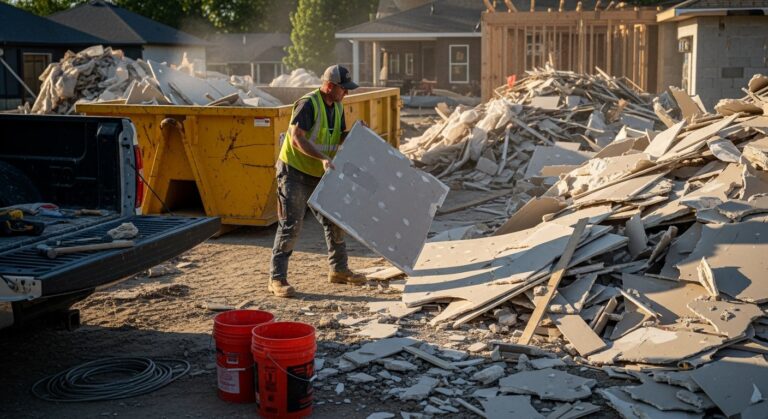
Finishing a drywall project in Arkansas leaves you with piles of cutoffs, broken sheets, and dust. Many homeowners and contractors assume they can toss this material into the nearest roll-off dumpster without a second thought. However, disposing drywall plasterboard Arkansas regulations best practices require careful attention to both state waste rules and the physical characteristics of the material. Gypsum, the main component of drywall, can release hydrogen sulfide gas when buried in wet conditions. This creates a landfill hazard and a regulatory concern. Understanding what to do with your waste keeps you compliant, protects the environment, and prevents unexpected fees from your disposal provider.
Arkansas does not ban drywall from landfills outright, but specific disposal methods and facility requirements apply. The Arkansas Department of Energy and Environment (DEQ) oversees solid waste management, and local landfill operators may have their own acceptance policies. Before you load a single piece of scrap, you need to know whether your drywall is clean or painted, whether it contains any hazardous additives, and how your chosen disposal facility handles construction debris. This guide walks you through the regulations, practical steps, and smart strategies for managing drywall waste on your next project.
Understanding Arkansas Drywall Disposal Regulations
Arkansas classifies drywall as construction and demolition (C&D) debris, which falls under the state’s solid waste management rules. Most municipal solid waste landfills in Arkansas accept C&D materials, including gypsum board, as long as the waste meets the facility’s specific criteria. However, the key issue is the potential for hydrogen sulfide gas generation. When gypsum (calcium sulfate dihydrate) decomposes in an anaerobic (oxygen-free) environment inside a landfill, bacteria convert the sulfate into hydrogen sulfide. This gas smells like rotten eggs and can pose health and odor problems for nearby communities.
To mitigate this risk, some Arkansas landfills require drywall to be placed in separate cells or mixed with other waste to allow airflow. Others may limit the volume of drywall accepted per load or charge a higher tipping fee for pure gypsum loads. The DEQ does not impose a statewide ban, but local ordinances can be stricter. For example, a county with a sensitive watershed or residential buffer zone may enforce additional handling rules. Always call ahead to the landfill or transfer station you plan to use. Ask specifically about their policy for clean drywall versus painted or taped material. This simple phone call can save you a rejected load and a return trip.
Clean vs. Painted Drywall: What Matters
Regulators and landfill operators distinguish between clean drywall and material that has paint, joint compound, texture, or wallpaper. Clean drywall is raw gypsum board with no coatings or adhesives. It is the easiest to dispose of and may even be accepted for recycling or beneficial use. Painted or finished drywall introduces additional chemicals (like latex paint binders or vinyl compounds) that may complicate disposal. Some landfills in Arkansas accept painted drywall as long as it is not mixed with hazardous waste, but tipping fees may be higher. If your drywall has mold, mildew, or water damage, disclose that as well because the moisture content can accelerate decomposition and gas production. Being upfront with the facility helps them manage the waste correctly and keeps you from surprise charges.
Best Practices for Drywall Disposal in Arkansas
Following best practices for disposing drywall plasterboard Arkansas regulations best practices means more than just following the law. It involves planning your waste stream from the moment you start the project. Here are the steps that experienced contractors and savvy homeowners use to keep drywall disposal simple and cost-effective.
1. Separate drywall from other debris. Mixing drywall with metal, wood, or plastic makes recycling or proper landfill placement harder. Keep a dedicated pile or container for gypsum board only. If you are using a dumpster, designate one section for drywall or use a separate smaller dumpster if the volume is high. This separation also helps if you decide to recycle the material later.
2. Keep drywall dry. Store scrap sheets under a tarp or inside a garage until disposal day. Wet drywall is heavier, harder to handle, and more likely to produce odors in the landfill. Dry material is also preferred by recycling facilities.
3. Check for hazardous contents. If your drywall was installed before 1980, it may contain asbestos in the joint compound or the paper facing. Asbestos is a regulated hazardous waste that cannot go to a standard C&D landfill. Have older material tested by a certified lab before disposal. If asbestos is present, you must hire a licensed abatement contractor for removal and disposal.
4. Choose the right disposal route. You typically have three options: landfill disposal, recycling, or donation/reuse. Landfill is the most common but may cost more per ton for pure gypsum loads. Recycling is available in some parts of Arkansas, where drywall is crushed and used as a soil amendment or in new drywall manufacturing. Donation is possible if you have large, clean sheets that can be used by Habitat for Humanity ReStores or similar organizations.
5. Use a reputable waste hauler. If you rent a dumpster, work with a company that understands Arkansas C&D regulations. They can advise on weight limits, prohibited items, and proper sorting. A good hauler will also handle the landfill paperwork so you do not have to.
Recycling Drywall: Is It an Option in Arkansas?
Drywall recycling is not as widespread in Arkansas as it is in some coastal states, but it is growing. A few private facilities and some public waste districts accept clean drywall for processing. The recycled gypsum is used as a soil conditioner for agriculture, as a component in new drywall, or as an additive in cement production. Recycling keeps material out of landfills and reduces the environmental impact of gypsum mining.
To recycle drywall in Arkansas, you need to find a facility that specifically accepts gypsum board. Call ahead because acceptance policies change. Some facilities require the drywall to be clean (no paint, no joint compound, no nails) and may reject loads with more than a small percentage of contamination. Others accept painted material but charge a higher fee. The Arkansas DEQ website offers a list of permitted recycling facilities, but calling the facility directly is the most reliable way to confirm current requirements. If you live in or near a larger metro area like Little Rock, Fayetteville, or Jonesboro, your chances of finding a recycler are better than in rural counties.
Cost Considerations for Drywall Disposal
Disposal costs for drywall in Arkansas vary by location, facility, and the condition of the material. Here is a rough breakdown of what you can expect:
- Tipping fees at C&D landfills: Typically $30 to $60 per ton for mixed debris. Pure drywall loads may incur a surcharge of $5 to $15 per ton because of the gas management requirements.
- Dumpster rental: A 10-yard dumpster for a small drywall project costs around $250 to $400 for a week, including disposal fees. Larger projects needing a 20 or 30 yard dumpster run $400 to $700.
- Recycling fees: Some recyclers accept clean drywall for free or at a reduced rate compared to landfill tipping fees. Others charge $20 to $40 per ton to cover processing costs.
- Transportation: If you haul the material yourself, factor in fuel costs and your time. Renting a dumpster often includes delivery, pickup, and disposal in one price, which can be more convenient and cost-effective for medium to large projects.
When comparing costs, remember that a rejected load due to contamination or incorrect sorting can double your expenses. Spending a little extra time on separation and research upfront saves money in the long run. Many contractors find that using a dedicated drywall dumpster with a clear weight limit avoids the risk of overage fees and rejected loads.
Common Mistakes to Avoid in Drywall Disposal
Even seasoned renovators make errors when handling drywall waste. Avoid these frequent pitfalls:
Mistake 1: Assuming all landfills accept drywall. Some smaller transfer stations or inert landfills (designed for clean dirt, concrete, and brick) do not accept gypsum board because of the gas issue. Always confirm before you go.
Mistake 2: Overloading a dumpster with drywall. Drywall is heavier than it looks. A full 20-yard dumpster of drywall can exceed the weight limit for the container or the truck, leading to overage charges. Know the weight limit of your dumpster rental and stay within it.
Mistake 3: Mixing hazardous waste with drywall. Paint cans, solvents, batteries, and asbestos-containing materials cannot go in the same load as drywall. Contamination can cause the entire load to be rejected. Keep hazardous items separate and dispose of them through appropriate channels.
Mistake 4: Ignoring local ordinances. Some Arkansas cities have specific rules about construction debris set out for curbside collection. For example, drywall may need to be bagged or bundled, and there may be limits on the amount per pickup. Check with your city’s public works department before placing drywall at the curb.
How to Choose a Drywall Disposal Service in Arkansas
Selecting the right disposal partner makes the difference between a smooth project and a stressful one. Whether you need a dumpster for a weekend renovation or a roll-off for a large commercial job, here are the factors to evaluate:
Experience with C&D waste. Look for a company that regularly handles construction debris and knows the local landfill regulations. They should be able to answer questions about drywall acceptance without hesitation. In our guide on Batesville waste disposal services and local regulations, we explain how to vet a provider for small to medium projects.
Transparent pricing. Ask for a quote that includes delivery, pickup, disposal fees, and any surcharges for drywall. Avoid companies that quote a base price and then add fees for weight or material type at the end.
Flexibility. If your project scope changes, your disposal plan should adapt. A good provider offers different dumpster sizes and can adjust pickup dates if work runs long.
Environmental commitment. Some Arkansas waste companies actively recycle drywall or partner with gypsum recyclers. Choosing one reduces your environmental footprint and may lower your costs.
Final Thoughts on Drywall Disposal in Arkansas
Managing drywall waste in Arkansas does not have to be complicated. The key is to understand the regulations, plan your disposal route before you start work, and work with a waste service that knows the local landscape. By separating clean material, keeping it dry, and choosing between landfill and recycling options, you can complete your project without regulatory headaches or surprise costs. Whether you are a DIY homeowner or a general contractor, taking these steps ensures that your drywall waste is handled responsibly and in full compliance with Arkansas rules.