
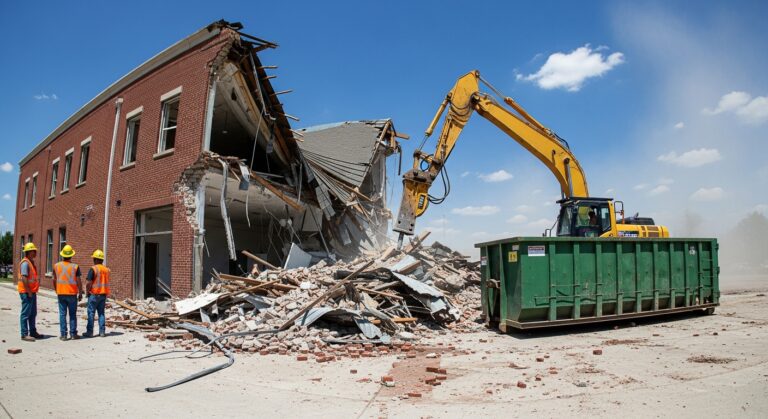
Demolishing a structure in Arkansas requires more than heavy machinery and a hard hat. Whether you are clearing land for new construction, removing an unsafe barn, or taking down an old commercial building, the process demands careful planning, strict adherence to local regulations, and a clear understanding of waste management. Property owners and contractors alike often underestimate the complexity of building demolition in Arkansas, which can lead to costly delays, safety hazards, and environmental fines. This guide breaks down the essential steps, permit requirements, and disposal strategies you need to execute a successful demolition project in the Natural State.
Understanding Arkansas Demolition Regulations
Before any structure comes down, you must navigate a web of state and local rules. Arkansas does not have a single statewide demolition code; instead, municipalities and counties enforce their own building codes and permit systems. For example, Little Rock requires a demolition permit for any structure over 120 square feet, while Fayetteville mandates asbestos inspection before issuing a permit. You should always contact your local building department early in the planning phase to obtain the specific application forms and fee schedules.
Beyond local permits, the Arkansas Department of Environmental Quality (ADEQ) oversees demolition projects that involve asbestos-containing materials. Federal law under the National Emission Standards for Hazardous Air Pollutants (NESHAP) requires a thorough asbestos survey before any renovation or demolition. Failing to identify and abate asbestos can result in fines of up to $37,500 per day. Many contractors hire a licensed asbestos inspector to perform the survey and create a abatement plan if needed. This step alone can add one to three weeks to the project timeline, so factor it into your schedule from the start.
Pre-Demolition Steps Every Owner Should Take
Proper preparation separates a smooth demolition from a chaotic one. Start by disconnecting all utilities: electricity, gas, water, and sewer lines. Contact the utility companies at least 48 hours before the planned start date. The gas company may require a technician to cap the line at the meter, and the electric utility may need to remove the meter and disconnect overhead service drops. Document these disconnections with photos and written confirmation for your records.
Next, conduct a structural assessment. A structural engineer or experienced demolition contractor can evaluate whether the building can be taken down safely with standard equipment or if specialized methods like controlled implosion are necessary. This assessment also identifies load-bearing walls, hazardous materials beyond asbestos (such as lead paint or mercury switches), and any underground storage tanks. In our guide on the Tuckerman roll off building demolition process explained, we detail how proper site evaluation prevents surprises during the tear-down phase.
Finally, notify neighbors and local authorities. Many Arkansas cities require a public notice period of 7 to 14 days before demolition begins. This allows adjacent property owners to prepare for noise, dust, and potential traffic disruptions. Posting a visible sign on the property with the contractor’s name and contact information is often part of the permit conditions.
Selecting the Right Demolition Method
The scale and location of your building determine which demolition approach works best. For most residential and small commercial structures, mechanical demolition using excavators with hydraulic shears, crushers, or wrecking balls is the standard. This method is fast and cost effective, but it generates significant noise and vibration. In dense urban areas like Fayetteville or downtown Little Rock, selective demolition may be required to protect adjacent buildings. This technique involves dismantling the structure piece by piece, often with hand tools and smaller machinery, which takes longer but minimizes collateral damage.
For tall structures or buildings in extremely confined spaces, controlled implosion using explosives is an option. However, Arkansas has few companies licensed for this work, and the permitting process through the State Fire Marshal’s Office is rigorous. Implosion is rarely used for buildings under four stories due to the high cost and safety risks. Most property owners find that mechanical demolition combined with proper debris management meets their needs without the complexity of explosives.
Managing Demolition Waste and Debris
Demolition generates enormous volumes of waste: concrete, wood, metal, drywall, roofing materials, and more. Arkansas landfills accept construction and demolition debris, but tipping fees vary widely by county. For example, the Little Rock landfill charges around $45 per ton, while rural landfills may charge less. However, you can significantly reduce disposal costs by sorting materials on site. Steel and copper can be sold to scrap metal recyclers, often offsetting a portion of your overall budget. Clean concrete and brick can be crushed and reused as fill or road base, saving both disposal fees and the cost of importing new aggregate.
When planning waste removal, consider the logistics of debris handling. Roll-off dumpsters are the most common solution for demolition projects because they can handle heavy, bulky materials. You will need to estimate the volume of debris accurately to avoid renting too few dumpsters or paying for multiple hauls. A standard 30-yard roll-off container holds about 9 tons of mixed demolition debris, but heavier materials like concrete may require a 20-yard container with a higher weight limit. Your dumpster rental provider can help you calculate the right size and quantity based on the building’s square footage and construction type.
Do not forget about hazardous waste streams. Asbestos, lead paint, solvents, and certain adhesives cannot go into standard dumpsters. These materials must be packaged, labeled, and transported to approved disposal facilities. Many demolition contractors subcontract this work to specialized environmental remediation companies. Keeping a detailed manifest of all waste streams protects you from liability and demonstrates compliance with ADEQ regulations.
Cost Factors and Budgeting for Your Project
Building demolition in Arkansas typically costs between $4 and $15 per square foot for residential structures, with commercial projects falling on the higher end. Several factors influence the final price:
- Structural complexity: Multi-story buildings, reinforced concrete, or structures with hazardous materials cost more to demolish.
- Location: Urban projects face higher permit fees, traffic control costs, and noise restrictions. Rural projects may have lower permit costs but higher transportation fees for equipment and debris.
- Utility disconnection and abatement: Asbestos removal alone can add $1,000 to $5,000 or more, depending on the extent of contamination.
- Disposal fees: Landfill tipping fees and the distance to the nearest disposal site directly impact your budget.
- Salvage value: If you can sell reusable materials like lumber, fixtures, or metal, you may recoup 5% to 15% of the total cost.
Always obtain at least three written bids from licensed demolition contractors. Ask each bidder to itemize costs for permits, abatement, labor, equipment, disposal, and any contingencies. A low bid may omit critical steps like asbestos inspection or proper dust control, leading to expensive change orders later. Investing time in bid comparison pays off in project reliability and cost predictability.
Safety Protocols and Liability Protection
Demolition is one of the most dangerous construction activities. The Occupational Safety and Health Administration (OSHA) reports that demolition workers face higher rates of fatal injuries than general construction workers. In Arkansas, where summer heat and sudden storms add environmental hazards, safety planning is non-negotiable. Every demolition site must have a written safety plan that covers fall protection, heavy equipment operation, dust management, and emergency response.
Your contractor should provide proof of insurance: general liability coverage of at least $1 million, workers’ compensation, and pollution liability if hazardous materials are present. As the property owner, you could be held liable for injuries or property damage if the contractor lacks adequate coverage. Request a certificate of insurance directly from the contractor’s insurer before work begins. Additionally, consider purchasing owner-controlled insurance for large projects to close gaps in coverage.
On-site safety measures include establishing a exclusion zone around the demolition area, using water sprays to control dust, and providing personal protective equipment for all workers. If the building is near public roads or sidewalks, you may need to install fencing, signage, and traffic control measures approved by the local public works department. Regular safety meetings with the crew ensure everyone understands the day’s tasks and potential hazards.
Post-Demolition Site Restoration
After the structure is down and debris is removed, the site rarely looks ready for its next use. You will need to grade the land to match the surrounding elevation, fill any basements or foundations with approved fill material, and compact the soil to prevent future settling. Arkansas’s clay-heavy soils require careful compaction testing to avoid drainage problems or structural issues for future construction. A geotechnical engineer can specify the necessary compaction density and test the site after grading.
Erosion control is another post-demolition concern. The Arkansas Department of Agriculture’s Natural Resources Division requires erosion and sediment control plans for any land disturbance over one acre. Even smaller sites should implement silt fences, straw wattles, or temporary seeding to prevent runoff into nearby waterways. If your property is within a floodplain or near a stream, additional permits from the Arkansas Natural Resources Commission may be required before grading begins.
Finally, update your property records. Notify the county assessor’s office that the building has been removed; this can lower your property tax assessment since you no longer have a habitable structure. If you plan to build something new, ensure your demolition permit closure documents are filed with the local building department so they do not impede future construction permits. A clean paper trail saves headaches when you apply for a building permit later.
Building demolition in Arkansas is a multifaceted process that rewards thorough preparation and professional execution. By understanding local regulations, budgeting for all cost components, prioritizing safety, and managing waste responsibly, you can transform an old structure into a clean slate for your next project. Whether you are a homeowner clearing a backyard eyesore or a developer preparing a commercial site, the principles outlined here will help you avoid common pitfalls and achieve a compliant, efficient demolition.