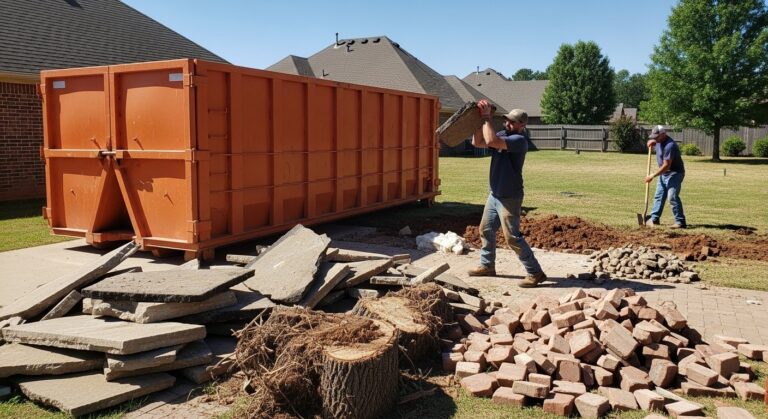
When you tackle a major landscaping or hardscaping project in Arkansas, the pile of debris can grow faster than a weed in summer heat. Broken concrete, uprooted stumps, old pavers, and loads of soil and rock all add up quickly. Without a solid removal plan, you risk delays, extra trips to the dump, and a messy jobsite. That is where Arkansas dumpster rental for landscaping hardscaping debris becomes an essential tool for homeowners and contractors alike. Renting the right dumpster saves time, keeps your property safe, and ensures you stay compliant with local disposal rules.
Landscaping and hardscaping projects produce heavy, dense waste that standard trash pickup simply cannot handle. A dedicated dumpster rental gives you a central spot to toss all debris as you work. This keeps your yard or driveway clear of hazards and lets you focus on the job instead of hauling loads yourself. Whether you are installing a new patio, building a retaining wall, or clearing an overgrown lot, having a dumpster on site from the start makes every phase smoother.
Why Landscaping and Hardscaping Debris Is Different
Not all waste is created equal. Landscaping debris includes branches, leaves, grass clippings, dirt, and organic matter. Hardscaping debris covers concrete, brick, stone, asphalt, pavers, and tile. These materials are heavier and bulkier than household trash. A standard 20-yard dumpster filled with soil or concrete can weigh several tons. That weight affects the type of dumpster you need and the cost of disposal.
Arkansas dumpster rental for landscaping hardscaping debris must account for weight limits and material types. Many rental companies have specific dumpsters for heavy debris because they are built stronger and have lower sides for easier loading. If you fill a general-purpose dumpster with concrete, you might exceed the weight allowance and face extra fees. Knowing the difference helps you choose the right container and avoid surprises.
Choosing the Right Dumpster Size for Your Project
Selecting the correct size is one of the most important decisions you will make. A dumpster that is too small forces you to stop work and order a second one. A dumpster that is too large costs more than necessary and takes up valuable space. Here is a breakdown of common sizes and what they handle best for landscaping and hardscaping debris.
- 10-yard dumpster: Best for small cleanups like removing a single tree stump, clearing brush, or a minor paver repair. Holds about 10 cubic yards or roughly 3 pickup truck loads.
- 15-yard dumpster: Ideal for medium projects such as removing a concrete patio or replacing a driveway apron. Good balance of size and weight capacity for mixed debris.
- 20-yard dumpster: The most popular choice for larger landscaping overhauls, including full yard renovations and medium hardscaping jobs like walkways or small retaining walls.
- 30-yard dumpster: Suited for major hardscaping installations, large-scale grading, or commercial landscaping projects. Handles heavy materials but requires more space for placement.
For most residential landscaping and hardscaping work in Arkansas, a 15 or 20-yard dumpster is the sweet spot. It gives you enough room for concrete, soil, and plant debris without exceeding weight limits. Always ask your rental provider about weight allowances and what happens if you go over. Some companies include a ton or two in the base price, while others charge per ton over the limit.
Understanding Weight Limits and Overage Charges
Weight is the biggest cost factor when renting a dumpster for heavy debris. A 20-yard dumpster might hold up to 4 tons of concrete, but soil and rock are also dense. If you fill it with wet clay, you could hit the weight limit before the container is full. Rental companies set a maximum weight in the rental agreement. Exceeding that limit triggers overage fees, often charged per hundred pounds or per ton.
To avoid extra costs, estimate your debris weight beforehand. A cubic yard of concrete weighs about 4,000 pounds. A cubic yard of soil weighs roughly 2,200 pounds when dry and up to 3,000 pounds when wet. Compare that to a cubic yard of mixed yard waste, which might weigh only 500 pounds. Arkansas dumpster rental for landscaping hardscaping debris requires honest communication with the rental company about what you plan to throw away. They can recommend the right size and weight allowance for your specific materials.
Some companies offer dumpsters specifically rated for heavy debris. These have reinforced floors and higher weight limits. They may cost more upfront but can save you money if you are disposing of concrete, brick, or stone. Always confirm the maximum weight allowed and ask about the policy for mixed loads. For example, filling the bottom with concrete and topping off with branches is a common strategy to stay under weight limits while maximizing space.
Permits and Placement Considerations in Arkansas
Where you place the dumpster matters. In Arkansas, if the dumpster sits on your private property, you usually do not need a permit. However, if it blocks a sidewalk, street, or alley, you likely need a city or county permit. Some municipalities, like Little Rock, Fayetteville, or Bentonville, have specific rules about dumpster placement on public right-of-way. Check with your local public works department before delivery to avoid fines.
Also consider access. The delivery truck needs a clear path at least 60 feet long and 14 feet wide. Overhead obstacles like low-hanging branches or power lines can block delivery. Hardscaping projects often involve heavy machinery, so plan the dumpster location to keep it out of the way of excavators and skid steers. Place it on a flat, solid surface to prevent sinking or tipping, especially if you are filling it with heavy materials like concrete.
If you are working on a large property with limited driveway space, consider a roll-off dumpster. These are delivered by a truck that tilts the container off the bed. They work well on gravel or grass but may require plywood under the wheels to prevent ruts. Your rental company can advise on the best setup for your Arkansas property.
What Can and Cannot Go in a Landscaping Hardscaping Dumpster
Most landscaping and hardscaping debris is acceptable, but some items are banned from standard dumpsters. Here is a quick guide to keep you compliant and avoid contamination fees.
- Allowed: Concrete, brick, stone, asphalt, pavers, tiles, dirt, sand, gravel, rocks, branches, stumps, leaves, grass, and untreated lumber.
- Not allowed: Hazardous waste like paint, solvents, chemicals, batteries, tires, propane tanks, asbestos, and medical waste. Also prohibited: large appliances with refrigerants, electronics, and fluorescent bulbs.
If you have treated lumber, check with your rental company. Some accept it, others do not because of the chemicals used in pressure treatment. For organic waste like large stumps, confirm that the company can handle them. Stumps are heavy and bulky, requiring special disposal methods. In our guide on Farm Waste Disposal With Arkansas Dumpster Rental, we explain how to manage challenging organic materials efficiently.
Mixing materials is generally fine, but keep wet dirt and concrete separate from lightweight yard waste if possible. This prevents the lighter debris from getting crushed under the weight and making it harder to unload. Some rental companies charge different rates for clean loads of concrete versus mixed loads. A clean load of concrete is cheaper to recycle, so if you are only removing a concrete slab, ask about a concrete-only dumpster rate.
Seasonal Timing and Weather Factors
Arkansas weather can affect your dumpster rental experience. Spring and fall are peak seasons for landscaping projects. Demand for dumpsters rises, so book at least a week in advance. Summer heat and humidity make physical work harder, but the dry conditions are ideal for concrete work. Winter brings mud and frozen ground, which can complicate dumpster placement and removal.
Heavy rain can turn soil into mud and make your debris heavier. Wet dirt and clay add significant weight, potentially pushing you over the limit. If you are renting during a rainy period, consider a slightly larger dumpster or a higher weight allowance. Also, protect your driveway or lawn by placing plywood under the dumpster to prevent damage from the container edges and truck tires.
Many Arkansas homeowners schedule dumpster delivery for the morning of their project and pickup for the day after completion. This minimizes the time the dumpster sits on the property and reduces the chance of unauthorized dumping. Some companies offer flexible rental periods, so you can keep the dumpster for a week or more if your project spans several days.
Cost Breakdown and Budgeting Tips
Pricing for Arkansas dumpster rental for landscaping hardscaping debris varies based on size, weight, location, and duration. A typical 20-yard dumpster for mixed debris costs between $350 and $550 for a week. Heavier materials like concrete can push the price higher due to disposal fees at the landfill or recycling center.
Here are common factors that affect the final price:
- Base rental fee: Covers delivery, pickup, and a set number of days (usually 7 to 10).
- Weight allowance: Most companies include 1 to 2 tons. Additional weight costs $50 to $100 per ton.
- Overweight fees: If you exceed the allowance, you pay extra. Avoid this by estimating your debris weight accurately.
- Permit fees: If the dumpster goes on public property, you pay the permit cost (typically $10 to $50).
- Additional days: Extending the rental past the included period costs $5 to $15 per day.
To budget effectively, get quotes from at least three Arkansas dumpster rental companies. Ask for a detailed breakdown that includes taxes, fuel surcharges, and disposal fees. Some companies offer flat-rate pricing that includes a higher weight limit, which can be a better deal for heavy hardscaping projects. Others charge per ton after a low allowance, making them cheaper for light yard waste but expensive for concrete.
If you are a contractor doing multiple projects, ask about volume discounts or repeat customer programs. Many Arkansas dumpster providers offer lower rates for frequent rentals or for customers who book several dumpsters at once.
Safety and Jobsite Best Practices
A dumpster on site improves safety by keeping debris contained and off the ground. Sharp objects like broken concrete, nails from old forms, and splintered wood can cause injuries if left scattered. Designate a clear zone around the dumpster and remind everyone to toss debris carefully rather than throwing it over the side. Overfilling is dangerous: debris should not extend above the rim of the dumpster. Loose items can fall out during transport and create road hazards.
For hardscaping projects involving heavy blocks or stone, use a wheelbarrow or dolly to move material to the dumpster. Lifting heavy pieces by hand can cause back injuries. If you are demolishing a concrete structure, break it into manageable pieces before loading. Most rental companies require that debris be no larger than 4 feet in length or width. Oversized items may not fit or could damage the container.
Keep the area around the dumpster clear of equipment and tools. When the truck arrives for pickup, the driver needs room to maneuver. Communicate with your crew about the pickup time so no one parks behind the dumpster or leaves obstacles in the path.
Environmental Benefits of Proper Disposal
Arkansas has a growing focus on recycling construction and demolition debris. Concrete, brick, and asphalt can be crushed and reused as base material for roads and new construction. Clean wood can be chipped into mulch or used for biomass energy. By renting a dumpster and sorting your debris properly, you contribute to these recycling efforts.
Many Arkansas dumpster rental companies partner with local recycling facilities. When you request a clean load of concrete, they can route it directly to a crusher instead of the landfill. This reduces disposal costs and environmental impact. Ask your rental provider if they offer recycling options for landscaping and hardscaping debris. Even if it costs a little more upfront, it can lower your overall waste footprint and sometimes reduce disposal fees.
For organic landscaping waste, consider composting or mulching when possible. Large branches and stumps are harder to compost but can be ground into wood chips. If you have a significant amount of yard waste, ask if your dumpster company separates it from heavy debris. Some facilities charge less for green waste than for mixed loads.
Final Thoughts on Your Arkansas Project
Renting a dumpster for your landscaping or hardscaping project in Arkansas is a straightforward investment that pays off in efficiency, safety, and compliance. By choosing the right size, understanding weight limits, and planning placement, you avoid common pitfalls that derail timelines and budgets. Whether you are a homeowner refreshing your backyard or a contractor managing a commercial hardscape installation, Arkansas dumpster rental for landscaping hardscaping debris gives you the capacity and convenience to get the job done right. Book early, communicate clearly with your rental provider, and keep your jobsite organized. Your project will move faster, and you will have one less thing to worry about.