Running a small business in Arkansas comes with many responsibilities, and managing waste effectively is one of the most critical. Whether you operate a retail store in Little Rock, a restaurant in Fayetteville, or a construction firm in Springdale, finding the right waste management approach can save you money, keep your site compliant, and protect the environment. Many owners assume that waste disposal is a simple matter of renting a dumpster and hauling trash away. In reality, a strategic plan tailored to your business type and location can reduce costs by 20 to 40 percent while improving operational efficiency. This article explores practical Arkansas small business waste management solutions that address local regulations, seasonal challenges, and industry-specific needs.
Understanding Local Waste Regulations for Arkansas Businesses
Arkansas has specific guidelines that affect how small businesses handle their waste. The Arkansas Department of Environmental Quality (ADEQ) oversees disposal standards, recycling mandates, and hazardous material restrictions. For example, businesses that generate more than 220 pounds of solid waste per month must comply with reporting requirements that smaller operations might overlook. Failing to follow these rules can result in fines that hurt your bottom line.
Municipalities like Little Rock, Bentonville, and Jonesboro also have their own ordinances. Some cities require businesses to separate recyclables from general trash, while others mandate the use of licensed haulers. Before you set up a waste management plan, check with your city’s public works department. A simple phone call can clarify whether you need special permits for dumpster placement or if there are restrictions on what can go into a commercial bin.
One common mistake small business owners make is assuming that all waste is the same. Cardboard from shipping boxes, food waste from a kitchen, and scrap metal from a workshop all require different handling. Mixing them can lead to higher disposal fees and missed opportunities for recycling revenue. By understanding local rules, you can create a system that keeps your business compliant and efficient.
Choosing the Right Dumpster Size and Rental Plan
Selecting the correct dumpster size is one of the most impactful decisions you will make. A container that is too small forces frequent pickups, driving up costs. A container that is too large wastes space and money. For most Arkansas small businesses, the sweet spot lies between 10 and 30 cubic yards, but the right choice depends on the volume and type of waste you produce.
Consider these common scenarios and their typical dumpster needs:
- Retail stores and offices: 10 to 15 cubic yards for mixed trash, cardboard, and paper waste. Weekly pickup often suffices.
- Restaurants and food services: 8 to 12 cubic yards with more frequent service to avoid odor and pest issues. Grease and food scraps may require separate containers.
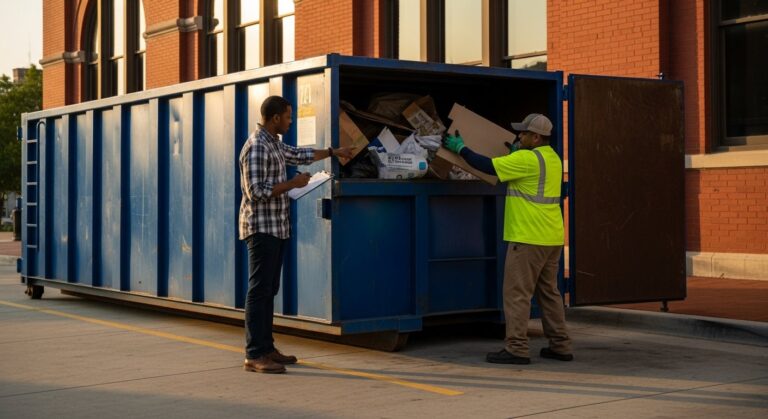
- Construction and renovation sites: 20 to 30 cubic yards for debris like wood, drywall, and metal. Roll-off dumpsters work best for these projects.
Rental plans also vary. Some providers offer flat-rate pricing that includes delivery, pickup, and disposal fees. Others charge per pickup or by weight. If your waste volume fluctuates seasonally, look for a flexible plan that lets you adjust service frequency. Many Arkansas businesses benefit from a scheduled service with the option to request extra pickups during busy periods.
In our guide on Cabot waste management solutions for homes and businesses, we explain how to match container size to specific waste streams. That principle applies broadly across the state. The key is to audit your waste output for two weeks, measure the volume, and then choose a dumpster that fits your average needs with a little extra capacity for peak times.
Recycling Programs That Save Money and Build Goodwill
Recycling is not just an environmental gesture. It can be a smart financial move for Arkansas small businesses. Many waste haulers offer lower rates for recyclable materials because they avoid landfill fees. Cardboard alone accounts for a significant portion of commercial waste. By compacting and recycling it, a small business can reduce its overall disposal costs by 15 to 25 percent.
Some municipalities provide free or low-cost recycling bins for businesses that meet certain criteria. For example, Fayetteville has a commercial recycling program that includes free cardboard collection for qualifying businesses. Similarly, Little Rock offers rebates for businesses that implement recycling programs. Check with your local chamber of commerce or ADEQ for incentives in your area.
Recycling also enhances your brand reputation. Customers increasingly prefer to support businesses that demonstrate environmental responsibility. A simple sign near your recycling station can communicate your commitment. You might even share your recycling metrics on social media to build community goodwill. Over time, these efforts can differentiate your business from competitors.
Managing Hazardous and Specialty Waste Streams
Certain types of waste require special handling under Arkansas law. Batteries, fluorescent bulbs, paints, solvents, and electronic waste cannot go into standard dumpsters. Improper disposal can lead to environmental contamination and legal liability. Small businesses that generate these materials must set up separate collection processes.
For example, auto repair shops and body shops produce used oil, filters, and rags contaminated with solvents. These items must be stored in sealed containers and picked up by a licensed hazardous waste transporter. Retail stores that sell electronics must have a plan for recycling or returning old devices. Restaurants that use cooking oil must store it in dedicated bins for rendering companies.
One effective strategy is to partner with a waste management provider that offers specialty disposal services. Many full-service companies in Arkansas handle both regular trash and hazardous streams. They can provide labeled containers, training for your staff, and documentation that proves compliance. This simplifies your operations and reduces the risk of mistakes.
If you produce only small amounts of hazardous waste, consider participating in a local household hazardous waste collection event. Some municipalities allow small businesses to drop off limited quantities on designated days. This can be a cost-effective alternative to a full-scale program, especially for low-volume generators.
Seasonal Challenges and How to Prepare
Arkansas experiences distinct seasons that affect waste generation. Spring and fall often bring yard waste, renovation debris, and increased inventory from retail promotions. Summer means higher volumes of food waste and packaging from tourism. Winter can slow down waste production but may also bring ice and snow that complicate dumpster access.
Plan for these fluctuations by adjusting your service schedule. Many waste management companies allow temporary increases in pickup frequency during peak seasons. You might also arrange for an extra dumpster drop during a big sale or construction project. Communicate your expected needs to your provider at least two weeks ahead to ensure availability.
Weather also impacts dumpster placement. Heavy rain can make ground soft, causing containers to sink or become difficult to access. Place dumpsters on a stable, gravel or concrete surface. During winter, keep a path clear of snow and ice so the hauler can safely service your container. These small steps prevent delays and extra fees.
Cost Reduction Strategies for Arkansas Small Businesses
Waste management costs can add up quickly, but there are proven ways to reduce them. Start by negotiating your contract. Many providers are willing to offer discounts for long-term commitments or bundled services. If you own multiple locations, ask about multi-site pricing.
Next, implement a waste sorting system. Train employees to separate recyclables, compostable materials, and landfill waste. This reduces the volume going to the landfill and lowers your per-pickup costs. Some haulers even provide rebates for large volumes of clean recyclables.
Consider compacting waste on site. A cardboard baler or a trash compactor can reduce the frequency of pickups by up to 50 percent. The upfront investment often pays for itself within a year through lower service fees. For small businesses with limited space, smaller compactors are available that fit under a counter or in a closet.
Finally, review your invoices monthly. Look for charges you do not recognize, such as fuel surcharges, environmental fees, or rental add-ons. If you see unexpected costs, ask your provider for an explanation. Sometimes a simple phone call can remove erroneous charges or clarify your contract terms.
Partnering With a Local Waste Management Provider
Working with a local provider offers advantages that national chains cannot match. Local companies understand Arkansas regulations, know the landfill schedules, and can respond quickly to service issues. They also tend to offer more personalized customer service. When you call with a problem, you speak to someone who knows your account and your area.
When evaluating providers, ask about their sustainability practices. Do they offer recycling services? Do they use fuel-efficient trucks? Do they support community cleanup events? A provider that shares your values can become a long-term partner in your business’s success.
Request references from other local businesses in your industry. A restaurant owner can tell you how well a hauler handles food waste, while a contractor can speak to reliability for construction debris. Online reviews also provide insight, but direct conversations often reveal more detail. Visit the provider’s facility if possible to see how they process waste and whether they maintain a clean operation.
Once you choose a provider, establish a clear communication channel. Provide them with a list of contacts at your business and update it regularly. Discuss your waste generation patterns, any upcoming changes, and your expectations for service. A strong relationship prevents misunderstandings and ensures smooth operations.
Technology and Tools for Waste Management Efficiency
Modern technology can simplify waste management for small businesses. Some dumpster rental companies offer online portals where you can schedule pickups, view invoices, and track service history. This saves time and reduces paperwork. You can also set up automatic payments to avoid late fees.
Smart bins with fill-level sensors are becoming more affordable. These devices send an alert when the dumpster is nearing capacity, so you only schedule pickups when needed. This prevents overflow and reduces unnecessary trips. For businesses with unpredictable waste volumes, this technology can cut costs by up to 30 percent.
Waste management software can also help you track your environmental impact. Some platforms calculate your carbon footprint, recycling rates, and cost per pound of waste. This data can inform decisions about where to cut waste or improve recycling. It also provides content for sustainability reports that customers and investors appreciate.
Building a Sustainable Waste Culture in Your Business
Lasting change comes from the people in your organization. Train your employees on proper waste sorting and disposal procedures. Make it easy for them to do the right thing by placing clearly labeled bins in convenient locations. Recognize staff members who go above and beyond in reducing waste.
Consider appointing a waste champion. This person can monitor compliance, suggest improvements, and serve as the point of contact for your waste management provider. Giving someone ownership of the program increases accountability and engagement. You might also hold quarterly reviews to celebrate successes and address challenges.
Share your waste reduction goals with customers. Post signs explaining your recycling program or composting efforts. Include a note on your website about your commitment to sustainability. Customers who share these values will appreciate your transparency and may become more loyal. Over time, your waste management program becomes a point of pride rather than a back-office chore.
Arkansas small business waste management solutions do not have to be complicated. By understanding local regulations, choosing the right dumpster size, recycling strategically, and partnering with a reliable local provider, you can control costs and reduce your environmental footprint. Start with a waste audit, set clear goals, and build a system that grows with your business. The effort you invest today will pay dividends in lower expenses, happier customers, and a cleaner Arkansas for everyone.