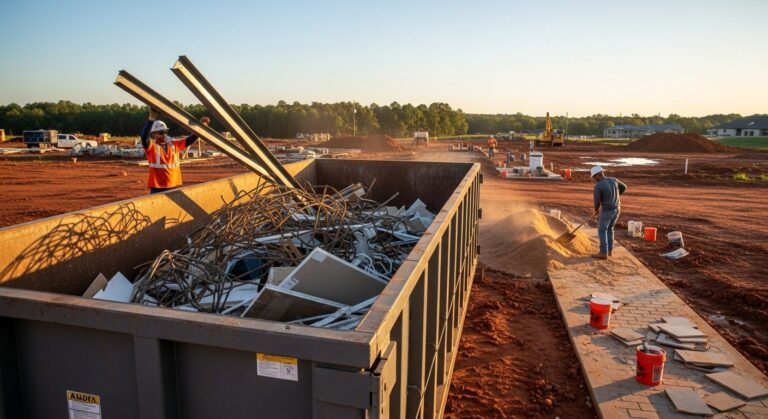
On any active construction site, the balance between productivity and safety is delicate. One overlooked hazard is the waste stream itself: piles of scrap lumber, twisted rebar, drywall dust, and chemical containers can turn a well-organized job site into a liability nightmare. In Arkansas, where construction regulations align with federal OSHA standards but also include state-specific environmental rules, proper waste handling is not just about keeping a clean site. It is about protecting workers, avoiding fines, and maintaining project momentum. Choosing the right dumpster and following a deliberate safety protocol for waste handling can be the difference between a smooth project and a costly shutdown.
This article provides a practical framework for integrating safety into every step of waste management on an Arkansas construction site. From selecting the correct container to training crews on disposal procedures, we cover the critical elements that keep your job site compliant and your team out of harm’s way.
<n
Why Waste Handling Is a Safety Priority on Arkansas Job Sites
Construction waste is not inert debris. It often contains sharp objects, heavy materials, toxic substances, and combustible items. When waste is piled haphazardly, it creates trip hazards, fire risks, and exposure to hazardous dust. In Arkansas, the combination of humidity and heat can accelerate chemical reactions in improperly stored waste, increasing the danger of spontaneous combustion or toxic off-gassing.
Safety statistics show that a significant percentage of construction injuries occur during cleanup and waste handling. Strains from lifting heavy debris, cuts from exposed nails or metal, and respiratory issues from silica dust are all common. Furthermore, improper waste handling can lead to environmental violations under the Arkansas Department of Energy and Environment (ADEE) guidelines, resulting in penalties that impact project budgets and timelines.
Integrating safety into waste handling means treating debris management as a core workflow, not an afterthought. It requires the right equipment, clear procedures, and consistent training. One of the most critical pieces of equipment is the dumpster itself. Choosing the correct size, type, and placement of a construction site safety waste handling Arkansas dumpster directly affects how safely your crew can dispose of materials.
<n
Selecting the Right Dumpster for Safety and Compliance
Not all dumpsters are created equal, and using the wrong container on a construction site can create hazards. For example, a standard open-top dumpster without a lid might be fine for lumber and drywall, but it is unsuitable for heavy materials like concrete or for waste that must be covered to prevent dust dispersion. In Arkansas, regulations may require covers on dumpsters containing friable materials or substances that could attract pests.
When evaluating dumpster options, consider the following safety factors:
- Size and weight capacity: Overloading a dumpster can cause structural failure during lifting or transport. Choose a size that matches your waste volume without exceeding safe weight limits. For heavy debris like concrete or brick, a smaller, reinforced roll-off is safer than a large, lightweight container.
- Accessibility features: Look for dumpsters with low sides or walk-in doors for easy loading. This reduces the need for workers to lift debris overhead or climb onto piles, which are common causes of falls and strains.
- Cover and containment: If your waste includes dust-producing materials or items that could blow away, a covered dumpster or one with a tarp system is essential. This prevents airborne particulates that can cause respiratory issues and keeps the site tidy.
- Material compatibility: Some waste streams require specialized containers. For instance, hazardous chemicals need sealed, labeled containers that comply with ADEE and EPA standards. Mixing incompatible waste in a single dumpster can lead to dangerous chemical reactions.
In our guide on Appliance Disposal Arkansas Dumpster Rental Made Simple, we discuss how proper container selection applies to specific waste types. The same principles apply to construction debris: match the container to the material to protect workers and the environment.
Once you have the right dumpster, the next step is placing it in a location that maximizes safety and efficiency. Position it on level, stable ground away from high-traffic areas, exit paths, and utility lines. Ensure there is clear access for delivery and pickup trucks, and that the surrounding area is free of tripping hazards. In Arkansas, where rain can quickly turn soil to mud, consider using gravel or a concrete pad to prevent the dumpster from sinking or tipping.
<n
Establishing Safe Waste Handling Procedures
Having the correct dumpster is only half the equation. Your crew must follow consistent, safe procedures for loading and managing waste. Begin by designating a waste handling zone around the dumpster. This area should be clearly marked with cones or caution tape, and only authorized personnel should enter. This prevents accidental collisions with equipment and keeps bystanders away from loading activities.
Develop a sorting protocol for different waste types. For example, separate lumber and metal from drywall and packaging. This not only aids recycling efforts but also reduces the risk of mixing incompatible materials. Use separate dumpsters or clearly labeled containers for each category if your project generates diverse waste streams. In Arkansas, recycling mandates for construction and demolition debris are becoming more common, so sorting can also keep you compliant with local ordinances.
Train every worker on proper lifting techniques. Debris can be awkwardly shaped, heavy, or slippery. Emphasize team lifting for items over 50 pounds and the use of carts, dollies, or forklifts when feasible. Provide puncture-resistant gloves, steel-toed boots, and eye protection for anyone handling waste. For tasks that generate dust, such as cutting or breaking materials, require N95 respirators or higher, especially in enclosed or semi-enclosed areas.
Establish a clear schedule for waste removal. Allowing dumpsters to overflow creates immediate hazards: debris can fall onto workers, block access routes, or be scattered by wind. Arrange for regular pickups or have a backup container ready during peak waste generation phases. In Arkansas’s hot summers, organic waste like food scraps from break areas can attract insects and rodents, so keep that waste in sealed containers and remove it frequently.
<n
Managing Hazardous Construction Waste
Construction sites often generate waste that is classified as hazardous under federal or state law. Common examples include paints, solvents, adhesives, lead-based paint chips, asbestos-containing materials, and certain treated woods. In Arkansas, the ADEE regulates the disposal of hazardous waste, and improper handling can result in significant fines and legal liability.
Never place hazardous waste in a standard construction dumpster. Instead, set up a separate, clearly labeled collection point for these materials. Use containers that are compatible with the waste type, such as sealed drums for liquids or heavy-duty bags for contaminated debris. Train a designated team member to oversee hazardous waste management and ensure that all containers are properly labeled with the contents and hazard warnings.
For materials like asbestos or lead, which are common in renovation and demolition projects, Arkansas law requires certified abatement contractors to handle removal and disposal. Do not allow general laborers to disturb these materials. If you suspect the presence of hazardous substances on your site, stop work in that area and arrange for testing before proceeding. The safety of your crew depends on strict adherence to these protocols.
Keep a detailed log of all hazardous waste generated, including the type, quantity, and disposal method. This documentation is essential for regulatory compliance and can protect you in the event of an inspection or incident. Partner with a waste disposal company that specializes in hazardous materials to ensure proper transport and treatment.
<n
Training and Communication for a Safety Culture
Even the best equipment and procedures fail without a crew that understands and follows them. Invest in regular safety training focused specifically on waste handling. This should be part of your site’s overall safety orientation and reinforced with weekly toolbox talks. Cover topics such as:
- Identifying different waste types and their hazards
- Proper use of personal protective equipment (PPE) for waste tasks
- Emergency procedures for spills or exposure incidents
- Reporting protocols for unsafe conditions or near misses
Document all training sessions and keep records accessible on site. In Arkansas, OSHA and state inspectors may request proof of training during visits. Beyond compliance, a well-trained crew is more confident and less likely to take shortcuts that lead to injuries.
Communication is equally important. Post clear signage near dumpsters indicating what can and cannot be placed inside. Use color-coded labels or symbols for different waste streams. Hold a brief daily huddle to discuss waste handling priorities, especially if the project is entering a new phase with different materials. Encourage workers to speak up if they see unsafe practices or if a dumpster is becoming overloaded. A safety culture thrives on open communication, not blame.
In Arkansas, where construction projects often span rural and urban environments, waste handling rules can vary by municipality. Some cities have additional ordinances regarding noise, dust, and waste pickup times. Ensure your team is aware of local requirements and that your dumpster rental provider delivers containers that meet those standards. Working with a provider experienced in Arkansas construction can simplify this process.
<n
Choosing a Dumpster Rental Partner for Safety
The dumpster rental company you choose can make a significant impact on your site’s safety and compliance. Look for a provider that offers a range of container sizes and types, including options for hazardous waste if needed. They should be able to advise on the best container for your specific waste stream and project duration.
Reliability matters. A provider that misses pickups or delivers damaged containers creates safety risks. Check reviews and ask for references from other Arkansas construction firms. Inquire about their safety record and how they handle waste disposal. A reputable company will have clear procedures for weighing, transporting, and processing debris in compliance with state and federal regulations.
Also consider logistics. Can they deliver and pick up containers at times that minimize disruption to your work schedule? Do they offer flexible rental periods to accommodate project delays? In Arkansas, weather can be unpredictable, and a flexible partner can adjust to changing conditions without compromising safety.
Finally, ensure that your rental agreement clearly defines responsibilities for waste handling. Typically, the renter is responsible for loading the container and ensuring that prohibited items are not included. The provider handles transport and disposal. Clarify what happens if a container is overloaded or if prohibited waste is discovered. A clear contract prevents misunderstandings that could lead to safety compromises or extra costs.
Integrating safety into construction site waste handling is not a one-time task. It requires ongoing attention, training, and the right equipment. By prioritizing proper dumpster selection, establishing clear procedures, managing hazardous materials responsibly, and fostering a culture of safety, Arkansas contractors can protect their most valuable asset: their people. Every piece of debris handled correctly is a step toward a safer job site and a more successful project.