
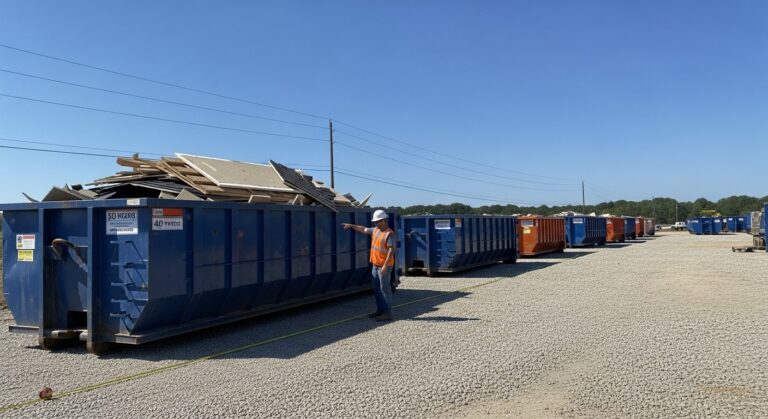
When you are tackling a construction project, a major home cleanout, or a large remodeling job in Arkansas, one of the first and most important questions is how much waste you will generate. Choosing the wrong dumpster size can lead to costly overages, wasted time, or the hassle of renting a second unit. That is why we created this choosing right dumpster size for project Arkansas visual guide. By understanding the volume of debris and matching it to the correct container, you can keep your job on schedule and within budget.
Many Arkansas homeowners and contractors underestimate the space their debris will occupy. A small bathroom renovation might seem compact, but once you tear out tile, drywall, and an old vanity, the pile can fill a 10-yard dumpster quickly. On the other hand, a new roof on a 2,500-square-foot home requires a 20-yard or larger container. This guide uses comparisons and real-world examples to help you visualize each dumpster size so you can make an informed decision before you rent.
We will walk through the five most common dumpster sizes available in Arkansas: 10, 15, 20, 30, and 40 yards. For each size, we describe the typical projects they fit, the types of debris allowed, and the physical dimensions of the container. We also include a visual comparison so you can picture how much space you actually need. Whether you are a DIY homeowner or a seasoned contractor, this guide will help you avoid the common pitfalls of dumpster sizing.
Why Dumpster Size Matters for Your Arkansas Project
Selecting the correct dumpster size is not just about convenience. It directly affects your project’s cost, timeline, and safety. If you rent a container that is too small, you risk overfilling it. Overfilled dumpsters are dangerous to haul, and most rental companies will refuse to pick them up until the excess debris is removed. This can cause delays of a day or more while you find alternative disposal methods. Conversely, renting a dumpster that is too large means you pay for unused space. That extra cost could have been allocated to materials or labor.
In Arkansas, local disposal regulations also come into play. Certain types of waste, such as concrete, asphalt, or roofing shingles, have weight limits that affect the size of dumpster you need. A 10-yard dumpster might hold a ton of mixed debris, but if you are loading it with heavy concrete, you could hit the weight limit before the container is full. Understanding these nuances helps you avoid surprise fees. Our choosing the right construction waste dumpster for your project guide provides additional detail on weight restrictions and material-specific advice.
Visual Guide to Dumpster Sizes
To help you picture each dumpster size, we compare them to familiar objects and standard room dimensions. Use these visuals as a reference when estimating your debris volume. Remember that dumpsters are measured in cubic yards, which is a volume measurement. One cubic yard is roughly the size of a standard washing machine or a small kitchen table.
10-Yard Dumpster
A 10-yard dumpster is the smallest standard size available. It measures approximately 12 feet long, 8 feet wide, and 3.5 feet high. The walls are about waist-high, making it easy to load smaller items by hand. Think of it as the size of a compact car or a large pickup truck bed filled to the brim with debris. This size works well for small cleanouts, minor bathroom or kitchen remodels, and yard waste removal. It can hold about three pickup truck loads of debris.
Best projects for a 10-yard dumpster: cleaning out a single-car garage, removing old carpet from a 1,500-square-foot home, or stripping a small deck. It is also a good choice for a weekend spring cleaning project. Because it is compact, it fits easily in a driveway without blocking access. If you are doing a project that generates mostly lightweight materials like cardboard, plastic, or wood scraps, the 10-yard size is often sufficient.
15-Yard Dumpster
The 15-yard dumpster is a versatile mid-size option. It measures about 14 feet long, 8 feet wide, and 4 feet high. The walls are chest-high, which allows for some stacking of debris. Visualize it as a standard cargo van or a small moving truck. This size is ideal for a medium-sized kitchen remodel, a full basement cleanout, or a large shed demolition. It holds approximately four to five pickup truck loads of waste.
Many Arkansas homeowners choose a 15-yard dumpster for whole-home interior renovations that do not involve major structural changes. For example, if you are replacing all the flooring, cabinets, and countertops in a 2,000-square-foot home, this size will likely accommodate the debris. It is also a common choice for estate cleanouts where furniture, clothing, and miscellaneous items need to be discarded. The 15-yard dumpster offers a good balance between capacity and footprint.
20-Yard Dumpster
A 20-yard dumpster is one of the most popular sizes for construction and demolition projects. It measures approximately 22 feet long, 8 feet wide, and 4.5 feet high. The walls are about shoulder-high, allowing you to toss debris in from ground level. Picture a full-sized pickup truck with a cap or a small box truck. This size is excellent for roofing projects on most homes, large room additions, and major kitchen or bathroom remodels that involve tearing out fixtures and flooring.
A typical residential roof of 2,500 to 3,000 square feet will fill a 20-yard dumpster with shingles, felt paper, and nails. If you are also replacing the plywood decking, you may need a 30-yard container. The 20-yard size is also used for large deck removals, concrete patio demolition, and whole-house junk removal. It holds about six to eight pickup truck loads. Because of its length, it requires a longer driveway or a wider street placement.
30-Yard Dumpster
The 30-yard dumpster is a heavy-duty container for large-scale projects. It measures about 22 feet long, 8 feet wide, and 6 feet high. The walls are above head-high, which means you will need to load debris carefully to avoid overfilling. Visualize it as a large box truck or a small moving van. This size is best for new home construction, major additions, large roofing jobs on commercial buildings, and full-home renovations where you are gutting the interior down to the studs.
If you are building a new 2,500-square-foot home, you will likely need two or three 30-yard dumpsters over the course of the project. For a single large project like a 3,000-square-foot roof replacement on a steep pitch, a 30-yard dumpster can handle the shingles and underlayment. It also works well for large-scale cleanouts such as hoarding situations or foreclosed properties. This size holds about nine to twelve pickup truck loads. Keep in mind that because it is tall, you may need a permit if you place it on a public street.
40-Yard Dumpster
A 40-yard dumpster is the largest standard size available for residential and commercial use. It measures about 22 feet long, 8 feet wide, and 8 feet high. The walls are about as tall as a standard garage door. Picture a large construction dump truck or a full-sized school bus stripped of seats. This size is typically reserved for major commercial demolition, large-scale construction projects, and massive cleanouts like multi-story office buildings or large warehouses.
In Arkansas, you might use a 40-yard dumpster for a commercial strip mall renovation, a large apartment complex cleanout, or a major road construction project. It is rarely needed for a typical residential job unless you are tearing down a house or doing a very large addition. This size holds about fifteen to eighteen pickup truck loads. Because of its massive capacity, it requires a large open area for placement and often requires a special permit for street parking.
How to Estimate Your Debris Volume
Estimating debris volume is not an exact science, but you can get close with a few simple methods. First, measure the area you are working in. For a room demolition, multiply the length by the width by the height of the debris pile. A standard 10×10 foot bathroom with 8-foot ceilings contains 800 cubic feet of space. However, debris does not fill the space completely. A good rule of thumb is that the debris pile will occupy about 40 to 60 percent of the room’s volume after demolition. So that 800-cubic-foot bathroom might produce 320 to 480 cubic feet of debris, which is roughly 12 to 18 cubic yards.
For roofing projects, use the square footage of the roof and the number of layers. A single layer of asphalt shingles on a 2,000-square-foot roof weighs about 5,000 to 6,000 pounds and fills about 15 cubic yards. If you have two layers, double that estimate. For concrete or asphalt demolition, weight is a bigger factor than volume. Concrete weighs about 2 tons per cubic yard. So a 10-yard dumpster can hold only about 5 tons of concrete, which is roughly 2.5 cubic yards of solid concrete. Plan accordingly.
Here are a few key tips for accurate estimation:
- Always overestimate by 10 to 15 percent to account for unexpected debris or compacted materials.
- Measure the largest items you are disposing of, such as cabinets, bathtubs, or furniture, and add them to your volume calculation.
- Check with your rental company about weight limits. Heavy materials like concrete, brick, and dirt may require a smaller dumpster to avoid overweight fees.
- If you are unsure, choose the next size up. The cost difference between a 20-yard and a 30-yard dumpster is usually small compared to the cost of a second rental.
Using these methods, you can confidently select the right dumpster size for your Arkansas project. If you are still uncertain, most rental companies offer free phone consultations where they can help you estimate based on your project description.
Common Mistakes to Avoid
Even experienced contractors sometimes make sizing errors. One of the most common mistakes is choosing a dumpster that is too small because the project seems manageable. A small bathroom remodel can easily fill a 10-yard dumpster, but if you are also tearing out a concrete shower pan or a cast-iron tub, you may need a 15-yard or 20-yard container. Another frequent error is forgetting about weight limits. A 20-yard dumpster filled with heavy roofing shingles can exceed the weight limit before the container is half full. Always ask your rental provider for the maximum weight allowance for each size.
Another mistake is not accounting for the space needed to place the dumpster. In Arkansas, many homes have narrow driveways or limited street access. A 30-yard or 40-yard dumpster requires a large, flat surface and at least 60 feet of clearance for the delivery truck. If your driveway is too short or steep, you may need to place the dumpster on the street, which may require a permit from your city or county. Check with your local municipality before delivery to avoid fines.
Finally, do not assume that all dumpsters are the same. Different rental companies may have slightly different dimensions for the same nominal size. Always confirm the exact interior dimensions with your provider. This is especially important for projects that involve large furniture or appliances. A 15-yard dumpster from one company might be 14 feet long, while another company’s 15-yard dumpster might be 16 feet long. Knowing the exact dimensions helps you plan your loading strategy.
Final Thoughts on Sizing Your Dumpster
Choosing the right dumpster size for your Arkansas project is a straightforward process when you use a visual guide and follow a few estimation rules. Start by listing all the materials you will discard, measure the volume of the largest items, and compare that to the capacity of each dumpster size. Remember that it is always better to rent a slightly larger dumpster than to run out of space halfway through your job. The extra cost is minimal compared to the time and frustration of arranging a second delivery.
If you are planning a construction or demolition project in Arkansas, use this guide as a reference. Visualize the dumpster sizes in relation to your workspace, and do not hesitate to ask your rental provider for advice. With the correct container, your project will proceed smoothly, and you can focus on the work at hand instead of worrying about waste disposal. By following the principles in this choosing right dumpster size for project Arkansas visual guide, you set yourself up for success.