
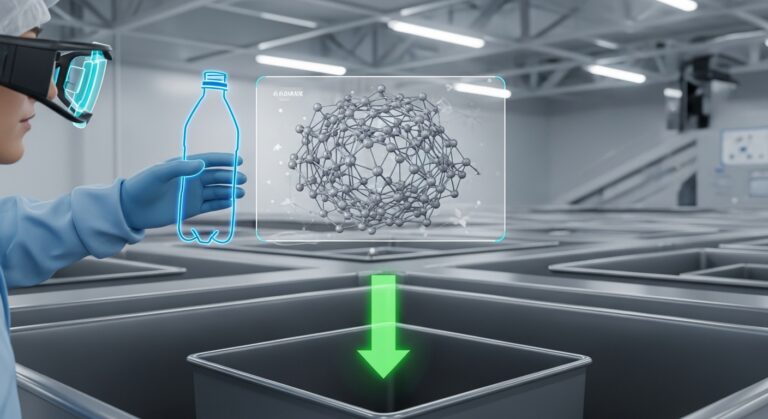
Imagine a world where sorting your trash feels like a high-tech treasure hunt, where a pair of smart glasses can instantly identify a plastic container and guide you to the correct bin, dramatically reducing contamination. This is no longer science fiction. Augmented Reality (AR) is stepping out of gaming and retail and into one of society’s most pressing challenges: waste management. By overlaying digital information onto the physical world, AR waste disposal systems are revolutionizing how we identify, sort, and process materials, creating smarter workflows for workers and empowering better decisions for consumers. This convergence of digital intelligence and physical action is building a bridge to a more circular economy, turning the mundane task of disposal into a data-driven process for environmental recovery.
The Core Technology Behind AR in Waste Management
At its heart, AR waste disposal leverages a combination of advanced technologies to create an interactive, guided experience. The system begins with computer vision, where cameras on smartphones, tablets, or AR glasses scan an object. Sophisticated machine learning algorithms, often trained on vast datasets of material images, then analyze the visual data in real-time. They can discern subtle differences between types of plastic, identify composite materials, and recognize contamination. This information is then rendered as an overlay on the user’s screen: highlighted bins, floating labels with disposal instructions, animated arrows, or color-coded outlines. For industrial applications, this data can be integrated with backend systems to track material flow, update inventory, and generate analytics on sorting accuracy and volume. The power lies in its immediacy and context-awareness, providing the right information exactly when and where it is needed most.
Practical Applications From Curb to Facility
The implementation of AR for waste management spans the entire value chain, from the point of discard to the final sorting line. These applications demonstrate its versatility and tangible impact.
Empowering Consumers and Public Education
One of the most significant challenges in recycling is consumer confusion over what goes where. AR-powered mobile apps can demystify this process. A user simply points their phone’s camera at a used item, such as a coffee cup or a shampoo bottle. The app instantly identifies it and displays a clear instruction, like “Lid: blue recycling bin” and “Cup: compost bin,” or indicates that a pizza box is only recyclable if free of grease. Municipalities can deploy these apps as part of public awareness campaigns, turning citizens into accurate first-line sorters. This reduces contamination at the source, which is critical because entire loads of recycling can be rejected due to high contamination rates, sending them to landfill.
Revolutionizing Professional Sorting and Facility Operations
Inside Material Recovery Facilities (MRFs) and industrial settings, AR is a game-changer for efficiency and worker safety. Sorters on fast-moving conveyor belts can wear AR glasses that highlight specific materials they need to pick. For instance, if the system detects a PET plastic bottle moving down the line, it can visually outline that item in the worker’s field of view, speeding up identification and reducing cognitive load. Furthermore, AR can guide facility maintenance technicians. By pointing a tablet at a piece of machinery, a technician can see superimposed schematics, performance data, and step-by-step repair instructions, minimizing downtime. This application of AR waste disposal technology ensures that the complex machinery keeping recycling streams pure operates at peak performance.
Measurable Benefits and Environmental Impact
The adoption of AR-driven systems delivers concrete returns on investment and profound environmental benefits. By enhancing sorting accuracy, these systems directly increase the volume and purity of recyclable materials recovered. This translates to higher commodity values for processed materials and reduced costs associated with landfilling contaminated loads. For workers, AR reduces training time significantly; new employees can become proficient sorters with visual, on-the-job guidance. It also improves ergonomics and safety by allowing workers to keep their focus on their environment while receiving hands-free information.
The environmental impact is substantial. Higher purity in recycling streams means less energy and resources are wasted processing contaminated materials that ultimately get rejected. It enables more materials to complete the loop in the circular economy, reducing the need for virgin material extraction and lowering the overall carbon footprint of production. Furthermore, the data collected by AR systems provides unprecedented insights into waste composition, helping policymakers and companies design better packaging and more effective recycling programs.
Overcoming Challenges and the Road Ahead
Despite its promise, integrating AR into waste management is not without hurdles. The initial cost of hardware, such as industrial-grade AR glasses, and the development of robust software can be a barrier, particularly for public municipalities with tight budgets. The technology also requires reliable, high-speed connectivity in often challenging industrial environments. Perhaps the most significant ongoing task is the continuous training of the AI models. The universe of consumer packaging is vast and constantly evolving, requiring systems to be regularly updated with new products and materials.
However, the trajectory is clear. As hardware becomes more affordable and AI models more sophisticated, AR will become a standard tool in advanced waste management. Future developments may include more seamless integration with Internet of Things (IoT) sensors in smart bins, creating a fully connected waste ecosystem. We can also anticipate wider use in hazardous waste handling, where AR can provide critical safety data and handling procedures overlaid on dangerous materials. The goal is a closed-loop system where AR assists at every touchpoint, ensuring that every item is directed to its highest and best use, minimizing what we consign to the landfill.
The integration of Augmented Reality into our waste systems represents a powerful shift from analog guesswork to digital precision. It transforms an often-overlooked daily chore into a node in a smart, data-rich network aimed at resource preservation. While challenges around cost and implementation persist, the potential for AR waste disposal to drive higher recycling rates, reduce environmental harm, and create more efficient operations is undeniable. This technology is not just about seeing the world differently; it’s about using that new vision to build a fundamentally cleaner and more sustainable one.