Industrial facilities across Arkansas face unique waste disposal challenges that go far beyond typical household or construction debris. From manufacturing byproducts and heavy machinery scrap to chemical containers and non-hazardous industrial sludge, the volume and weight of industrial waste demand specialized handling. Standard dumpsters simply cannot withstand the load, and improper disposal can lead to regulatory fines, environmental damage, and operational delays. This is where industrial waste management rolloff dumpsters Arkansas businesses rely on become an essential part of daily operations. These heavy-duty containers, paired with expert logistics and compliance knowledge, help factories, warehouses, and processing plants maintain clean, safe, and legally compliant worksites.
Why Industrial Waste Requires Specialized Rolloff Dumpsters
Industrial waste differs from municipal solid waste in density, composition, and regulatory classification. A typical 20-yard rolloff container might work for a home renovation, but an industrial setting often demands 30-yard, 40-yard, or even custom-sized units built from 12-gauge steel with reinforced floors. These containers must handle scrap metal, concrete rubble, wood pallets, packaging materials, and non-hazardous industrial process waste without buckling or leaking. Furthermore, Arkansas industries must comply with state and federal waste management regulations, including those enforced by the Arkansas Department of Energy and Environment (ADEE). Using a rolloff dumpster that is too small or structurally weak can result in overloading, safety hazards, and non-compliance. By choosing the correct container size and service plan, industrial operators can streamline their waste stream management and avoid costly disruptions.
Key Benefits of Industrial Rolloff Dumpster Services in Arkansas
Engaging a professional provider for industrial waste management rolloff dumpsters Arkansas companies trust delivers several tangible advantages that directly impact your bottom line and operational efficiency. Below are the primary benefits you can expect from a well-structured partnership.
- Regulatory compliance: Reputable providers understand ADEE and EPA guidelines for industrial waste, ensuring your disposal methods meet all legal requirements.
- Reduced labor costs: Instead of having your team haul debris to a landfill in pickup trucks, a single rolloff container on-site minimizes handling and transportation time.
- Enhanced safety: Centralized waste collection reduces trip hazards, fire risks, and clutter around machinery and walkways.
- Flexible scheduling: You can arrange pickups and exchanges based on your production cycles, not a fixed calendar.
These benefits translate into measurable savings and a cleaner, more organized facility. For example, a manufacturing plant in Little Rock that switched to scheduled rolloff services reported a 30 percent reduction in waste-related labor hours within the first quarter. The key is matching the container size and pickup frequency to your specific waste generation rate, which a knowledgeable provider can help you calculate.
Choosing the Right Rolloff Dumpster Size for Industrial Use
Selecting the appropriate container size is critical for industrial waste management. Too small, and you face frequent pickups and potential overage fees. Too large, and you waste money on unused capacity. Here are the standard sizes available for industrial applications in Arkansas and the types of waste they best accommodate.
30-Yard Rolloff Dumpsters
A 30-yard container is typically 22 feet long, 8 feet wide, and 6 feet high. It works well for medium-sized industrial cleanouts, large-scale packaging waste, and mixed non-hazardous debris from warehouses. It is also a popular choice for facilities undergoing equipment upgrades or interior renovations where large amounts of discarded machinery parts and packing materials accumulate.
40-Yard Rolloff Dumpsters
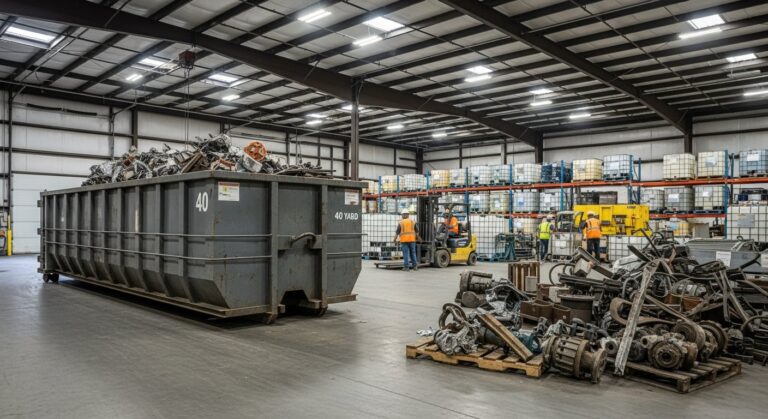
The 40-yard rolloff is the most common choice for heavy industrial use. At approximately 22 feet long, 8 feet wide, and 8 feet high, it can hold roughly 12 to 16 tons of material, depending on the waste type. Factories producing scrap metal, large wooden crates, or demolition debris from structural changes typically require this size. The reinforced steel construction prevents damage from sharp or heavy objects.
Custom and Specialty Containers
Some industrial operations generate waste streams that do not fit standard dimensions. Examples include extremely heavy materials like cast iron or concrete blocks, or unusually shaped items like large pipes or tanks. In these cases, providers may offer custom-built rolloff dumpsters with lower sides for easy loading by forklifts or cranes, or with reinforced floors to handle concentrated weight. Discuss your specific waste profile with your provider to determine if a specialty container is necessary.
Compliance and Environmental Responsibility in Arkansas
Arkansas industrial facilities must navigate a complex web of waste management regulations. The ADEE oversees the proper disposal of non-hazardous industrial solid waste, while hazardous materials fall under stricter federal and state rules. Industrial waste management rolloff dumpsters Arkansas providers typically handle only non-hazardous waste, but they play a crucial role in ensuring that your waste is transported to permitted landfills or recycling facilities. It is your responsibility as the waste generator to classify your waste correctly before disposal. Common non-hazardous industrial wastes include scrap metal, wood, cardboard, plastics, and concrete. However, if your operations involve solvents, paints, acids, or other hazardous substances, you must separate those materials and arrange for specialized disposal. Using a rolloff dumpster for hazardous waste is illegal and can result in severe penalties. Work with your provider to establish clear waste segregation protocols and documentation procedures.
Cost Factors for Industrial Rolloff Dumpster Rentals
The cost of renting an industrial rolloff dumpster in Arkansas depends on several variables. Understanding these factors helps you budget accurately and avoid surprise charges. The primary cost drivers include container size, rental duration, waste type, disposal fees, and transportation distance. Most providers charge a flat rate that covers delivery, pickup, and a set number of days (often 7 to 14). Exceeding that timeframe incurs daily overage fees. Additionally, if your waste exceeds the weight limit included in the rental agreement, you will pay an overweight surcharge per ton. To keep costs predictable, request a detailed quote that itemizes the base rate, weight allowance, extra days, and any fuel surcharges. For ongoing industrial operations, many providers offer volume discounts or recurring service contracts that reduce per-container costs compared to one-off rentals.
Integrating Rolloff Dumpsters into an Industrial Waste Management Plan
A single rolloff dumpster is not a waste management strategy; it is a tool. To maximize its value, you should integrate it into a broader industrial waste management plan. Start by conducting a waste audit to identify the types and volumes of waste your facility generates each week or month. Next, determine whether recycling options exist for certain materials. For example, scrap metal, concrete, and clean wood can often be recycled, reducing your landfill disposal costs and improving your environmental footprint. Then, schedule rolloff deliveries and pickups to align with your production schedule. For high-volume generators, a provider may place multiple containers on-site and swap them out as they fill. This approach minimizes downtime and keeps your facility organized. Finally, train your team on proper waste sorting and container loading techniques to maximize space and prevent contamination. In our guide on Corning Roll Off Services: Streamlined Waste Management for Your Project, we explain how similar principles apply to smaller-scale projects, but the same strategic thinking scales up for industrial operations.
Common Mistakes to Avoid When Renting Industrial Dumpsters
Even experienced facility managers can make errors when renting rolloff dumpsters. Being aware of these pitfalls helps you avoid unnecessary expenses and operational headaches. One frequent mistake is underestimating the weight of industrial waste. A 40-yard container filled with scrap metal can easily exceed the standard weight limit, leading to hefty surcharges. Always ask your provider about the weight allowance and estimate your load based on the material density. Another common error is failing to secure necessary permits. If you plan to place a rolloff dumpster on a public street, sidewalk, or easement, you may need a permit from the local city or county. Industrial facilities typically keep containers on private property, but verify this before delivery. Lastly, do not assume all waste types are acceptable. Even within non-hazardous categories, some providers restrict certain items like tires, batteries, or electronics. Confirm the list of prohibited materials in advance.
Finding a Reliable Industrial Rolloff Dumpster Provider in Arkansas
Not all dumpster rental companies are equipped to handle industrial waste management. When evaluating providers, look for those with experience serving manufacturing, warehousing, and processing facilities. Ask about their container inventory, particularly the availability of heavy-duty 40-yard and custom units. Inquire about their disposal partners and whether they prioritize recycling. A provider that sends waste to a landfill without exploring recycling options may not align with your sustainability goals. Also, check their responsiveness and scheduling flexibility. Industrial operations cannot afford to wait days for a container swap. The best providers offer same-day or next-day delivery and pickup, with clear communication channels. Finally, read reviews or request references from other industrial clients in Arkansas. A proven track record with facilities similar to yours is the strongest indicator of reliable service.
Implementing a robust industrial waste management system with rolloff dumpsters in Arkansas is a practical, cost-effective way to maintain a safe and compliant facility. By selecting the right container size, understanding regulatory requirements, and partnering with an experienced provider, you can turn waste management from a recurring headache into a streamlined part of your operations. Start by assessing your waste volume and scheduling a consultation with a provider who specializes in industrial services. The result will be a cleaner worksite, lower overhead, and peace of mind that your waste is handled responsibly.