Construction and demolition projects generate massive amounts of debris. For builders and developers in Arkansas aiming for LEED certification, managing that waste is not just an environmental responsibility. It is a direct path to earning valuable points under the Materials and Resources category. Choosing the right dumpster rental service in Arkansas can make the difference between achieving certification and falling short. This article explains how strategic dumpster rental supports LEED waste management credits and helps your project meet sustainability goals.
Understanding LEED Waste Management Credits
LEED, or Leadership in Energy and Environmental Design, is the most widely used green building rating system in the world. Projects earn points across several categories. One of the most impactful categories for construction teams is Materials and Resources (MR). Within MR, the Construction and Demolition Waste Management credits reward projects that divert waste from landfills through recycling, reuse, and recovery.
To earn these credits, a project must track all waste streams and achieve a diversion rate of at least 50% for MR Credit 5 (Construction and Demolition Waste Management). Higher diversion rates earn more points. This is where working with a knowledgeable dumpster rental provider becomes essential. A provider that offers separate containers for different waste types, provides clear weight tickets, and understands local recycling infrastructure can simplify the documentation process.
How Dumpster Rental Supports LEED Documentation
LEED requires detailed waste management plans and diversion reports. Every load removed from the site must be tracked. The dumpster rental company you choose should supply monthly or per-project reports showing total waste weight, weight sent to landfill, and weight diverted to recycling or reuse facilities.
In our guide on commercial dumpster rental in Arkansas key tips, we explain how to select a provider that offers transparent reporting. For LEED projects, look for a company that provides the following:
- Itemized receipts for each pickup, including facility destination
- Certificates of recycling or diversion from end processors
- Online portal access to download waste data for your LEED submission
Without this documentation, your LEED auditor cannot verify diversion rates. Many Arkansas dumpster rental companies now offer these services specifically to serve the growing green building market. Always ask about reporting capabilities before signing a contract.
Strategies to Maximize Diversion Rates on Arkansas Job Sites
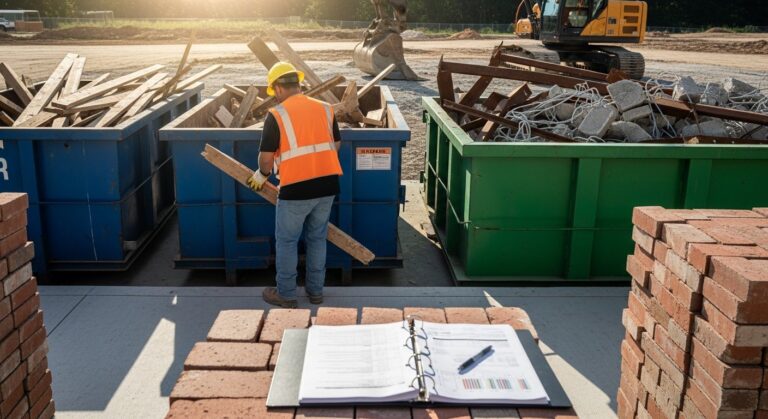
Achieving high diversion rates requires planning before the first load of debris leaves the site. The best approach involves source separation. Instead of mixing all waste into one dumpster, separate materials on site into categories such as wood, metal, concrete, cardboard, and mixed recyclables. Each material stream goes into a dedicated container.
Many Arkansas dumpster rental companies offer roll-off containers in various sizes for source separation. For example, a 30-yard container for mixed construction debris, a 20-yard container for clean wood, and a 10-yard container for metal. This approach increases recycling rates and reduces contamination. Contaminated loads often get sent to landfill, hurting your diversion percentage.
Another strategy is to partner with local salvage yards and donation centers. Materials like cabinets, doors, windows, and fixtures can be removed carefully and donated to organizations such as Habitat for Humanity ReStore. These donations count toward diversion and may also qualify for tax deductions. Your dumpster rental provider can coordinate separate pickups for salvageable items.
Common Materials Diverted in Arkansas Projects
Knowing what can be recycled locally is critical. Arkansas has facilities that accept the following common construction materials:
- Concrete, asphalt, and brick for crushing into aggregate
- Untreated wood for mulching or biomass fuel
- Ferrous and non-ferrous metals for scrap recycling
- Cardboard and clean paper for paper mills
- Gypsum drywall for processing into new wallboard or soil amendment
Always verify with your dumpster rental provider which materials their downstream partners accept. Some Arkansas recyclers have specific requirements regarding contamination levels. A reliable provider will know these specifications and help you avoid rejected loads.
Selecting the Right Dumpster Size for LEED Projects
Container sizing directly affects your waste management efficiency. Too small a container means frequent pickups, higher costs, and potential delays. Too large a container encourages waste mixing and reduces the incentive to separate materials. For LEED projects, the goal is to match container capacity to each waste stream’s volume.
Consider these typical container sizes used on Arkansas job sites pursuing LEED certification:
- 10-yard dumpsters: Best for metal, cardboard, or clean wood on smaller projects
- 20-yard dumpsters: Ideal for single-material streams on medium-sized renovations
- 30-yard dumpsters: Common for mixed debris on new construction or major demolition
- 40-yard dumpsters: Used for large-scale separation zones with multiple streams
Work with your dumpster rental company to create a waste management plan that specifies container sizes, pickup schedules, and material destinations. This plan becomes part of your LEED submission. Some providers offer a free site assessment to help determine the right mix of containers.
LEED Credit Tiers and Point Values
Understanding the point structure helps you prioritize your waste management efforts. For LEED v4 and v4.1, the Construction and Demolition Waste Management credit offers two options:
- Option 1: Diversion (1-2 points) , Divert at least 50% of total construction and demolition waste. Two points are earned if at least 75% is diverted.
- Option 2: Reduction of Total Waste (1 point) , Limit total waste generated to 2.5 pounds per square foot or less.
Projects can pursue both options for a maximum of 3 points. To achieve Option 1’s higher tier, you need robust source separation and reliable recycling partners. Your dumpster rental provider’s ability to handle multiple streams simultaneously becomes crucial. In Arkansas, many providers now offer single-stream recycling for construction debris, but source separation still yields higher diversion rates.
Working With Local Arkansas Recycling Facilities
Each region in Arkansas has unique recycling capabilities. Northwest Arkansas, including Fayetteville and Bentonville, has strong recycling infrastructure due to the corporate sustainability initiatives of major employers. Central Arkansas, around Little Rock, offers multiple concrete crushing and metal recycling operations. The Delta region may have fewer options, requiring longer hauls to recycling facilities.
A dumpster rental company with established relationships at local recycling facilities can negotiate better rates and ensure your materials are processed correctly. Ask potential providers which facilities they use for each material type. If they cannot name specific downstream partners, that is a red flag. For LEED projects, you need transparency from the dumpster to the final processor.
Some Arkansas recyclers provide their own diversion certificates, which your dumpster rental company should pass along to you. These certificates contain the weight and type of material processed, the facility name, and the date. Keep these documents organized for your LEED audit.
Cost Considerations for LEED-Compliant Waste Management
Many project managers worry that source separation and LEED documentation will increase waste management costs. In practice, the opposite is often true. Recycling typically costs less than landfilling in Arkansas, especially for materials like metal and concrete. Additionally, reduced landfill fees and potential tax benefits from donations can offset the cost of additional containers.
Here is a typical cost comparison for an Arkansas construction project:
- Mixed debris dumpster (30-yard): $450-$600 per pull, includes landfill disposal fee
- Clean wood dumpster (20-yard): $300-$400 per pull, lower disposal cost due to recycling
- Metal dumpster (10-yard): Often free or low cost because scrap value offsets hauling
- Cardboard compactor: $200-$350 per pull, high recycling value
When you factor in potential LEED points and the marketing value of a certified green building, the investment in proper waste management pays for itself. Many Arkansas dumpster rental companies offer discounted rates for multi-container setups on LEED projects.
Common Pitfalls and How to Avoid Them
Even experienced contractors make mistakes when pursuing LEED waste management credits. The most common errors include mixing recyclable materials with trash, failing to maintain separation throughout the project, and losing documentation. Here are specific ways to avoid these issues:
First, assign a waste management coordinator on site. This person ensures that all subcontractors know which materials go into which container. Post clear signage on each dumpster showing acceptable materials. Second, schedule regular audits of your waste streams. Walk the site weekly to check for contamination. Third, store all weight tickets and diversion certificates in a digital folder. Use a naming convention that includes date, material type, and facility name.
If you are working with a dumpster rental company that does not offer online reporting, request paper copies of every pickup record. Keep these records in a binder organized by month. Your LEED auditor will thank you.
Case Study: A LEED Project in Little Rock
A recent commercial renovation in Little Rock, Arkansas, targeted LEED Gold certification. The general contractor partnered with a local dumpster rental provider that specialized in construction recycling. They placed five containers on site: one for mixed debris, one for clean wood, one for metal, one for cardboard, and one for concrete.
Over the six-month project, they diverted 78% of total waste by weight. The concrete was crushed and used as road base on a nearby project. The metal was sold to a scrap yard in North Little Rock. The wood was chipped for landscaping mulch. The contractor achieved 2 points for Option 1 Diversion and 1 point for Option 2 Reduction of Total Waste. The dumpster rental provider supplied monthly reports that streamlined the LEED submission process.
This project demonstrates that with the right planning and provider, achieving high diversion rates in Arkansas is entirely feasible. The key was early coordination between the contractor, architect, and dumpster rental company.
Future Trends in LEED Waste Management
LEED continues to evolve. The upcoming LEED v5 will place even greater emphasis on circular economy principles and embodied carbon reduction. Waste management credits may require projects to track not just diversion but also the percentage of materials that are reused on site or remanufactured into new products.
Arkansas dumpster rental companies are already adapting. Some now offer deconstruction services, where materials are carefully removed for reuse rather than demolition. Others provide tracking software that integrates with LEED Online to simplify submissions. Staying ahead of these trends will help your projects earn maximum points.
When selecting a dumpster rental provider for future LEED projects, ask about their plans for expanded recycling services. Companies that invest in technology and partnerships will be better positioned to support your sustainability goals.
Achieving LEED waste management credits in Arkansas requires more than just renting a dumpster. It requires a strategic partner who understands local recycling markets, provides accurate documentation, and helps you separate materials efficiently. By choosing the right dumpster rental company and implementing a comprehensive waste management plan, your project can earn valuable LEED points while reducing environmental impact. Start the conversation early with your provider to ensure every load contributes to your certification goals.