
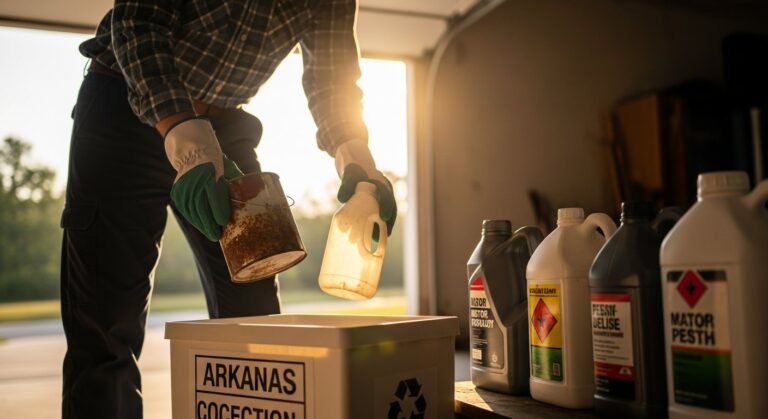
Imagine cleaning out your garage and finding old paint cans, a half-empty bottle of bleach, and a rusted container of weed killer. You know these items cannot go in your regular trash bin, but you are not sure what to do with them. This scenario plays out in homes across Arkansas every day, and improper disposal of these materials can harm sanitation workers, pollute local waterways, and even lead to fines. Understanding how to handle household hazardous waste disposal Arkansas is not just a matter of convenience. It is a responsibility that protects your family, your community, and the natural beauty of the Natural State.
Household hazardous waste (HHW) includes any product labeled with words like flammable, corrosive, toxic, or reactive. Common examples include paints, solvents, motor oil, batteries, pesticides, and cleaning chemicals. Unlike everyday trash, these items require special handling to prevent fires, explosions, or groundwater contamination. Arkansas provides several options for safe disposal, from permanent collection centers to special drop-off events. This guide walks you through the process, explains the rules for different waste types, and offers practical steps to make disposal easy and legal.
Understanding Household Hazardous Waste in Arkansas
Before you toss something in the garbage, it helps to know what counts as hazardous. The Arkansas Department of Environmental Quality (ADEQ) defines HHW as leftover household products that contain chemicals that can ignite, corrode, react violently, or be toxic. Many products you use daily fall into this category. Paint thinners, drain cleaners, oven sprays, and even some cosmetics can be hazardous if disposed of incorrectly.
The risk is real. When HHW goes to a landfill, chemicals can leach into the soil and groundwater over time. If poured down a drain or into a storm sewer, they can disrupt wastewater treatment or contaminate rivers and lakes. Arkansas is home to the Buffalo National River, the Mississippi River, and countless lakes and streams that support drinking water, recreation, and wildlife. Proper household hazardous waste disposal Arkansas helps keep these resources clean for generations to come.
One common mistake is assuming that small amounts are harmless. A single battery or a half-empty can of paint might seem insignificant, but when many households dispose of them improperly, the cumulative effect is substantial. Always treat any product with a warning label as hazardous until you confirm it is safe for regular trash.
Where to Dispose of Household Hazardous Waste in Arkansas
Arkansas offers several convenient options for HHW disposal. The best choice depends on where you live, what you need to dispose of, and how much waste you have. Below are the primary methods available to residents.
Permanent Household Hazardous Waste Collection Centers
Some cities and counties operate year-round drop-off facilities that accept HHW for free. The most notable is the Little Rock HHW Collection Center, located at 8400 Scott Hamilton Drive. This facility accepts a wide range of materials from residents of Pulaski County. Other permanent centers exist in Fayetteville, Springdale, and Fort Smith, though hours and accepted items vary. Check with your local solid waste district to find a center near you.
At these centers, trained staff sort and package the waste for safe transport to treatment or recycling facilities. You typically drive up, stay in your vehicle, and workers unload your items. This contactless process is efficient and reduces the risk of spills or exposure. For most households, a trip to a permanent center is the simplest way to handle regular HHW accumulation.
Special Collection Events
Many counties that lack permanent centers host one-day or weekend collection events several times a year. These events are often announced in local newspapers, on county websites, or through social media. They may be held at fairgrounds, recycling centers, or public works yards. For example, Benton County and Washington County hold periodic HHW events that are free to residents. These events are ideal for people who live in rural areas or who have accumulated a large amount of waste over time.
To make the most of a collection event, arrive early and bring proof of residency, such as a driver’s license or a utility bill. Some events limit the amount of waste accepted per household, so check the guidelines beforehand. If you have materials like old tires or electronics, confirm whether they are accepted at the same event or require separate disposal.
Retail Take-Back Programs
Certain retailers in Arkansas accept specific types of HHW for recycling or proper disposal. For instance, many auto parts stores accept used motor oil and batteries. Home improvement stores like Home Depot and Lowe’s often have bins for rechargeable batteries and compact fluorescent bulbs. Some hardware stores also accept leftover paint through paint recycling programs. These programs are not a substitute for a full HHW center, but they are a convenient option for small quantities of common items.
Before taking items to a retailer, call ahead to confirm what they accept. Policies vary by location, and some stores only accept products they sell. For example, a store might take back a battery purchased there but not one from a different brand. Always follow the store’s guidelines for packaging and labeling to ensure safe handling.
Step-by-Step Guide to Preparing Hazardous Waste for Disposal
Proper preparation makes disposal safer and smoother. Follow these steps before you transport any HHW to a collection center or event.
- Read labels and keep products in original containers. Original containers have important safety information and chemical identification. Never mix different products, as this can cause dangerous reactions. If a container is leaking, place it inside a larger, sealable plastic container or a heavy-duty trash bag.
- Store waste safely until disposal. Keep HHW in a cool, dry place away from heat sources, flames, and children or pets. A garage or shed with a concrete floor works well. Avoid storing items in direct sunlight or near water heaters, furnaces, or pilot lights.
- Transport waste securely. When driving to a collection site, place containers upright in a sturdy box or plastic tub to prevent tipping. Use newspapers or rags to cushion items and absorb any minor leaks. Keep the items in the trunk or cargo area, away from passengers.
- Know what is NOT accepted. Most HHW programs do not accept explosives, radioactive waste, medical sharps, or large quantities of commercial or industrial waste. For those items, you may need to contact a specialized disposal company. If in doubt, call the collection center ahead of time.
Following these steps reduces the chance of spills, injuries, or environmental harm. It also helps collection staff process your waste quickly and safely. When you arrive at the facility, stay in your vehicle unless instructed otherwise, and be ready to describe what you are dropping off.
What to Do with Specific Hazardous Materials
Different types of HHW require different handling. Here is a breakdown of common household hazardous materials and how to manage them in Arkansas.
Paints and Solvents. Latex paint is not always considered hazardous, but oil-based paints, stains, and thinners are. For latex paint, you can dry it out by mixing it with cat litter or paint hardener, then dispose of the dried paint in your regular trash. Oil-based products must go to a HHW center. Many Arkansas counties accept paint at collection events or permanent centers. Never pour paint down a drain or into the ground.
Motor Oil and Antifreeze. Used motor oil can be recycled. Many auto parts stores and service stations accept it for free. Antifreeze is also recyclable but must be handled separately. Store both fluids in clean, sealable containers and label them clearly. Do not mix oil with other fluids. In our guide on E-Waste Disposal in Arkansas: Dumpster vs Recycling Centers, we explain how to manage electronics and related hazardous components.
Batteries. Standard alkaline batteries (AA, AAA, C, D) are generally safe for regular trash in most Arkansas communities, but check local rules. Rechargeable batteries (NiMH, lithium-ion) and button cell batteries contain metals that require recycling. Retailers like Best Buy and Home Depot have drop-off bins for these. For large quantities, contact a HHW center. Never incinerate batteries, as they can explode.
Pesticides and Herbicides. These products are highly toxic and must be taken to a HHW collection center. Keep them in original containers with labels intact. If you have a small amount left, consider donating unused product to a neighbor or community garden, but only if the product is still usable and properly labeled. Otherwise, wait for the next collection event in your area.
Electronics and E-Waste. Televisions, computers, and other electronics contain lead, mercury, and other hazardous materials. Arkansas has laws restricting the disposal of certain electronics in landfills. Many counties host e-waste recycling events, or you can take items to a certified recycler. Some retailers offer trade-in or recycling programs for old devices. For large volumes, consider renting a dumpster specifically for e-waste, but check with the rental company about accepted items.
Compact Fluorescent Lights (CFLs). CFLs contain a small amount of mercury and should not be thrown in the trash. Many home improvement stores accept them for recycling. If a bulb breaks, follow EPA clean-up guidelines: air out the room, carefully collect fragments with stiff paper or tape, and place them in a sealed jar or bag. Take the debris to a HHW center.
Legal Requirements and Penalties in Arkansas
Arkansas regulates the disposal of hazardous waste under state and federal laws. While household waste is generally exempt from strict hazardous waste regulations, improper disposal can still lead to fines or legal action, especially if it causes environmental damage. The Arkansas Water and Air Pollution Control Act prohibits discharging pollutants into state waters. Pouring paint thinner down a storm drain violates this law and can result in penalties of up to $10,000 per day.
Businesses face even stricter rules. If you run a home-based business that generates hazardous waste, you may be subject to the same regulations as larger commercial entities. Contact ADEQ for guidance on proper handling and disposal. For households, the best approach is to use the free or low-cost disposal options provided by your county. Ignorance of the law is not a defense, and the cost of a fine far outweighs the effort of finding a collection center.
Many Arkansas communities have adopted ordinances that prohibit HHW in regular trash. For example, the City of Fayetteville bans the disposal of electronics and certain chemicals in landfill-bound waste. Violations can result in citations or extra fees. Check with your local solid waste department to understand the rules in your area.
Benefits of Proper Household Hazardous Waste Disposal
Taking the time to dispose of HHW correctly offers several advantages beyond avoiding fines. First, it protects the health of waste collection workers. When hazardous items end up in garbage trucks or landfills, they can cause fires, explosions, or toxic exposure. In 2023, a garbage truck fire in central Arkansas was traced to a discarded lithium-ion battery. Proper disposal prevents these dangerous incidents.
Second, it safeguards Arkansas’s natural resources. The state’s rivers, lakes, and aquifers provide drinking water for millions of people. Hazardous chemicals that seep into groundwater are expensive and difficult to remove. By keeping HHW out of landfills, you help maintain water quality and support the tourism and recreation industries that depend on clean environments.
Third, proper disposal often leads to recycling. Many HHW items, such as motor oil, batteries, and certain metals, can be processed into new products. This reduces the demand for raw materials and lowers the environmental footprint of manufacturing. For example, recycled motor oil can be re-refined into lubricants or used as fuel in industrial boilers. Your small effort contributes to a larger cycle of sustainability.
Common Myths About Hazardous Waste Disposal
Several misconceptions prevent people from disposing of HHW correctly. One common myth is that small amounts of hazardous waste are safe to pour down the drain. In reality, even tiny quantities of chemicals can harm septic systems or wastewater treatment plants. Another myth is that all household chemicals can be thrown in the trash if they are sealed tightly. While some dried-out latex paint is acceptable, most solvents, cleaners, and pesticides remain hazardous even in sealed containers.
Some people believe that burning hazardous waste is a safe disposal method. This is false and dangerous. Burning releases toxic fumes into the air and can cause explosions. Never attempt to incinerate paint, batteries, or chemical containers. Finally, there is a myth that HHW collection events are expensive or inconvenient. In fact, most events in Arkansas are free to residents and scheduled on weekends for easy access. The real inconvenience comes from dealing with a chemical spill or a fire caused by improper disposal.
If you are unsure about a specific product, contact ADEQ or your local solid waste district. They can provide guidance based on the type and quantity of waste you have. Most offices have websites with searchable databases of accepted items and collection schedules.
Planning for Future Hazardous Waste Reduction
The best way to handle HHW is to produce less of it. When shopping for household products, look for safer alternatives. Many cleaning products now come in non-toxic, biodegradable formulas that are less hazardous to people and the environment. Buy only what you need to avoid leftover chemicals. If you have excess paint, consider donating it to a theater group, school, or community organization that can use it.
Store products properly to extend their shelf life. Keep lids tight and store containers in a temperature-controlled area. Mark purchase dates on containers so you know how old the product is. Rotate your stock, using older products first. For products you rarely use, consider sharing purchases with neighbors or borrowing from a friend instead of buying a full container.
Finally, stay informed about HHW collection opportunities in your area. Sign up for email alerts from your county solid waste department or follow them on social media. Mark collection event dates on your calendar and plan to attend at least once a year. By making safe disposal a routine habit, you protect your home, your community, and the Arkansas environment.
Household hazardous waste disposal in Arkansas does not have to be complicated. With a little planning and awareness, you can handle these materials responsibly. Whether you use a permanent collection center, attend a community event, or take advantage of retail take-back programs, every proper disposal action makes a difference. Start by sorting through your garage or under-sink cabinets today. Identify any products with warning labels, and commit to disposing of them safely. Your efforts will contribute to a cleaner, safer Arkansas for everyone.