
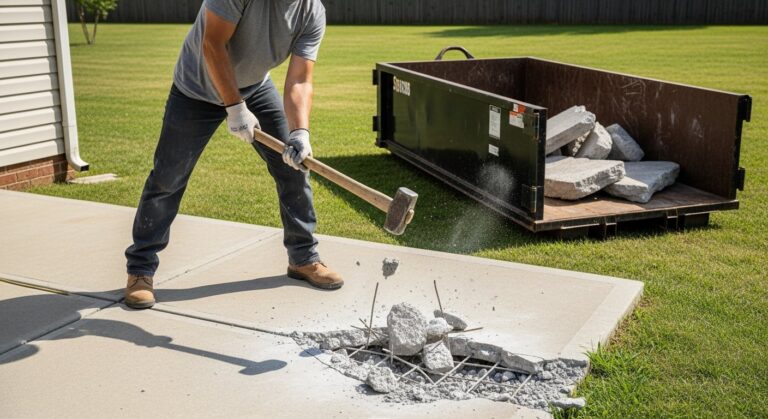
Most demolition projects are not full house teardowns. Many homeowners and contractors simply need to remove one interior wall or an old patio slab. That is where selective demolition: removing a single wall or patio with minimal waste, comes into play. It lets you make a targeted change without disturbing the rest of the property. The result is lower removal costs, less dust, and a shorter timeline.
What Is Selective Demolition and Why Does It Matter?
Selective demolition is the process of taking apart only the specific parts of a structure that need to go. Instead of leveling an entire building, you remove a single wall, a section of flooring, or an exterior patio slab. This approach is common in renovation projects where the goal is to update a space while preserving the existing footprint. It is also a smarter way to manage waste because you generate a smaller, more predictable debris stream.
A full demolition project can involve heavy machinery, multiple dumpsters, dust control measures, and days of downtime. Selective demolition is different. You can often finish a wall or patio removal in one or two days with hand tools and a small rental dumpster. That makes it a practical option for DIY renovators, homeowners preparing for an addition, and contractors who need to protect the areas they are not touching.
The environmental side is just as important. When you remove only one wall or one patio, you have a chance to separate materials and send them to the right recycling facility. Concrete, brick, metal, and clean lumber can all be diverted from a landfill. That is a big reason why selective demolition has become a preferred method for sustainable home improvement.
How to Plan a Single Wall Removal With Minimal Waste
Before you swing a sledgehammer, you need to know what is inside that wall. A wall can be load-bearing, meaning it supports the structure above it. Removing a load-bearing wall without installing a temporary support or a permanent beam can cause serious damage. If you are not sure, hire a structural engineer or a qualified contractor to inspect the wall first. This small step can save you from a repair bill that is far larger than the demolition itself.
Once you confirm the wall is safe to remove, plan the sequence carefully. The goal is to create the least amount of mixed debris possible. You can do this by removing materials in layers rather than smashing everything together. Finishes like drywall, trim, and insulation should come off before the framing. This keeps clean wood separate from contaminated or mixed waste and makes recycling much easier.
- Confirm the wall is not load-bearing and obtain any required permits.
- Shut off power, water, and gas lines that may run through the wall.
- Remove trim, drywall, insulation, and nails in separate batches.
- Set up a debris station with labeled containers for wood, metal, drywall, and trash.
- Schedule a dumpster pickup before you start so debris does not pile up on site.
Following this sequence minimizes waste because you are not creating a giant pile of mixed rubble. It also saves money on disposal fees. Clean loads of scrap metal or unpainted wood may be accepted at recycling centers for free or at a low cost. Mixed loads, on the other hand, often require expensive sorting and landfill tipping fees.
Removing a Patio Slab Without Turning It Into Landfill
A patio slab is a different challenge. Concrete is heavy, dusty, and hard to move, but it is also highly recyclable. Many concrete recycling plants accept clean concrete and process it into aggregate for road base or new construction. If your patio is made of pavers, the job can be even cleaner because individual pavers can be lifted, stacked, and reused.
For a concrete slab, the most efficient method is to break it into manageable pieces with a demolition hammer or a sledgehammer. Work from one edge toward the center and keep pieces small enough to lift safely. You can also use a saw cut to create clean break lines, especially if you want to preserve a section of the patio for future use. As you break up the concrete, separate any embedded rebar or wire mesh. Scrap metal dealers will often take rebar, and removing it before disposal makes the concrete ready for recycling.
Do not forget the base material underneath the patio. Sand, gravel, and soil should not go into the same container as concrete. These materials have different disposal paths. Clean fill dirt can sometimes be reused on site or hauled to a location that accepts clean fill. Keeping the layers separate is one of the best ways to practice selective demolition: removing a single wall or patio with minimal waste, even when the project is outdoors.
Waste Sorting and Disposal Strategies for Selective Demolition
Waste sorting is the core of minimal-waste demolition. If you mix concrete, wood, metal, and drywall together, the entire load becomes contaminated. That forces the disposal facility to treat it as mixed construction waste, which is more expensive and less likely to be recycled. A few extra minutes of sorting on site can lead to significant savings and a smaller environmental footprint.
Here are the main waste streams you can separate during a selective demolition project:
- Concrete, brick, and masonry for aggregate recycling
- Steel rebar and metal framing for scrap metal recovery
- Clean lumber for reuse, mulching, or biomass processing
- Drywall for gypsum recycling when it is clean and unpainted
- Mixed trash for landfill disposal only after recyclables are removed
This list is not meant to make the job complicated. It is a simple framework that helps you start with the right mindset. For a single wall removal, you might only have drywall, wood framing, and a small amount of mixed trash. For a patio removal, concrete and rebar will dominate the load. In both cases, separation is the difference between a wasteful project and a truly selective one.
Why a Dumpster Rental Fits a Selective Demolition Project
A dumpster rental is often the most convenient way to handle selective demolition waste. Unlike a pile of bags waiting on the curb, a dumpster gives you a central place to toss debris as you work. It also reduces the risk of injury because you do not have to lift heavy materials onto a truck bed. You simply carry debris to the container and drop it over the side.
For projects that involve a full shed or garage, the waste profile is different. In our guide on Arkansas shed garage demolition waste disposal, we explain how to calculate the right dumpster size before you load the first piece of debris. The same logic applies to a single wall or patio removal: you need a container that is large enough for the job but not so large that you pay for unused space.
Choosing a local dumpster rental service makes the process even smoother. A local company understands the regulations for construction waste in Arkansas and can help you select the right bin for concrete, mixed debris, and recyclables. They can also advise you on weight limits. Concrete is much heavier than drywall, so a 10-yard dumpster filled with patio pieces may weigh more than a 20-yard dumpster filled with wood framing. Understanding these details before you order prevents surprise fees and keeps your project on budget.
Final Checks Before You Start
Take a few minutes to review local permit requirements before you remove a wall or patio. Many cities require a permit for structural changes, even if the change is small. A permit protects you and your property by ensuring the work meets building codes. Your dumpster rental company may also need a permit if the container will be placed in the street or on a public right of way. Check with your local municipality to avoid fines.
Safety should be your final check. Wear sturdy gloves, safety glasses, steel-toe boots, and a dust mask when cutting or breaking materials. Use proper lifting techniques, especially with concrete, and keep children and pets away from the work area. Have a plan for sharp objects like nails and rebar. A magnet sweeper can pick up small metal pieces before they end up in a tire or a foot.
Selective demolition: removing a single wall or patio with minimal waste, is not just a trend. It is a smarter way to renovate. You protect the parts of your home that matter, you reduce the amount of material sent to landfills, and you keep disposal costs under control. With careful planning, the right tools, and a properly sized dumpster, your next renovation can be lean, safe, and efficient.