
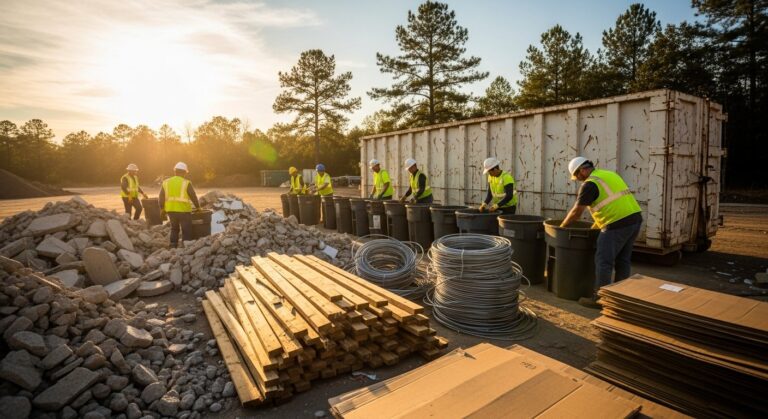
Construction projects in Arkansas generate significant amounts of debris, from concrete and lumber to drywall and metal. For contractors, managing this waste responsibly is no longer optional. It is a competitive advantage. Sustainable construction waste management Arkansas contractors adopt practices that reduce landfill contributions, lower project costs, and satisfy increasingly strict environmental regulations. This approach transforms waste from a costly burden into a resource that can be recycled, reused, or repurposed. By integrating sustainable methods, contractors not only protect the environment but also improve their bottom line.
The first step toward sustainability is understanding what waste your project generates. Common materials include concrete, asphalt, wood, metals, cardboard, plastics, and hazardous items like paints or solvents. Each material requires a different disposal pathway. For example, concrete and asphalt can be crushed and reused as aggregate for new construction. Metals can be sold to scrap yards. Clean wood can be chipped for mulch or biomass fuel. By sorting materials at the source, contractors can divert up to 70 percent of construction waste from landfills.
Why Arkansas Contractors Are Embracing Green Practices
Arkansas has seen a steady increase in green building certifications, municipal recycling mandates, and client requests for sustainable practices. Contractors who offer sustainable construction waste management Arkansas contractors gain a distinct edge in bidding for commercial and residential projects. Many developers now require waste diversion plans as part of their contract specifications. Failure to provide one can disqualify a bid before it is even reviewed.
Beyond winning bids, sustainable waste management reduces disposal costs. Landfill tipping fees in Arkansas have risen steadily, making recycling and reuse more economical than ever. When you factor in potential tax incentives for green building practices and the positive public relations value, the financial case becomes compelling. Contractors who invest in proper sorting, on-site recycling, and partnerships with local recyclers often see a return on investment within the first year of implementation.
Key Strategies for Reducing Construction Waste
Effective waste management starts before the first shovel hits the ground. During the planning phase, contractors should estimate the types and volumes of materials that will be used and wasted. This allows them to order precisely, reducing excess. It also helps them arrange for the right dumpsters and recycling containers. A well-designed waste management plan includes provisions for material separation, on-site storage, and scheduled pickups.
Here are three proven strategies that Arkansas contractors use to minimize waste:
- Source separation: Place clearly labeled bins for concrete, metal, wood, cardboard, and general waste. Train crews to sort materials as they work. This practice keeps recyclable materials clean and maximizes their value.
- Deconstruction instead of demolition: When renovating older structures, carefully remove doors, windows, fixtures, and lumber for reuse or donation. This approach can yield tax deductions and lower disposal costs.
- On-site grinding and crushing: For large projects, mobile crushers can turn concrete and asphalt into reusable aggregate on the spot. This eliminates hauling costs and provides material for road base or backfill.
These strategies require upfront planning and crew training, but they pay dividends. Contractors who implement them report fewer dumpster hauls, lower material costs, and higher client satisfaction. Additionally, they build a reputation as environmentally responsible businesses, which attracts eco-conscious clients.
Navigating Arkansas Regulations and Recycling Options
Arkansas does not yet have a statewide mandatory construction waste recycling law, but several municipalities have enacted local ordinances. For example, Fayetteville and Little Rock have construction and demolition debris recycling requirements for certain projects. Contractors must stay informed about local rules to avoid fines and project delays. The Arkansas Department of Environmental Quality provides guidance on acceptable disposal methods and lists licensed recyclers.
Partnering with the right waste hauler is critical. A hauler that offers separate streams for recyclables can simplify compliance. Some haulers provide color-coded containers and detailed reporting on diversion rates. This data is valuable for LEED certification and client reports. Contractors should ask potential partners about their recycling capabilities, drop-off locations, and pricing for mixed loads versus sorted loads.
Overcoming Common Challenges
Transitioning to sustainable waste management is not without obstacles. Space constraints on job sites can make source separation difficult. Crew resistance to changing habits is another common hurdle. Cost concerns, especially for smaller contractors, can also deter adoption. However, these challenges are manageable with the right approach.
To address space issues, consider using smaller, stackable containers or scheduling more frequent pickups. For crew training, hold a brief session at the start of each project to explain the sorting system and why it matters. Recognize and reward teams that meet diversion goals. Regarding costs, start small. Implement source separation for just one or two high-volume materials, such as concrete and metal. As savings accumulate, expand the program. Many contractors find that the money saved on tipping fees offsets the cost of additional containers and labor.
How Dumpster Rentals Support Sustainable Construction Waste Management
Dumpster rentals are a cornerstone of efficient waste management on construction sites. They provide a centralized collection point for debris, keeping job sites clean and safe. For sustainable practices, the right dumpster rental company offers containers specifically for recyclable materials. This eliminates the need for contractors to transport materials to recycling centers themselves. In our guide on healthcare facility renovation waste management Arkansas, we explain how specialized dumpster services can streamline disposal for complex projects.
Arkansas contractors should look for a rental provider that offers flexible sizes, clear pricing, and recycling partnerships. Many providers now offer single-stream recycling dumpsters, where mixed recyclables are collected and sorted at a facility. This simplifies on-site operations while still achieving diversion. Some companies even provide detailed reports showing exactly how much material was recycled versus landfilled. These reports are invaluable for project documentation and client communication.
Financial and Environmental Benefits of Sustainable Practices
The financial benefits of sustainable construction waste management are tangible. Reduced tipping fees, lower material costs through reuse, potential tax credits, and improved project efficiency all contribute to a healthier bottom line. Environmentally, every ton of construction debris diverted from landfills saves space, reduces methane emissions, and conserves natural resources. For Arkansas contractors, these benefits align with growing public demand for green building.
Consider this example: A mid-sized commercial project in central Arkansas generates approximately 200 tons of waste. With traditional disposal, at a tipping fee of $45 per ton, the cost is $9,000. By implementing source separation and recycling, the contractor diverts 60 percent of the waste. The remaining 80 tons costs $3,600 to dispose of. The recycled materials may also generate revenue or avoid additional fees. The contractor saves $5,400 on this single project. Over the course of a year with multiple projects, those savings become substantial.
Building a Long-Term Sustainability Plan
Sustainable waste management is not a one-time initiative. It requires ongoing commitment and adaptation. Contractors should set measurable goals, such as achieving a 50 percent diversion rate within the first year and increasing it annually. Regularly review waste reports to identify areas for improvement. Stay informed about new recycling technologies and local regulations. Engage with industry groups like the Arkansas Associated General Contractors to share best practices.
Training is an essential component of any long-term plan. New employees should receive orientation on waste sorting procedures. Annual refresher courses can reinforce the importance of sustainability and introduce updates. Consider designating a waste management coordinator for larger firms. This person oversees sorting, hauler relationships, and documentation. For smaller contractors, the project manager can take on these responsibilities with the support of a reliable waste partner.
Finally, communicate your sustainability efforts to clients and the public. Include waste diversion metrics in project proposals and marketing materials. Highlighting your commitment to sustainable construction waste management Arkansas contractors can differentiate your business in a crowded market. Clients increasingly seek partners who share their values. By demonstrating environmental stewardship, you build trust and loyalty.
Sustainable construction waste management is a journey, not a destination. Arkansas contractors who take the first step today will find themselves ahead of the curve tomorrow. The practices outlined here provide a solid foundation for reducing waste, saving money, and protecting the natural beauty of the Natural State. With the right partners, planning, and persistence, any contractor can turn waste into opportunity.