Commercial renovation projects in Arkansas are on the rise, driven by a booming economy and a desire to modernize aging infrastructure. However, these projects generate significant waste, from drywall and lumber to concrete and metal. The challenge for contractors and property owners is managing this debris efficiently while meeting environmental goals and staying within budget. Sustainable waste solutions for commercial renovation in Arkansas are no longer a luxury; they are a necessity for responsible business practice and regulatory compliance. This article explores how Arkansas businesses can implement eco-friendly waste management strategies that reduce landfill impact, cut costs, and improve project outcomes.
Why Sustainability Matters in Commercial Renovation
The construction and demolition sector is one of the largest contributors to landfill waste in the United States. In Arkansas, where landfill space is finite and environmental regulations are tightening, adopting sustainable waste solutions for commercial renovation in Arkansas is critical. Beyond environmental stewardship, there are compelling business reasons: clients increasingly demand green practices, and many projects now require waste diversion plans to meet LEED certification or corporate sustainability goals.
Moreover, sustainable waste management can directly impact the bottom line. Recycling materials like metal, concrete, and cardboard often reduces disposal costs compared to sending everything to a landfill. Some materials, such as scrap metal, can even generate revenue. By planning waste reduction from the start, renovation teams can avoid surprise bills for overweight dumpsters or contaminated loads. In short, sustainability is not just good for the planet; it is good for business.
The Waste Stream: What Commercial Renovations Produce
Understanding the types of waste generated during a commercial renovation is the first step toward managing it sustainably. Typical materials include:
- Concrete, brick, and masonry from demolition
- Wood from framing, flooring, and cabinetry
- Drywall, plaster, and ceiling tiles
- Metal from pipes, wiring, and structural elements
- Glass from windows and partitions
- Plastics from packaging and fixtures
- Cardboard and paper from shipping materials
- Hazardous waste like paints, solvents, and adhesives
Each of these categories requires a different handling approach. Concrete and metal are highly recyclable, while drywall can be processed into new gypsum products. Hazardous materials must be segregated and disposed of according to state regulations. A comprehensive waste management plan accounts for each stream, ensuring maximum diversion and minimum contamination.
Key Strategies for Sustainable Waste Solutions
Implementing sustainable waste solutions for commercial renovation in Arkansas involves a combination of planning, partnerships, and on-site practices. The following strategies are proven to reduce waste and increase recycling rates.
Pre-Renovation Audits and Planning
Before demolition begins, conduct a waste audit to identify what materials will be generated and estimate volumes. This allows you to order the right number and type of containers, arrange for specialized recycling services, and identify opportunities for salvage. For example, reusable furniture or fixtures can be donated to local nonprofits, reducing waste and potentially earning tax deductions. Planning also helps avoid costly last-minute changes and ensures that recycling facilities are prepared to accept materials.
On-Site Sorting and Segregation
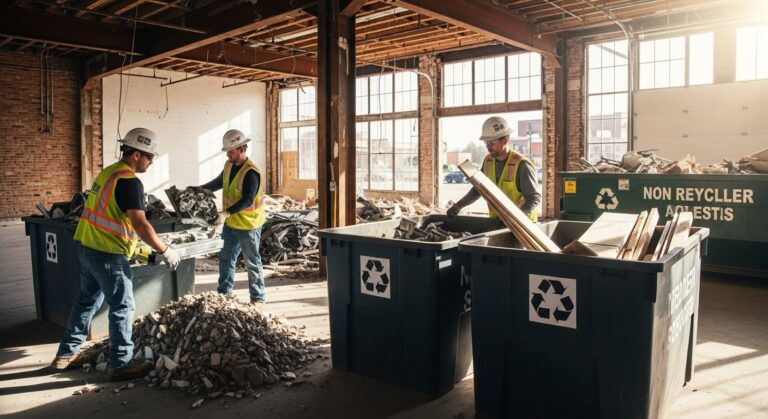
Mixed waste is difficult to recycle and often ends up in a landfill because sorting is too labor-intensive afterward. The solution is source separation: providing separate containers for wood, metal, concrete, cardboard, and general waste. Label bins clearly and train workers on what goes where. While this requires more space and initial effort, it dramatically increases recycling rates and reduces contamination. Many Arkansas dumpster rental companies offer multiple container sizes and types to facilitate this process.
Partnering with Local Recycling Facilities
Arkansas has a growing network of construction and demolition recycling centers that accept materials like concrete, asphalt, wood, and metal. By establishing relationships with these facilities ahead of time, you can ensure that your materials have a home and that you are not turned away due to contamination or volume limits. Some facilities even provide roll-off containers and hauling services, simplifying logistics. For example, concrete can be crushed into aggregate for new construction, and wood can be chipped into mulch or biomass fuel.
Deconstruction Over Demolition
Whenever possible, choose deconstruction over traditional demolition. Deconstruction involves carefully dismantling a building to preserve materials for reuse. This approach is slower and more labor-intensive, but it can salvage high-value items like hardwood flooring, doors, windows, and architectural details. These materials can be sold to architectural salvage yards or reused in the same project, significantly reducing waste and providing a unique aesthetic. In some cases, the value of salvaged materials offsets the additional labor cost.
Lean Construction Practices
Minimizing waste at the source is the most effective strategy. Lean construction principles focus on precise ordering, efficient cutting, and just-in-time delivery to reduce offcuts and overages. For instance, using modular materials or prefabricated components can reduce scrap. Digital tools like BIM (Building Information Modeling) help optimize material usage and identify potential waste before construction begins. These practices not only cut waste but also save money on materials and disposal.
Navigating Arkansas Regulations and Incentives
Arkansas has specific regulations governing construction and demolition waste, particularly for hazardous materials like asbestos and lead-based paint. Contractors must follow state and federal guidelines for testing, abatement, and disposal. Failure to comply can result in fines and project delays. On the positive side, some municipalities offer incentives for green building practices, such as reduced permit fees or expedited review for projects that achieve certain waste diversion targets.
Additionally, the Arkansas Department of Environmental Quality (ADEQ) provides resources and guidance for recycling and waste reduction. Staying informed about local ordinances and available programs can help you make the most of sustainable waste solutions for commercial renovation in Arkansas. For example, some cities have mandatory recycling ordinances for construction projects above a certain size, requiring a waste management plan as part of the permit application.
Selecting the Right Dumpster and Hauling Partner
A critical component of any waste management plan is the container and hauling service. For commercial renovation projects in Arkansas, you need a partner that offers flexible sizing, reliable scheduling, and expertise in recycling. Here are factors to consider:
- Container sizes: 10-yard to 40-yard roll-off dumpsters to match project scale
- Material restrictions: Ensure the provider accepts the types of waste you generate
- Recycling capabilities: Look for companies that sort and recycle a high percentage of materials
- Pricing transparency: Avoid hidden fees for overweight loads or extended rental periods
- Local knowledge: A provider familiar with Arkansas regulations and recycling facilities
When you choose a dumpster rental company that prioritizes sustainability, you gain a partner who can advise on best practices, provide recycling reports, and help you achieve your environmental goals. This partnership is essential for scaling sustainable waste solutions for commercial renovation in Arkansas.
Case Study: A Successful Sustainable Renovation in Central Arkansas
A mid-sized office building renovation in Little Rock provides an example of sustainable waste management in action. The project team conducted a pre-demolition audit and identified that 70% of the waste could be recycled or reused. They set up six separate containers: one for concrete, one for metal, one for wood, one for cardboard, one for mixed recyclables, and one for landfill-bound waste. The general contractor trained all subcontractors on the sorting system and posted clear signage.
During demolition, the team salvaged steel beams and sold them to a scrap yard, generating $12,000 in revenue. Concrete was crushed on-site and used as backfill, eliminating hauling costs. Wood was sent to a facility that produces biomass fuel. At the end of the project, 85% of the waste was diverted from the landfill, exceeding the initial goal. The project also earned LEED Gold certification, which helped attract tenants who value sustainability. This case demonstrates that with careful planning and the right partners, sustainable waste solutions for commercial renovation in Arkansas are both achievable and profitable.
Overcoming Common Challenges
Despite the benefits, implementing sustainable waste solutions for commercial renovation in Arkansas can present challenges. Space constraints on urban job sites make source separation difficult. Tight schedules may discourage the extra time needed for deconstruction. And some subcontractors may resist changing their habits. However, these obstacles can be overcome with clear communication, proper training, and incentives. For example, including waste diversion targets in subcontractor contracts and rewarding teams that meet or exceed goals can drive compliance.
Another challenge is finding recycling markets for certain materials. While concrete, metal, and cardboard are widely recycled, materials like carpet, insulation, and ceiling tiles have fewer options. In these cases, working with a waste management consultant or a full-service dumpster rental provider can help identify alternative solutions, such as waste-to-energy facilities or specialized recyclers. The key is to stay flexible and continuously seek better options as the recycling industry evolves.
The Future of Sustainable Renovation in Arkansas
As environmental awareness grows and regulations tighten, sustainable waste solutions for commercial renovation in Arkansas will become standard practice. Emerging technologies, such as AI-powered sorting systems and mobile apps for waste tracking, will make it easier to monitor and improve performance. Additionally, the growing demand for green buildings means that contractors who master sustainable waste management will have a competitive advantage.
Businesses that invest in these practices now will be better positioned for the future. They will build stronger relationships with clients who prioritize environmental responsibility, reduce their exposure to rising landfill fees, and contribute to a healthier Arkansas community. Whether you are a contractor, property owner, or facility manager, taking steps toward zero waste is a smart investment.
Sustainable waste management is not just about compliance; it is about leadership. By adopting these strategies, Arkansas businesses can turn renovation waste into a resource, reduce their environmental footprint, and set a new standard for the industry. The path to sustainability begins with a single dumpster, a clear plan, and a commitment to doing better.