
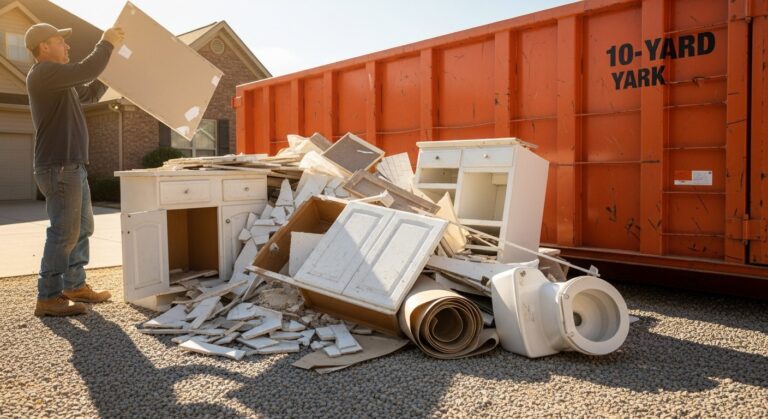
Planning a kitchen or bathroom remodel in Arkansas is exciting, but the pile of debris that comes with it can quickly turn that excitement into stress. Interior demolition waste from tearing out old cabinets, countertops, tile, drywall, and plumbing fixtures adds up fast. Without a clear plan for disposal, your project can stall, your yard can become a hazard, and your budget can blow up on surprise dump fees. This guide walks you through every step of managing interior demolition waste for kitchen and bathroom remodels in Arkansas, from choosing the right dumpster to understanding local regulations.
Understanding Interior Demolition Waste in Kitchen and Bathroom Remodels
Interior demolition waste includes everything you pull out during a remodel. In a kitchen, you typically remove cabinets, countertops (laminate, granite, or quartz), sinks, faucets, old appliances, backsplash tile, drywall, and sometimes flooring. Bathroom demolition adds toilets, bathtubs, shower pans, vanity units, mirrors, and ceramic or porcelain tile. Each material type has different weight and disposal requirements, which directly affects the dumpster size you need and the total cost.
Many homeowners underestimate the volume of debris. A standard kitchen remodel can generate 3 to 6 cubic yards of waste, while a full bathroom gut can produce 2 to 4 cubic yards. If you are combining both projects, you may need a 10-yard or even a 15-yard dumpster. Overfilling a smaller dumpster leads to extra fees or the need for a second rental, so accurate estimation is critical.
Choosing the Right Dumpster Size for Your Arkansas Remodel
Dumpster sizes are measured in cubic yards. The most common sizes for residential kitchen and bathroom remodels are 10-yard, 15-yard, and 20-yard containers. A 10-yard dumpster works well for a single bathroom or a small kitchen with limited cabinetry. A 15-yard dumpster is ideal for a standard kitchen plus one bathroom. A 20-yard dumpster suits a full kitchen and two bathrooms, or a kitchen with heavy stone countertops and large appliances.
Here is a quick breakdown of what fits in each size:
- 10-yard dumpster: Approximately 3 pickup truck loads. Best for a single bathroom remodel or a small kitchen refresh. Holds about 2-3 tons of mixed debris.
- 15-yard dumpster: About 4-5 pickup truck loads. Good for a full kitchen or a kitchen plus one bathroom. Holds up to 4-5 tons.
- 20-yard dumpster: Approximately 6-8 pickup truck loads. Handles a whole-house interior gut or a large kitchen plus two bathrooms. Holds up to 6 tons.
When you order, ask about weight limits. Heavy materials like concrete, tile, and stone can quickly exceed the allowance. If your demolition includes thick granite countertops or a cast-iron bathtub, consider a larger dumpster or discuss overweight fees with the rental company upfront. In our guide on Arkansas shed and garage demolition waste disposal step by step, we explain how to estimate weight for mixed loads, which applies equally to interior remodels.
Regulations and Permits for Dumpster Placement in Arkansas
Arkansas does not have a statewide permit for dumpsters on private property, but many cities and counties require a permit if the dumpster sits on a public street, sidewalk, or alley. For example, Little Rock, Fayetteville, and Bentonville each have specific rules. You typically need to apply for a right-of-way permit from the public works department, which costs between $25 and $75 and takes 1-3 business days to process.
If you place the dumpster in your driveway or on your lawn, no permit is usually needed. However, check your homeowners association (HOA) rules. Some HOAs restrict dumpster placement to certain days or require screening. Also, be aware of utility lines. Call 811 before placing a dumpster to mark underground lines, especially if the dumpster will be on a grassy area or near a curb where digging might occur.
What Can and Cannot Go in Your Remodel Dumpster
Interior demolition waste from kitchens and bathrooms is mostly non-hazardous, but some items require special handling. Acceptable materials include wood cabinets, drywall, lumber, tile, carpet, linoleum, sinks, toilets (without the tank), bathtubs, shower pans, countertops, and appliances (if the rental company allows them). Most Arkansas dumpster providers accept these items as long as they are mixed with general construction debris.
Prohibited items typically include:
- Hazardous waste: Paint, solvents, adhesives, thinners, and chemical cleaners.
- Electronics: Old microwaves, smart appliances with circuit boards, or any e-waste.
- Batteries: Lithium-ion and lead-acid batteries from tools or backup systems.
- Asbestos: Older homes (pre-1980) may have asbestos in floor tiles, ceiling texture, or pipe insulation. You cannot put asbestos in a regular dumpster. It requires a certified abatement contractor.
- Fluorescent bulbs and ballasts: These contain mercury and must be recycled separately.
Always confirm your specific dumpster rental company’s list of prohibited items. Some Arkansas providers have more flexible policies for appliances and electronics, while others strictly exclude them. Sorting prohibited materials before demolition saves you from rejected loads and extra fees.
Step-by-Step Process for Ordering and Using a Dumpster in Arkansas
Follow these steps to ensure a smooth dumpster rental experience for your kitchen or bathroom remodel.
Step 1: Estimate your debris volume. Measure the dimensions of the space you are demolishing. For cabinets, count the linear feet. For tile, measure square footage. Use an online debris calculator or ask your dumpster provider for guidance. Overestimating by 10-20% is safer than underestimating.
Step 2: Choose a dumpster size and provider. Compare local Arkansas companies. Look for transparent pricing that includes delivery, pickup, a set rental period (usually 7-14 days), and a weight allowance. Read reviews about customer service and on-time delivery.
Step 3: Schedule delivery and placement. Book your dumpster at least 2-3 days before you start demolition. Confirm the drop-off location and any access requirements. If you need a street permit, apply before the delivery date.
Step 4: Load the dumpster correctly. Break down large items like cabinets and drywall sheets to maximize space. Place heavy items like tile and concrete at the bottom, then layer lighter materials on top. Do not fill the dumpster above the rim line. Overfilled containers may not be picked up or may incur extra charges.
Step 5: Schedule pickup. Call the rental company when you are finished or when the dumpster is full. Most companies pick up within 24-48 hours. If you need more time, ask about extension fees before your rental period expires.
Cost Factors for Interior Demolition Waste Disposal in Arkansas
Dumpster rental costs in Arkansas typically range from $250 to $600 for a 10-yard dumpster, $300 to $750 for a 15-yard, and $400 to $900 for a 20-yard. Prices vary by location, season, and the type of debris. Heavy waste like tile and concrete often costs more because of weight limits.
Additional fees to watch for include overweight charges (usually $50-$100 per ton over the allowance), late return fees ($10-$20 per day), and permit costs if you place the dumpster on public property. Some companies charge extra for certain items like refrigerators or large appliances. Ask for a full price breakdown before you agree to the rental.
Tips for Efficient Demolition and Waste Reduction
To keep your project on track and your dumpster from overflowing, plan your demolition sequence. Remove large items first (cabinets, vanities, bathtubs), then tackle tile and drywall. Work in sections so you can load the dumpster evenly. If you are doing the work yourself, rent a wheelbarrow or debris chute to move waste quickly from upper floors to the dumpster.
Consider donating reusable items. Kitchen cabinets in good condition, bathroom vanities, sinks, and even some appliances can be donated to Habitat for Humanity ReStores in Arkansas. This reduces your waste volume and may qualify for a tax deduction. Similarly, metal fixtures and piping can be taken to a scrap metal recycler. Some recyclers pay by weight, giving you a small rebate.
Environmental Considerations for Arkansas Remodel Waste
Arkansas has a growing focus on construction and demolition recycling. Many materials from kitchen and bathroom remodels are recyclable. Drywall can be processed into new drywall or soil amendment. Wood cabinets and lumber can be chipped into mulch or biomass fuel. Metal, concrete, and asphalt can be crushed and reused. Ask your dumpster provider if they sort loads for recycling. Some Arkansas companies offer mixed-load recycling, where they separate recyclables at their facility rather than sending everything to a landfill.
If you prefer a greener approach, you can rent a dumpster specifically for recyclables and take non-recyclable waste to the landfill separately. This requires more effort but reduces your environmental footprint. Check with your local county waste management department for drop-off locations and accepted materials.
Common Mistakes to Avoid in Arkansas Remodel Waste Disposal
One frequent mistake is renting a dumpster that is too small. Homeowners often think they can fit all debris into a 10-yard container, only to find they need a second dumpster halfway through the project. Choosing one size up from your estimate is a wise precaution. Another mistake is not checking weight limits. A small dumpster filled with heavy tile can exceed the weight allowance, leading to significant overage fees.
Failing to secure a street permit is another common issue. If your dumpster blocks a sidewalk or street without a permit, you may receive a fine from the city. Always verify local requirements before delivery. Lastly, do not mix hazardous waste with regular debris. If the dumpster company discovers paint cans or chemicals during pickup, they may refuse the load and charge a contamination fee.
Managing interior demolition waste from your kitchen or bathroom remodel in Arkansas does not have to be overwhelming. By choosing the right dumpster size, understanding local rules, and loading efficiently, you can keep your project moving smoothly and avoid unexpected costs. Whether you are a DIY homeowner or a contractor, a well-planned waste disposal strategy saves time, money, and frustration. Start by calling a reputable Arkansas dumpster rental company, asking the right questions, and scheduling your dumpster before the first sledgehammer swings.