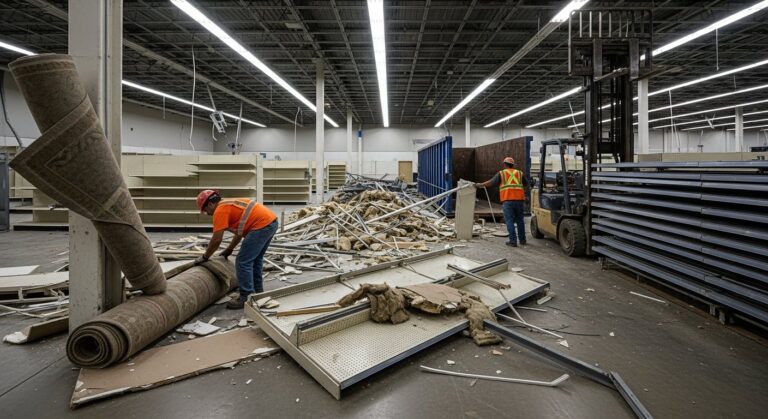
When a retail store undergoes an interior demolition in Arkansas, the waste generated is far from ordinary. From old fixtures and shelving to drywall, carpeting, and electrical components, the debris requires a disposal strategy that balances speed, cost, and regulatory compliance. Retail owners, property managers, and general contractors often underestimate the volume and complexity of this waste stream. A single 10,000-square-foot store can produce 20 to 40 tons of mixed debris. Without a clear plan, delays and fines can erode project budgets and timelines. This article provides a step-by-step framework for retail store interior demolition waste disposal in Arkansas, covering everything from material sorting and container selection to local regulations and cost-saving strategies.
Understanding the Waste Profile of Retail Interior Demolition
Retail spaces are built for aesthetics and function, not for easy deconstruction. Interior demolition typically involves removing non-structural elements such as drop ceilings, partition walls, flooring, lighting, signage, shelving, and display cases. Each of these materials has a different disposal path. For example, metal shelving and aluminum fixtures can often be recycled, while carpet padding and certain wall coverings may need to go to a landfill. Knowing what you are dealing with before the first hammer swings is essential for efficient waste management.
Common materials in retail demolition include drywall, metal framing, wood, glass, plastic, carpet, laminate, tile, and electrical wiring. Some stores also have specialized elements like refrigeration units, security systems, or hazardous materials such as old paint or fluorescent bulbs. A proper waste audit at the planning stage helps you separate recyclables, reusable items, and hazardous waste. This upfront work reduces disposal costs and aligns with Arkansas environmental regulations. In our guide on Arkansas shed garage demolition waste disposal step by step, we explain how similar sorting principles apply to larger commercial projects.
Contractors who skip the waste audit often pay more in dumpster fees and face last-minute sorting requirements at transfer stations. The key is to plan for separation before demolition begins, not after the debris piles up.
Regulatory Landscape for Commercial Demolition Debris in Arkansas
Arkansas does not have a single statewide law governing demolition waste, but multiple regulations apply depending on the waste type and disposal location. The Arkansas Department of Environmental Quality (ADEQ) oversees solid waste management, and its rules require that construction and demolition debris be disposed of at permitted facilities. Landfills that accept C&D waste must meet specific liner and operational standards. Using an unpermitted site can result in significant fines for the property owner or contractor.
Hazardous materials are a separate concern. Fluorescent light bulbs, ballasts, paints, solvents, and batteries must be handled under federal and state hazardous waste rules. Many retail stores built before the 2000s also contain asbestos in ceiling tiles, floor tiles, or insulation. Asbestos removal requires licensed abatement contractors and special disposal procedures. Failing to test for asbestos before demolition can halt a project and trigger legal liability.
Local municipalities also have their own ordinances. For instance, Little Rock, Fayetteville, and Fort Smith each have specific requirements for dumpster permits, street placement, and noise hours during demolition. Checking with the city planning or public works department before starting work can prevent delays. A reliable waste disposal partner familiar with Arkansas regulations can handle these details and keep your project compliant.
Choosing the Right Dumpster Size and Type for Retail Demolition
Selecting the correct container is a critical decision that affects both cost and workflow. Dumpster sizes are measured in cubic yards, and retail demolition projects typically require containers ranging from 20 to 40 yards. Here are the most common options and their best uses:
- 20-yard dumpster: Suitable for small store renovations or partial demolitions. Holds about 110-130 standard trash bags. Best for projects under 1,000 square feet.
- 30-yard dumpster: A popular choice for medium retail spaces (1,000 to 3,000 square feet). Accommodates bulkier items like shelving units and display cases.
- 40-yard dumpster: Ideal for full-store demolitions or large-format retail spaces. Can handle heavy mixed debris including drywall, metal, and wood.
Beyond size, consider the type of dumpster. Roll-off dumpsters are standard for demolition debris, but some waste may require separate containers for recyclables. For example, if you are removing large quantities of metal shelving, a dedicated metal recycling dumpster can reduce tipping fees. Similarly, concrete or masonry debris may need a heavier-duty container to avoid overloading. Discuss your waste profile with your dumpster provider to match the container to the debris.
Placement is another factor. Retail demolition often occurs in strip malls or shopping centers where space is limited. You may need a permit to place a dumpster on a public street or sidewalk. Plan the drop-off location in advance to avoid blocking customer access or emergency routes.
Step-by-Step Process for Efficient Waste Disposal
Executing a smooth demolition waste disposal plan involves several coordinated steps. Follow this framework to stay on schedule and within budget:
Step 1: Conduct a pre-demolition audit. Walk the space with your contractor and identify all materials. Note which items can be donated or recycled. Create a waste inventory to guide your dumpster selection and sorting strategy.
Step 2: Arrange utility disconnects and hazardous material removal. Before demolition begins, ensure that electricity, gas, and water are safely disconnected. Remove any hazardous materials such as asbestos, lead paint, or chemical residues. Use licensed professionals for this work.
Step 3: Order the right dumpsters and schedule delivery. Based on your audit, order containers for mixed waste and separate recycling streams. Coordinate delivery so dumpsters arrive just before demolition starts. Multiple smaller containers may be more practical than one large one if space is tight.
Step 4: Demolish systematically and sort as you go. Train your crew to separate materials at the source. Use designated piles or bins for wood, metal, concrete, cardboard, and general trash. This reduces the need for post-demolition sorting and lowers disposal costs.
Step 5: Monitor fill levels and arrange timely pickups. Overfilled dumpsters incur extra fees and can be unsafe. Schedule pickups before containers reach capacity. If the project generates more debris than expected, order additional containers promptly.
Step 6: Complete final cleanup and documentation. After demolition, sweep the space and remove any remaining debris. Keep receipts and weight tickets from the disposal facility. These records are useful for tax deductions, insurance claims, and regulatory compliance.
By following these steps, you minimize downtime and avoid common pitfalls like contaminated loads or permit violations.
Cost Factors and How to Budget for Disposal
The cost of retail store interior demolition waste disposal in Arkansas varies widely based on location, debris volume, material type, and disposal fees. On average, dumpster rental rates range from $350 to $800 for a 20-yard container to $600 to $1,200 for a 40-yard container. These prices typically include delivery, pickup, and a set weight limit. Exceeding the weight limit triggers overage charges, which can add hundreds of dollars to the final bill.
Landfill tipping fees in Arkansas range from $30 to $60 per ton for C&D waste, depending on the facility. Recycling metal or concrete can reduce these fees. Some recyclers even pay for clean scrap metal, offsetting disposal costs. Labor costs for sorting and loading also factor into the budget. If your crew is not trained in waste separation, you may need to hire additional workers or pay for post-demolition sorting services.
To keep costs under control, get quotes from multiple dumpster providers, ask about weight limits and overage fees, and prioritize recycling. A reputable disposal company will provide a transparent estimate and help you identify cost-saving opportunities. Remember that the cheapest upfront option is not always the most economical if it leads to hidden charges or compliance issues.
Recycling and Donation Opportunities for Retail Fixtures
Retail interior demolition produces a surprising amount of reusable material. Fixtures like shelving, racks, display cases, and lighting can often be donated to nonprofit organizations, schools, or small businesses. Donating usable items not only reduces waste but may also qualify for a tax deduction. Organizations like Habitat for Humanity ReStore, local theater groups, and community centers often accept retail fixtures in good condition.
Recycling is another major opportunity. Metal, cardboard, wood, and certain plastics can be processed into new products. Many Arkansas recycling centers accept construction and demolition materials, though rules vary by facility. For example, clean wood can become mulch or biomass fuel, while metal is melted down and reused. Cardboard from packaging and signage should be baled or flattened to maximize space in recycling containers.
Work with a waste hauler that offers recycling services or can direct you to local recyclers. Some dumpster rental companies provide separate containers for recyclables, making it easy to separate materials on site. This approach not only supports sustainability goals but can also reduce your overall disposal costs.
Hiring a Professional Waste Disposal Partner in Arkansas
Managing retail demolition waste is a complex task that benefits from professional expertise. A reliable waste disposal company handles container delivery, pickup, sorting, recycling, and disposal, allowing you to focus on the demolition itself. When vetting providers, ask about their experience with commercial demolition projects, their familiarity with Arkansas regulations, and their recycling partnerships.
Look for a company that offers flexible scheduling, transparent pricing, and responsive customer service. Reading online reviews and requesting references can provide insight into their reliability. A good partner will also help you navigate permit requirements and advise on best practices for waste reduction. For retail projects across Arkansas, working with a local provider ensures faster response times and knowledge of regional disposal options.
Choosing the wrong vendor can lead to missed pickups, overfilled dumpsters, or improper disposal that results in fines. Investing time in selection pays off in smoother project execution and lower total waste management costs.
Retail store interior demolition waste disposal in Arkansas does not have to be a headache. With proper planning, the right equipment, and a knowledgeable partner, you can keep your project on track, compliant, and cost-effective. Start with a waste audit, choose the correct dumpster size, and prioritize recycling and donation. By following the framework outlined here, you will avoid common mistakes and complete your demolition with confidence.