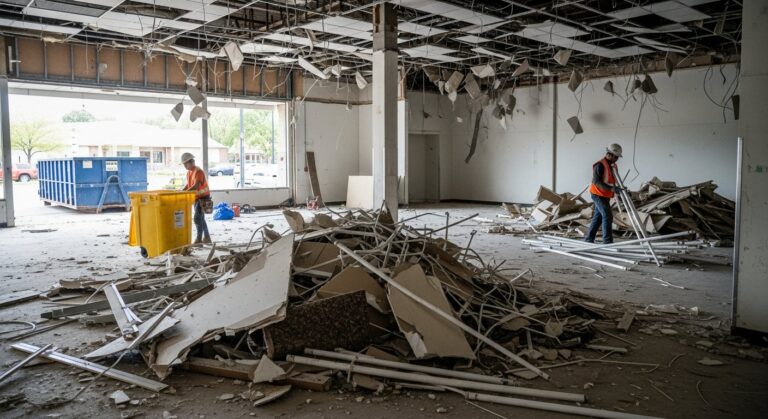
When a retail store undergoes an interior demolition in Arkansas, the waste generated is far from ordinary. Broken drywall, old shelving, carpet remnants, lighting fixtures, and even hazardous materials like fluorescent bulbs or adhesives must be removed legally and efficiently. For property managers, business owners, and general contractors, managing this debris is a critical phase of renovation. Without a solid plan for retail store interior demolition waste disposal in Arkansas, projects face costly delays, safety violations, and environmental fines. This article breaks down the specific waste streams you will encounter, the regulatory landscape in Arkansas, and the most practical disposal strategies to keep your project on track.
Understanding the Waste Profile of Retail Interior Demolition
Retail interiors are complex environments. Unlike a residential teardown, a commercial retail space often includes multiple layers of materials that must be separated for proper disposal. Common waste categories include mixed construction debris (drywall, wood, metal studs), flooring materials (carpet, tile, vinyl), ceiling tiles and grid systems, electrical components, and HVAC ductwork. Many of these items can be recycled or repurposed, but only if they are sorted at the source.
One of the biggest challenges is the presence of non-structural hazardous materials. Older retail spaces built before the 1980s may contain asbestos in floor tiles, ceiling texture, or pipe insulation. Fluorescent lighting contains mercury, and old exit signs may hold trace amounts of radioactive tritium. Any retail store interior demolition waste disposal in Arkansas must account for these regulated items. Failure to identify and handle them properly can result in EPA penalties and worker safety hazards. A pre-demolition audit is the first and most important step.
Arkansas Regulations Governing Commercial Demolition Waste
The Arkansas Department of Energy and Environment (ADEE) oversees solid waste management, including construction and demolition debris. Retail demolition waste is classified under specific state rules that dictate how materials must be transported, processed, and disposed of. For example, clean wood, metal, and concrete can often go to a C&D recycling facility, while mixed debris requires a permitted landfill. Hazardous waste must be handled by licensed transporters and disposed of at approved facilities.
Additionally, municipalities like Little Rock, Fayetteville, and Fort Smith may have local ordinances that affect dumpster placement, noise hours, and permits for roll-off containers. If your demolition involves structural changes, a building permit is required, and the waste disposal plan may need to be submitted as part of the application. Working with a provider that understands both state and local requirements ensures compliance. When you partner with a service that specializes in Arkansas demolition waste disposal, you gain a team that navigates these regulations on your behalf.
Step-by-Step Waste Management Plan for Retail Interior Demolition
Developing a structured approach to waste disposal saves time and money. Here is a practical sequence to follow:
- Conduct a pre-demolition audit. Walk the entire space with your contractor and identify all materials. Note any suspect hazardous items. Create a detailed inventory of waste types and estimated volumes.
- Secure necessary permits. Check with the local building department for demolition permits and dumpster placement approvals. Request any special hauling permits if you plan to move waste across city lines.
- Source separate at the point of generation. Place dedicated containers for wood, metal, concrete, and mixed debris. Label each container clearly. Train your crew on sorting rules to avoid contamination.
- Arrange for hazardous waste removal. Contact a licensed hazardous waste hauler for materials like asbestos, mercury lamps, or old batteries. Do not mix these with general debris.
- Schedule regular pickups. Retail demolition generates waste rapidly. Coordinate with your dumpster provider to swap containers before they overflow. This prevents safety hazards and keeps the work area clear.
Following this plan reduces landfill tipping fees, improves recycling rates, and keeps your project compliant. Many retail renovation projects in Arkansas have saved 15-30% on disposal costs simply by separating materials and using the right containers from day one.
Choosing the Right Dumpster Size for Retail Interior Demolition
Selecting the correct container size is essential for efficient retail store interior demolition waste disposal in Arkansas. A 30-yard roll-off dumpster is the most common choice for a mid-sized retail space (1,500 to 3,000 square feet). It holds roughly 9 pickup truck loads of debris. For larger stores (5,000+ square feet), a 40-yard container may be necessary. However, if your waste is mostly lightweight materials like ceiling tiles and carpet, a 30-yard can often handle more volume than expected. Your waste disposal provider can help estimate based on your specific demolition scope.
Recycling Opportunities for Retail Demolition Materials
Arkansas has a growing network of recycling centers that accept construction and demolition debris. Metal studs, copper wiring, and aluminum fixtures have scrap value. Many centers pay for these materials, potentially offsetting some disposal costs. Clean wood can be ground into mulch or biomass fuel. Concrete and masonry can be crushed for road base or fill. Even ceiling tiles can be recycled into new tiles or building materials at specialized facilities.
However, recycling only works if materials are free of contamination. A single bag of trash mixed into a load of wood can send the entire truckload to the landfill. This is why on-site sorting is critical. Some Arkansas disposal providers offer single-stream C&D recycling, where mixed debris is sorted at their facility using magnets, screens, and manual picking lines. This option is more expensive than sorted loads but still diverts a significant percentage of waste from the landfill. For retail store interior demolition waste disposal in Arkansas, pursuing recycling options demonstrates environmental responsibility and may qualify your project for green building certifications like LEED.
Cost Factors and Budgeting for Waste Disposal
Waste disposal costs for a retail interior demolition in Arkansas typically range from $500 to $3,000, depending on container size, rental duration, and disposal fees. Key cost drivers include:
- Container rental fees. Most companies charge a flat rate for the dumpster delivery, pickup, and a set number of days (usually 7-14). Extra days incur daily fees.
- Tipping fees. Landfill charges per ton. Mixed debris rates in Arkansas average $40-$60 per ton. Separated loads (e.g., clean wood or metal) are often cheaper or even free to drop off at recycling centers.
- Hazardous waste surcharges. Asbestos abatement, chemical disposal, and fluorescent lamp recycling add significant costs. Always get a separate quote for these items.
- Distance and access fees. If the dumpster must be placed far from the road or requires special equipment, additional charges may apply.
To avoid surprise bills, request a detailed written estimate that includes all fees. Ask about weight limits and overage charges. Many Arkansas dumpster rental companies offer flat-rate pricing for up to a certain tonnage, which simplifies budgeting. For example, a 30-yard container with 10 tons of disposal included might cost $750. Exceeding that limit triggers per-ton overage fees. Plan your waste volume accurately to stay within budget.
Safety Considerations During Retail Interior Demolition
Safety is paramount when handling demolition waste. Sharp metal studs, broken glass, and nails in wood can cause serious injuries. Dust from drywall and insulation may contain silica or other respiratory hazards. All crew members should wear personal protective equipment (PPE): hard hats, safety glasses, gloves, steel-toed boots, and N95 respirators when dust is present.
Additionally, proper waste stacking inside the dumpster is important. Overfilling a container creates falling hazards during transport. Never place heavy items on top of lightweight debris. Distribute weight evenly to prevent the dumpster from tipping when lifted. If you are using a front-load or roll-off container, ensure the access area is clear and the ground is level. A well-organized waste disposal plan is a safer work environment.
Hiring a Professional Waste Disposal Partner in Arkansas
Retail store interior demolition is a fast-paced job. You need a waste disposal partner who can deliver containers on schedule, handle special waste streams, and provide transparent pricing. When evaluating companies in Arkansas, look for the following:
- Experience with commercial projects. Ask if they have handled retail interior demolitions before. They should understand the need for quick container swaps and flexible scheduling.
- Knowledge of local regulations. They should be able to advise on permits, recycling options, and hazardous waste handling requirements specific to your city or county.
- Recycling partnerships. Providers that work with local recycling centers can help you divert more waste and potentially lower costs.
- Clear communication. You need a single point of contact who can answer questions about drop-off times, weight limits, and prohibited items.
Many Arkansas contractors and property managers choose a full-service disposal company that offers both dumpster rental and waste sorting services. This simplifies logistics: one call handles everything from container delivery to final disposal. When your partner understands the unique demands of retail interior demolition, your project runs smoother from start to finish.
Retail store interior demolition waste disposal in Arkansas does not have to be a headache. By understanding the waste types, following state regulations, sorting materials for recycling, and partnering with the right disposal provider, you can complete your renovation on time and within budget. Whether you are refreshing a single storefront or managing a chain-wide remodel, a strategic waste plan is the foundation of a successful demolition phase.