
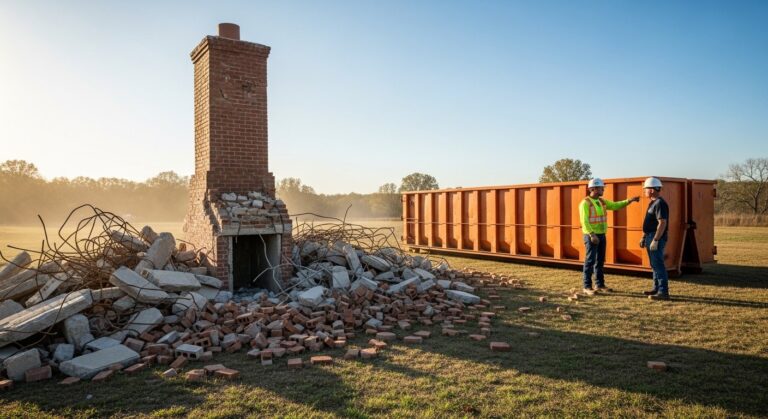
When an old foundation or chimney begins to show signs of failure, it becomes more than an eyesore. It becomes a safety hazard, a barrier to new construction, and a source of ongoing liability. Homeowners and contractors across the Natural State face the same dilemma: how do you remove tons of brick, concrete, and rebar without breaking the bank or violating local regulations? The answer lies in understanding the full scope of old foundation chimney demolition debris removal Arkansas projects require, from structural assessment to final disposal. This guide walks you through every critical step, ensuring your project stays compliant, efficient, and cost-effective.
Understanding the Scope of Foundation and Chimney Demolition
Before any equipment arrives on site, you need a clear picture of what you are dealing with. An old foundation might be a simple concrete slab, a full basement wall, or a series of pier-and-beam supports. A chimney, meanwhile, often contains brick, mortar, flue liners, and sometimes metal flashing. Each material presents unique challenges for demolition and disposal.
The volume of debris from a typical residential chimney removal can range from 3 to 8 cubic yards. A full foundation removal, depending on the size of the home or structure, can produce 10 to 20 cubic yards or more. This is not a job for a standard pickup truck or a few trips to the landfill. You need a plan that accounts for weight, material separation, and local disposal fees. In Arkansas, many landfills charge by the ton for construction and demolition debris, so accurately estimating the debris volume directly affects your budget.
Additionally, you must consider the age of the structure. Foundations and chimneys built before 1980 may contain materials that require special handling. For example, older mortar might contain asbestos, and some bricks were made with coal ash or other additives. Testing for hazardous materials is a step you cannot skip. Failing to identify and properly handle regulated waste can lead to fines, project delays, and health risks for workers and neighbors.
Assessing Hazardous Materials Before Demolition Starts
One of the most overlooked aspects of old foundation chimney demolition debris removal Arkansas is the presence of hazardous substances. As mentioned, asbestos is a primary concern in older structures. Asbestos was commonly used in chimney flue liners, insulation around the foundation, and even in some brick mortars until the late 1970s. Lead-based paint is another issue, especially on chimney crowns or foundation walls that were painted decades ago.
You have two options for handling this risk. The first is to hire a certified asbestos inspector to take samples and send them to a lab. This costs a few hundred dollars but provides certainty. The second is to assume the material contains asbestos and treat it accordingly, which means using proper personal protective equipment, wetting the debris during demolition, and disposing of the material at a facility licensed to accept asbestos waste. This second approach can be more expensive in disposal fees, but it avoids the risk of missing a hazard.
If you discover asbestos or lead, your demolition plan must change. You may need to seal off the work area, use negative air pressure machines, and double-bag all debris. In Arkansas, the Department of Environmental Quality (ADEQ) regulates the disposal of asbestos-containing materials. You must notify them before beginning work, and you must use a transporter that holds a valid waste hauling permit. Ignoring these rules can result in penalties of up to $25,000 per day.
Demolition Methods for Foundations and Chimneys
Once you have cleared the safety hurdles, you can choose a demolition method. The right approach depends on the structure’s size, location, and your budget. For small chimneys and isolated foundation sections, manual demolition with sledgehammers, pry bars, and chipping guns is feasible. This method produces less dust and noise, and it gives you more control over debris size. However, it is slow and physically demanding.
For larger projects, mechanical demolition using an excavator with a hydraulic breaker or a skid-steer loader with a demolition attachment is far more efficient. These machines can reduce a chimney to rubble in an hour and pull up a concrete foundation in a single day. The trade-off is cost. Renting a mini excavator with a breaker attachment in Arkansas runs between $300 and $600 per day, plus delivery fees. You also need a way to load the debris into a dumpster or truck.
Another option is controlled blasting, but this is rarely used for residential projects in Arkansas due to permit requirements, insurance costs, and the risk of flying debris. For most homeowners and contractors, a combination of manual work and small machinery strikes the right balance. Regardless of the method, you must plan for dust control. Wetting the debris with a garden hose or a misting system keeps airborne particles down and protects your lungs and your neighbors’ property.
Permits and Local Regulations in Arkansas
Before you swing the first hammer, check with your city or county building department. Many Arkansas municipalities require a demolition permit for any structure over a certain size. For example, Little Rock requires a permit for the demolition of any building, foundation, or chimney exceeding 120 square feet. Fayetteville and Bentonville have similar rules. The permit application typically asks for a description of the work, a site plan showing where the debris will be staged, and proof of liability insurance.
You may also need to notify utility companies. Gas, electric, and water lines must be marked and, in some cases, disconnected before demolition begins. Arkansas law requires you to call 811 at least two business days before digging to have underground utilities located. This service is free, and it can prevent a catastrophic accident. Even if you are only demolishing a chimney above ground, the foundation may extend deeper than you expect, and hitting a gas line could be deadly.
Finally, consider noise ordinances. Most Arkansas cities restrict construction noise to certain hours, typically 7:00 AM to 8:00 PM on weekdays and 9:00 AM to 6:00 PM on weekends. Failing to comply can result in fines and complaints from neighbors. Plan your demolition schedule accordingly.
Debris Removal and Disposal Options
After the chimney and foundation are reduced to rubble, you face the logistics of removal. You have three primary options: hauling debris yourself in a pickup or trailer, renting a dumpster, or hiring a full-service debris removal company. Each has pros and cons, but for most projects, the dumpster rental option offers the best balance of cost, convenience, and compliance.
Hauling debris yourself seems simple, but it often leads to hidden costs. Multiple trips to the landfill consume time and fuel. Landfill fees in Arkansas vary by location but typically range from $40 to $70 per ton for construction and demolition debris. A full-size pickup truck can carry about 1.5 tons per load, so a 10-ton project could require seven trips. That is a full day of driving and unloading, plus wear and tear on your vehicle.
Dumpster rental solves these problems. You choose a size based on your estimated debris volume, the dumpster is delivered to your site, and you fill it at your own pace. When you are done, the company picks it up and handles disposal. For old foundation chimney demolition debris removal Arkansas, a 10-yard or 15-yard dumpster is usually sufficient for a chimney and small foundation. A 20-yard or 30-yard dumpster works better for full foundation removals. The cost for a 15-yard dumpster rental in Arkansas typically falls between $350 and $550, including delivery, pickup, and a set weight limit.
What to Look for in a Dumpster Rental Company
Not all dumpster rental services are equal. When selecting a provider for your demolition debris removal, consider these factors:
- Weight allowance: Most companies include a tonnage limit in the rental price. Exceeding that limit triggers overage fees, which can add $50 to $100 per ton. Ask for a weight allowance that matches your debris estimate.
- Prohibited items: Some companies do not accept concrete, brick, or dirt in their standard dumpsters because of the weight. Confirm that the provider accepts heavy debris like foundation concrete and chimney brick before you rent.
- Placement requirements: The dumpster needs a flat, stable surface. If your driveway is long but narrow, or if the debris is in a backyard with limited access, you may need a smaller dumpster or a different placement strategy.
- Permit requirements: If the dumpster will sit on a public street or sidewalk, your city may require a right-of-way permit. The rental company can often help you obtain this, but you should ask in advance.
For a reliable solution, consider our Arkansas dumpster rental for landscaping hardscaping debris services. While designed for landscaping and hardscaping, these dumpsters are equally suited for heavy demolition debris like concrete, brick, and stone. Our team can help you select the right size and weight allowance for your chimney and foundation removal project.
Recycling Opportunities for Demolition Debris
One of the best ways to reduce disposal costs and environmental impact is to recycle as much debris as possible. Concrete, brick, and mortar are all recyclable. In Arkansas, several facilities accept clean concrete and brick for crushing and reuse as road base, fill material, or aggregate for new concrete. The key word is “clean.” If your debris is mixed with wood, metal, plastic, or hazardous materials, it becomes contaminated and must go to a landfill.
Separating materials on site takes time, but it pays off. Clean concrete and brick can often be disposed of for free or at a reduced rate at recycling centers. Some facilities even pay a small fee for clean material because it has value as aggregate. Metal from rebar, flashing, or chimney caps is even more valuable. Scrap metal dealers in Arkansas pay current market rates for ferrous and non-ferrous metals. A typical chimney contains 50 to 200 pounds of metal, which might net you $10 to $30 at current prices. It is not a windfall, but it offsets some of your disposal costs.
Wood from framing or formwork that was part of the foundation should be separated and disposed of separately. Untreated wood can often go to a biomass facility or a landfill that accepts clean wood. Treated wood, however, must go to a construction and demolition landfill because of the chemical preservatives it contains.
Cost Breakdown for a Typical Arkansas Project
Let us walk through a realistic scenario to illustrate the costs involved in old foundation chimney demolition debris removal Arkansas. Suppose you have a single-story brick chimney that extends from the ground up through the roof, plus a small concrete foundation pad that supported a porch or addition. The total debris volume is estimated at 6 cubic yards.
First, you pay for an asbestos inspection, which costs around $300. The test comes back negative, so you proceed. You rent a jackhammer and a chipping gun for two days at a cost of $150. You also buy personal protective equipment (gloves, dust masks, safety glasses) for $50. You then rent a 10-yard dumpster for $400, which includes a 2-ton weight allowance. Your debris weighs approximately 3 tons, so you pay an overage fee of $100 per ton for the extra 1 ton, adding $100 to your bill. The total project cost is $300 (inspection) + $150 (tool rental) + $50 (PPE) + $500 (dumpster with overage) = $1,000.
If you had chosen a full-service demolition and removal company, the same project might cost $1,500 to $2,500. The difference is labor. Doing the work yourself saves money but requires time, effort, and physical risk. Many homeowners find that the dumpster rental approach gives them the best value, especially if they have help from a friend or a hired laborer for a day.
Safety Protocols for DIY Demolition
If you decide to tackle the demolition yourself, safety must be your top priority. A chimney collapse can crush a person or cause severe injuries. Follow these protocols to minimize risk.
Always work from the top down. If you are demolishing a chimney, start at the crown and remove bricks layer by layer. Never undermine the base while the upper section remains intact. That is how unexpected collapses happen. Use a sturdy ladder and have a spotter hold it steady. Wear a hard hat, steel-toed boots, and heavy gloves at all times. Eye protection is non-negotiable. Flying brick chips and concrete dust can cause permanent eye damage.
Keep children and pets far away from the work area. Establish a perimeter of at least 20 feet around the demolition zone. If you are using power tools or heavy machinery, add more distance. Also, have a first-aid kit on site and a charged phone to call for emergency help if needed.
Finally, listen to your body. Demolition is strenuous work. Take breaks every hour, drink plenty of water, and stop if you feel dizzy or overly fatigued. Heat exhaustion is a real risk in Arkansas summers. Work in the early morning or late evening when temperatures are lower.
Hiring a Professional Contractor
Not everyone has the time, tools, or physical ability to demolish a foundation or chimney themselves. Hiring a professional contractor is a valid and often safer alternative. When vetting contractors for old foundation chimney demolition debris removal Arkansas, ask for proof of licensing, insurance, and bonding. Arkansas does not have a statewide contractor license, but many cities require local business licenses. Ask for references from recent demolition projects and check online reviews.
Get at least three written estimates. Each estimate should itemize the scope of work, the disposal method, the timeline, and the total cost. Be wary of bids that are significantly lower than others. They may cut corners on safety or disposal compliance, leaving you liable for fines later. Also, ask how they handle hazardous materials. A reputable contractor will test for asbestos and lead and will have a plan for proper disposal.
Finally, get the contract in writing. The contract should specify the start and end dates, the debris removal method, and the payment schedule. Never pay the full amount upfront. A typical arrangement is 30% down, 30% at the midpoint, and 40% upon completion and cleanup.
Clearing an old foundation and chimney from your Arkansas property is a demanding project, but it is also a rewarding one. You reclaim usable space, eliminate a safety hazard, and pave the way for new construction or landscaping. By planning carefully, following safety protocols, and choosing the right debris removal method, you can complete the job efficiently and within budget. Whether you rent a dumpster and do the work yourself or hire a professional, the key is to start with a thorough assessment and end with proper disposal. Your property and your peace of mind will thank you.